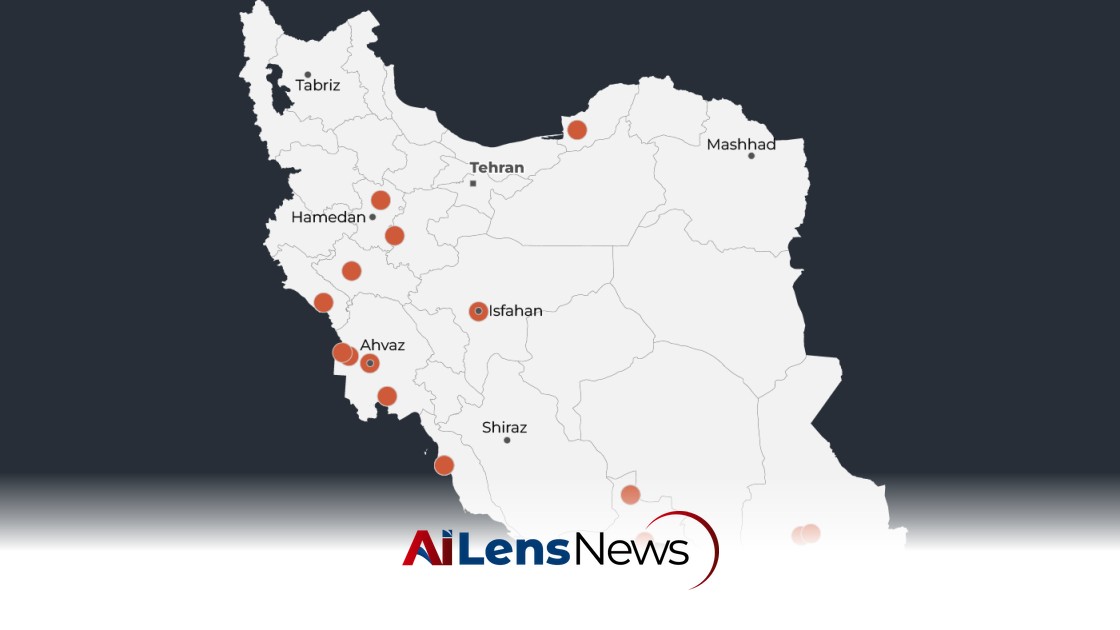


Recent US military airstrikes in Iran have resulted in significant casualties, raising fears of escalating conflict as Iran retaliates against US facilities in the region.
Doha, Qatar Jul 15, 2026 ALN: The United States military has launched hundreds of air attacks across Iran over the past week, killing at least 35 people and wounding 300, according to Iranian health officials. This escalation comes amid a fragile ceasefire agreement that had been in place, raising concerns about the potential for further conflict in the region. The U.S. military's operations have primarily targeted military sites along Iran's southern coast and near the strategically vital Strait of Hormuz, which is a critical maritime passage for global oil transportation.
The airstrikes have been reported in various Iranian cities and islands, including Aqqala, Ahvaz, Bampur, Bandar Abbas, Bushehr, Chabahar, and many others. These locations are not only significant for their military infrastructure but also for their role in Iran's economy, particularly in the oil and gas sectors. The Armed Conflict Location and Event Data (ACLED) organization has noted that U.S. strikes have occurred in previous months as well, indicating a sustained military campaign targeting key strategic locations within Iran.
Iran's southern waters are home to more than 30 islands, many of which are positioned along the Strait of Hormuz. These islands provide Iran with a forward operating base to monitor maritime traffic and deploy military assets, including missiles and naval forces. The Strait of Hormuz itself is one of the world's busiest energy corridors, through which a significant portion of the world's oil supply is transported. The geopolitical importance of this strait cannot be overstated, as it serves as a critical chokepoint for global energy security.
Mehdi Yazdi, a Tehran-based defense analyst, emphasized the strategic significance of the Strait of Hormuz for Iran. He stated, "If Iran were to abandon the Strait of Hormuz because of negotiations or anything else, it would not only lose the strait as a pressure lever, but negotiations and other issues would also slip out of Iran’s hands." This sentiment reflects the broader perspective within Iran regarding the necessity of maintaining control over the strait as a means of exerting influence and deterring external aggression.
Moreover, Yazdi pointed out that Iran views attacks on U.S. bases in the region as legitimate responses to U.S. military actions. This reciprocal view of military engagement underscores the potential for escalation and further conflict, particularly if the U.S. continues its airstrikes and naval blockade. The situation remains precarious, with both sides potentially embroiled in a cycle of retaliation that could destabilize the entire region.
The ongoing conflict and military actions have had a profound impact on maritime traffic in the region. Prior to the recent escalation, approximately 100 ships passed through the Strait of Hormuz each day, with around half of those being oil tankers transporting a combined total of 20 million barrels of crude oil. This accounted for about one-fifth of global oil consumption. However, following the U.S. military's actions, ship traffic has significantly decreased.
After a preliminary U.S.-Iran agreement was announced on June 17, the Strait of Hormuz reopened, but traffic levels remained well below normal. Data from PortWatch indicates that only 603 ships transited the strait in the first 25 days following its reopening, averaging just 24 ships per day. This figure is starkly lower than the pre-war average, highlighting the adverse effects of the ongoing conflict on global shipping and trade.
Furthermore, the situation has been exacerbated by attacks on vessels in the region, particularly on June 6-7, which led to a further reduction in the number of ships passing through the strait. With the U.S. blockade of Iranian ports now in effect, there is a real possibility that maritime traffic through the Strait of Hormuz could come to a complete standstill, further straining global supply chains and energy markets.
In addition to the Strait of Hormuz, Bab al-Mandeb is another critical maritime chokepoint that has come into focus amid rising tensions. This strait links the Red Sea and the Suez Canal with the Indian Ocean and is vital for global trade. Iran has hinted at the possibility of closing this waterway in the event of a major escalation, potentially leveraging its influence over the Houthis in Yemen to create a second pressure point alongside the Strait of Hormuz.
If both the Strait of Hormuz and Bab al-Mandeb were to be shut down, the implications for global energy supplies would be catastrophic. A quarter of the world’s energy would be blocked, severely affecting oil prices and availability. This scenario would not only impact oil-exporting nations but also have far-reaching consequences for economies reliant on energy imports, particularly in Europe and Asia.
The interconnectedness of these chokepoints underscores the strategic importance of maritime security in the region. As tensions escalate, the potential for conflict over these vital waterways increases, raising the stakes for all parties involved. The international community is closely monitoring the situation, as any further escalation could lead to a broader military confrontation with significant implications for global stability and security.
In light of these developments, international diplomatic efforts are likely to intensify as nations seek to de-escalate tensions and prevent a larger conflict. The U.S. and its allies may consider various strategies, including sanctions, diplomatic negotiations, and military deterrence, to manage Iran's regional influence and its military capabilities. Conversely, Iran may seek to strengthen its alliances with other regional players, including Russia and China, to counterbalance U.S. actions.
Moreover, the impact of the ongoing conflict is not limited to military and economic dimensions. The humanitarian situation in Iran could deteriorate further as a result of sustained military operations and potential economic sanctions. Civilians are often the most affected in times of conflict, facing shortages of essential goods, medical supplies, and access to basic services. This humanitarian aspect adds another layer of complexity to the geopolitical landscape, as it can provoke international outcry and calls for intervention.
As the situation continues to unfold, the potential for miscalculation on either side remains a significant concern. Both the U.S. and Iran have demonstrated a willingness to engage in military actions that could escalate quickly. The presence of U.S. naval forces in the region, along with Iran's aggressive posturing, suggests that the risk of an unintended clash is ever-present. Such an incident could have dire consequences, not only for the immediate region but also for global peace and security.
In conclusion, the recent U.S. airstrikes in Iran mark a significant escalation in the ongoing conflict between the two nations. With the fragile ceasefire now in jeopardy, the implications for regional stability, global energy security, and the humanitarian situation are profound. The international community must remain vigilant and proactive in seeking diplomatic solutions to prevent further escalation and to address the underlying issues that fuel this enduring conflict.
To learn more about the latest developments in Regions & Countries, stay updated with our exclusive reports and analyses on AiLensNews.

