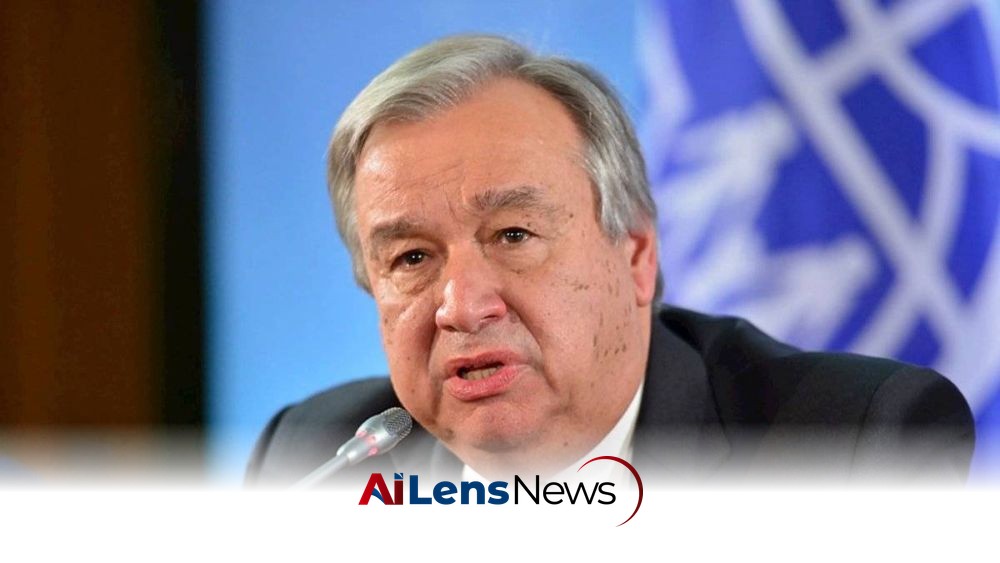


Antonio Guterres calls for an end to hostilities in the Middle East and restoration of navigational rights in key straits, warning of global instability.
Doha, Qatar Aug 1, 2026 ALN: United Nations Secretary-General Antonio Guterres has called for an end to the fighting across the Middle East and urged the full restoration of international navigational rights and freedoms in and around the Strait of Hormuz and the Bab El Mandeb Strait. This statement comes in the wake of escalating tensions and conflict in the region, which have drawn international concern and condemnation.
"The fighting must stop everywhere in the region. International navigational rights and freedoms in and around the Strait of Hormuz and Bab El Mandeb must be fully restored," Guterres said, warning that the military escalation that began six months ago has rapidly evolved from a regional conflict into a source of global instability. The Strait of Hormuz is a crucial maritime corridor, through which approximately 20% of the world's oil passes. Any disruption in this vital passage can have far-reaching implications, not only for the countries directly involved in the conflict but for global energy prices and supply chains.
The Strait of Hormuz serves as a critical gateway for oil exports from the Persian Gulf, making it a focal point of geopolitical tension. The region is home to some of the largest oil reserves in the world, and its stability is vital for maintaining the flow of energy resources to global markets. The strategic importance of this waterway cannot be overstated; it is not only vital for oil but also for liquefied natural gas (LNG) shipments, which are increasingly important in the global energy transition. Any military action or conflict in this area can lead to shipping delays, increased shipping insurance rates, and ultimately higher prices for consumers worldwide.
Guterres highlighted that the conflict has disrupted trade through the Strait of Hormuz, driven up the prices of food and key fertilizers, and affected global energy markets and supply chains. The ongoing violence has created an environment of uncertainty, which has led to increased insurance costs for shipping companies and a reluctance to navigate through these waters. This situation is particularly concerning given the current global economic climate, where supply chain disruptions and inflation are already prevalent. The interconnectedness of global economies means that local conflicts can have ripple effects that are felt far beyond their geographic boundaries.
"Around the world, we see families struggling to put food on the table, farmers unable to afford essential inputs, and vulnerable countries being pushed to the brink," Guterres added. The Secretary-General's remarks underscore the interconnected nature of global economies and how conflicts in one region can have cascading effects worldwide. The rising costs of basic commodities, exacerbated by the conflict, threaten to deepen existing inequalities and push more people into poverty. The ongoing violence and instability in the Middle East can hinder international efforts to combat food insecurity, especially in a world where millions are already facing hunger.
Separately, the United Nations World Food Programme (WFP) warned that the deteriorating situation in the Middle East could leave about 45 million people facing acute food insecurity. The agency stated that rising prices and slowing economic growth threaten to push millions more into poverty, underscoring the urgent need to prevent further escalation and protect vulnerable populations. The WFP's alarming assessment highlights the human cost of conflict, particularly in a region where many rely on agriculture and trade for their livelihoods. The implications of food insecurity can be dire, leading to increased malnutrition, social unrest, and long-term developmental challenges.
The Bab El Mandeb Strait, another critical chokepoint mentioned by Guterres, lies between Yemen on the Arabian Peninsula and Djibouti in the Horn of Africa. It connects the Red Sea to the Gulf of Aden and is vital for shipping routes that serve Europe, Asia, and beyond. Any disruption in this area could similarly impact global trade and energy supplies, making it imperative for international stakeholders to prioritize peace and stability. The Bab El Mandeb Strait is also significant for military strategy, as it serves as a passage for naval forces and is closely monitored by various countries due to its importance for maritime security.
In recent months, the Middle East has seen a rise in hostilities, with various factions and state actors involved in ongoing conflicts. The situation in Yemen, for example, has deteriorated significantly, with a humanitarian crisis that has left millions in dire need of assistance. The ongoing war, which has persisted for years, has been marked by widespread violence and a blockade that has severely restricted access to food, medicine, and other essential supplies. The humanitarian situation in Yemen is one of the worst in the world, with millions facing famine and disease as a result of the conflict and economic collapse.
The implications of the current situation extend beyond immediate humanitarian concerns. As nations grapple with the fallout from the conflict, there is a growing recognition of the need for diplomatic solutions and multilateral engagement. The UN has often played a pivotal role in mediating disputes and facilitating dialogue, and Guterres' call for an end to hostilities is a reminder of the organization's commitment to fostering peace. Diplomatic efforts, however, are often hindered by the complex web of alliances and rivalries that characterize the region, making it essential for the international community to work collaboratively to address these challenges.
Moreover, the geopolitical landscape in the Middle East is complex, with various nations pursuing their interests, often at the expense of regional stability. The involvement of external powers has further complicated the situation, as different countries back opposing sides in various conflicts. This multifaceted dynamic requires careful navigation to avoid exacerbating tensions and to promote a sustainable resolution. The role of international actors, including regional powers, is critical in shaping the outcome of these conflicts, and their engagement will be necessary for any lasting peace.
As the international community watches the developments in the Middle East, the need for a cohesive response becomes increasingly clear. Addressing the root causes of conflict, promoting economic development, and ensuring the protection of human rights are essential components of any long-term solution. The UN's involvement will be crucial in coordinating efforts and mobilizing resources to address the humanitarian needs arising from the ongoing violence. The international community must also consider the broader implications of these conflicts on global security and economic stability, as the interconnected nature of today’s world means that crises in one region can have profound effects elsewhere.
In conclusion, Secretary-General Guterres' call for an end to the fighting in the Middle East and the restoration of navigational rights is a clarion call for action. The implications of the ongoing conflict are profound, affecting not only the immediate region but also the global economy and humanitarian landscape. As the situation evolves, it is imperative for the international community to remain engaged and committed to finding a peaceful resolution that prioritizes the well-being of affected populations and ensures stability in one of the world's most volatile regions. The path forward will require a concerted effort from all stakeholders to address the underlying issues and foster an environment conducive to peace and prosperity.
To learn more about the latest developments in Culture & Society, stay updated with our exclusive reports and analyses on AiLensNews.

