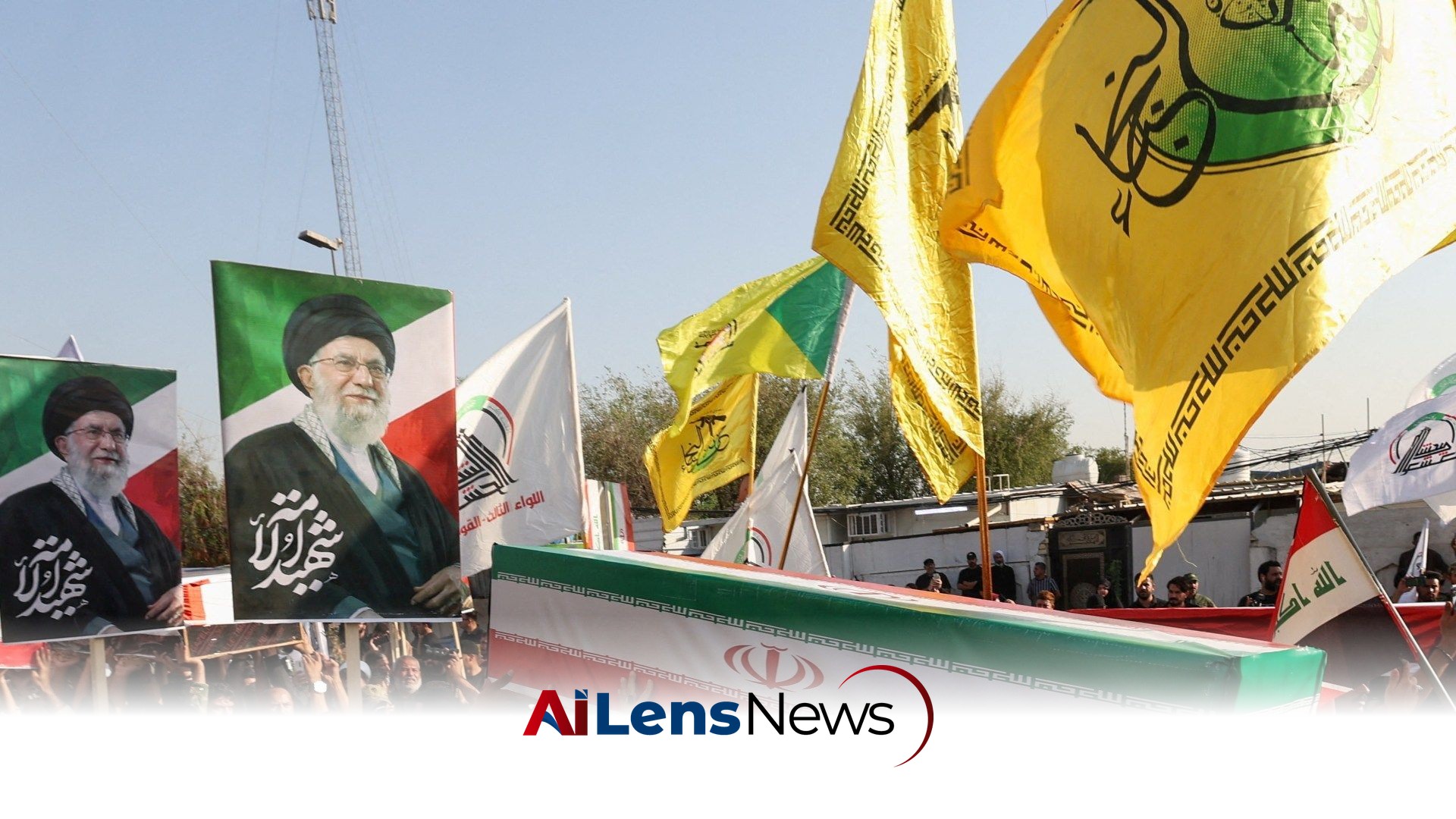


As tensions rise following joint US-Saudi strikes in Iraq, Trump threatens severe retaliation, coinciding with reports of Iranian casualties.
Doha, Qatar Jul 30, 2026 ALN: In a significant escalation of rhetoric, former President Donald Trump has threatened to respond 'very hard' to recent military actions in the Middle East, particularly in relation to Iran. This warning comes in the wake of reports that four Iranians were killed during joint US-Saudi airstrikes in Iraq, heightening fears of further conflict in the region.
The strikes, which have drawn widespread condemnation from Iranian officials, are part of a broader military strategy aimed at curbing Iranian influence in Iraq and the surrounding areas. Iranian media has been vocal in reporting the casualties, framing them as martyrs in the ongoing struggle against foreign intervention. This framing is significant as it resonates with a considerable segment of the Iranian population, who view military actions against their country as violations of sovereignty and dignity.
The tensions between the US and Iran have been simmering for years, exacerbated by a series of military engagements and retaliatory strikes. The roots of this conflict can be traced back to the 1979 Iranian Revolution, which led to the overthrow of the US-backed Shah of Iran and the establishment of the Islamic Republic. This revolution marked a pivotal moment in Middle Eastern geopolitics, as it shifted the balance of power and led to a deep-seated animosity between the two nations.
Since then, relations between the two nations have been characterized by hostility, marked by events such as the Iran Hostage Crisis, the Iran-Iraq War, and the ongoing disputes over Iran's nuclear program. The Iran Hostage Crisis in 1979, where American diplomats were held hostage for 444 days, solidified a narrative of mistrust and animosity that has persisted for decades. The Iran-Iraq War, which lasted from 1980 to 1988, further entrenched divisions, as the United States supported Iraq in its conflict against Iran.
In recent years, the situation has been further complicated by the US's withdrawal from the Joint Comprehensive Plan of Action (JCPOA) in 2018, a move that was met with international criticism and led to the re-imposition of sanctions on Iran. These sanctions have severely impacted Iran's economy, leading to increased tensions and a series of military confrontations in the region. The US has accused Iran of supporting proxy groups in Iraq, Syria, and Lebanon, which has fueled further military responses. This support for proxy groups has allowed Iran to extend its influence across the region, creating a network of allied militias that can act on its behalf, complicating US efforts to stabilize the area.
Trump's statement has raised alarms among analysts and political leaders, who fear that such rhetoric could lead to a further escalation of military actions. His comments suggest a willingness to engage in a more aggressive stance against Iran, which could have dire consequences for US foreign relations and the safety of American troops in the region. The potential for miscalculations or misunderstandings between the two nations increases with such heightened rhetoric, raising the stakes for military engagements.
The implications of Trump's threats extend beyond immediate military responses. Analysts warn that a more aggressive US posture could provoke Iran to respond with asymmetric warfare tactics, including cyber attacks, attacks on shipping in the Strait of Hormuz, or support for militant groups targeting US interests in the region. Such actions could lead to a cycle of retaliation that spirals out of control, drawing in other regional players and potentially leading to a broader conflict. The prospect of a military conflict involving Iran raises concerns not only for regional stability but also for global security, as the ramifications could extend far beyond the Middle East.
Iranian officials have condemned the strikes and Trump's threats, vowing to retaliate against any further aggression. The Iranian government has called for unity among its citizens and allies, emphasizing the need to stand firm against perceived threats from the US and its allies. Iranian President Ebrahim Raisi has stated that any act of aggression will be met with a decisive response, reflecting a long-standing policy of maintaining a posture of deterrence against foreign intervention. This rhetoric serves to bolster national pride and consolidate internal support for the government amidst external pressures.
Moreover, Iranian leaders have sought to rally support from their regional allies, including groups like Hezbollah in Lebanon and various militia factions in Iraq and Syria. This coalition-building effort aims to create a united front against US military actions, further complicating the security dynamics in the region. The involvement of these groups not only increases the potential for conflict but also highlights the interconnected nature of Middle Eastern geopolitics, where local disputes can quickly escalate into broader regional confrontations.
The situation remains fluid, with the potential for further military engagement looming. Analysts are closely monitoring the developments, as both sides prepare for possible escalations that could lead to a wider conflict in the region. The presence of US forces in Iraq and Syria, coupled with the activities of Iranian-backed militias, creates a volatile environment where miscalculations could have catastrophic consequences. The risk of inadvertent clashes is heightened by the proximity of US and Iranian forces, and the potential for a single incident to spark a larger confrontation is a significant concern for military planners.
Furthermore, the geopolitical implications of this conflict extend beyond the immediate region. A significant escalation between the US and Iran could have repercussions for global oil markets, as the Strait of Hormuz is a crucial passage for oil shipments. Any disruption in this area could lead to spikes in oil prices, affecting economies worldwide. The Strait of Hormuz is a vital chokepoint through which about a fifth of the world's oil passes, and any military conflict that disrupts this flow could have far-reaching economic consequences, potentially leading to a global energy crisis.
As the world watches, the implications of Trump's threats and the ongoing military actions will likely shape the geopolitical landscape in the Middle East for the foreseeable future. The interplay of domestic politics in the US, Iran's regional ambitions, and the responses from other nations will continue to influence the trajectory of this conflict. The involvement of other global powers, such as Russia and China, who have vested interests in the region, further complicates the situation, as they may seek to leverage the conflict to expand their own influence.
In conclusion, the current tensions between the US and Iran represent a critical juncture in Middle Eastern geopolitics. The potential for escalation remains high, and the international community is urged to seek diplomatic solutions to prevent a further deterioration of the situation. As both sides navigate this precarious landscape, the stakes are higher than ever, with the possibility of broader conflict looming on the horizon. The outcome of this confrontation may well determine the future of US-Iran relations and the stability of the entire Middle Eastern region.
To learn more about the latest developments in Culture & Society, stay updated with our exclusive reports and analyses on AiLensNews.

