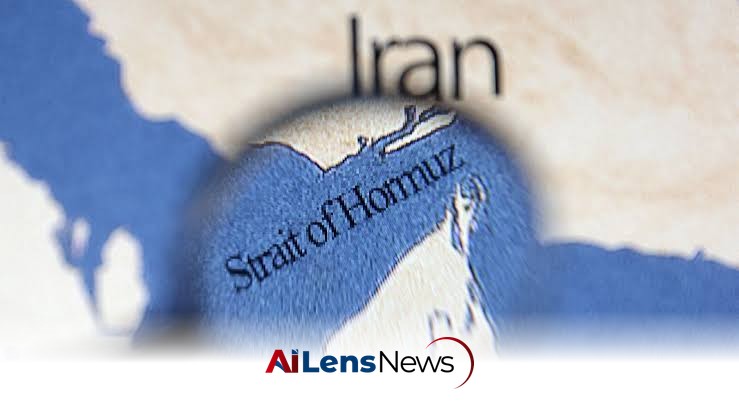


Iran's Islamic Revolutionary Guard Corps has announced that the Strait of Hormuz will remain closed due to ongoing tensions with the United States, raising concerns over maritime security.
Islamabad, Pakistan Jul 22, 2026 ALN: Iran’s Islamic Revolutionary Guard Corps (IRGC) has declared that the Strait of Hormuz will remain closed as regional tensions with the United States escalate. This announcement has raised significant concerns regarding maritime security and global energy routes, given the strategic importance of the Strait of Hormuz in international trade.
The Strait of Hormuz is a narrow waterway that connects the Persian Gulf with the Gulf of Oman and ultimately the Arabian Sea. This chokepoint is crucial for global energy supplies, as it is the transit route for approximately 20% of the world's oil. Disruptions in this area can lead to substantial increases in oil prices, affecting economies worldwide, particularly those heavily reliant on oil imports. The strait is also a critical passage for liquefied natural gas (LNG) shipments, making it vital not only for oil-exporting nations in the Gulf but also for energy consumers across Europe and Asia.
According to Iranian state media, the IRGC reported that two tankers caught fire after explosions while attempting to navigate what it described as an unsafe route south of the Strait of Hormuz. The details surrounding these incidents remain murky, and the cause of the explosions has not been definitively established. Such incidents are not uncommon in the region, which has seen a rise in maritime confrontations and incidents involving both Iranian and foreign vessels. In recent years, the Gulf has witnessed a series of attacks on tankers, often attributed to rising tensions between Iran and the U.S. and its allies, with both sides accusing each other of provocative actions.
The IRGC stated that the waterway would remain closed as long as U.S. military actions in the region persist. This statement underscores the heightened military presence of the United States in the Gulf, which has been a point of contention between Washington and Tehran. The U.S. has deployed various naval assets to the region in response to perceived threats from Iran, particularly in light of previous incidents involving attacks on oil tankers and U.S. military installations. The U.S. Navy's presence in the Gulf is designed to ensure the safety of maritime navigation and to deter Iranian aggression, yet it has also contributed to the escalating cycle of threats and counter-threats.
Moreover, the IRGC claimed that American military equipment and assets were destroyed in Bahrain’s Muharraq and Riffa areas. These claims, however, have not been independently verified and should be viewed with caution. The information landscape in such conflict-prone regions is often fraught with misinformation, and both sides may exaggerate or misrepresent events to bolster their narratives. The potential for misinformation complicates the already tense environment, making it difficult for international observers to ascertain the truth of events as they unfold.
In addition, the Iranian force indicated that the reported attacks on U.S. military assets in Bahrain were part of preparations for what it termed a “major operation.” This assertion raises alarms, as it suggests that Iran may be preparing for escalated military action, which could further destabilize the region. The mention of a “major operation” is particularly concerning, as it implies a potentially significant escalation in hostilities. Such developments could lead to a broader conflict that might involve not only Iran and the U.S. but also their respective allies in the region, further complicating an already volatile geopolitical landscape.
Furthermore, the IRGC asserted that drone attacks had successfully destroyed U.S. military equipment and facilities in Kuwait, although authorities in the affected countries had not immediately confirmed these assertions. The use of drones in military operations is a growing trend in modern warfare, and Iran has been increasingly vocal about its capabilities in this area. The implications of such drone attacks could extend beyond immediate military objectives, potentially drawing other nations into a wider conflict. The proliferation of drone technology has changed the dynamics of warfare, allowing for asymmetric engagements that can be difficult to counter.
The latest statements from the IRGC come amid escalating military exchanges between Iran and the United States in the Gulf region. The U.S. has accused Iran of conducting aggressive operations against its interests and allies, while Iran has portrayed its actions as defensive measures against foreign intervention. This tit-for-tat dynamic complicates efforts to de-escalate tensions and reach a diplomatic resolution. The stakes are high, as both nations have significant military capabilities and a miscalculation could lead to unintended consequences, including military confrontations that could spiral out of control.
International governments continue to monitor the situation closely, assessing potential impacts on security and shipping. The situation is particularly precarious, as any further escalation could lead to military confrontations that might involve not only the U.S. and Iran but also other regional players and international stakeholders. Countries that rely on the Strait of Hormuz for oil imports are especially concerned about the implications of a prolonged closure or conflict in the area. The economic repercussions could be severe, with potential spikes in oil prices leading to inflation and economic instability in oil-dependent nations.
The geopolitical landscape surrounding the Strait of Hormuz is also influenced by broader issues, including the ongoing tensions between Iran and Saudi Arabia, the civil war in Yemen, and the Israeli-Palestinian conflict. Each of these factors contributes to the complexity of the situation and the potential for miscalculations or unintended consequences. The rivalry between Iran and Saudi Arabia, in particular, has fueled a proxy conflict across the region, complicating efforts to stabilize the Gulf and surrounding areas.
Moreover, the role of global powers in this region cannot be overlooked. The United States has historically maintained a strong military presence in the Gulf to ensure the free flow of oil and to counter Iranian influence. However, the recent shift in U.S. foreign policy, including a focus on reducing military engagements abroad, has raised questions about the future of U.S. involvement in the region. This shift has created a vacuum that Iran may seek to exploit, potentially increasing its assertiveness in the Gulf and beyond.
As tensions continue to rise, the international community is urged to engage in diplomatic efforts to address the underlying issues that fuel hostilities. The potential for economic sanctions, negotiations, and multilateral talks must be considered as viable options to prevent further escalation. The closure of the Strait of Hormuz would not only disrupt global energy markets but could also have broader implications for international trade and security. The potential for a wider conflict in the Gulf poses risks not just to regional stability but to global economic health.
In conclusion, the IRGC's declaration regarding the closure of the Strait of Hormuz highlights the fragile state of relations between Iran and the United States, as well as the potential ramifications for global energy security. As the situation develops, it is crucial for all parties involved to exercise restraint and seek diplomatic avenues to resolve their differences, thereby ensuring stability in this vital region. The international community must remain vigilant and proactive in seeking solutions to avoid further escalation and to promote peace in a region that is critical to global trade and security.
To learn more about the latest developments in Culture & Society, stay updated with our exclusive reports and analyses on AiLensNews.

