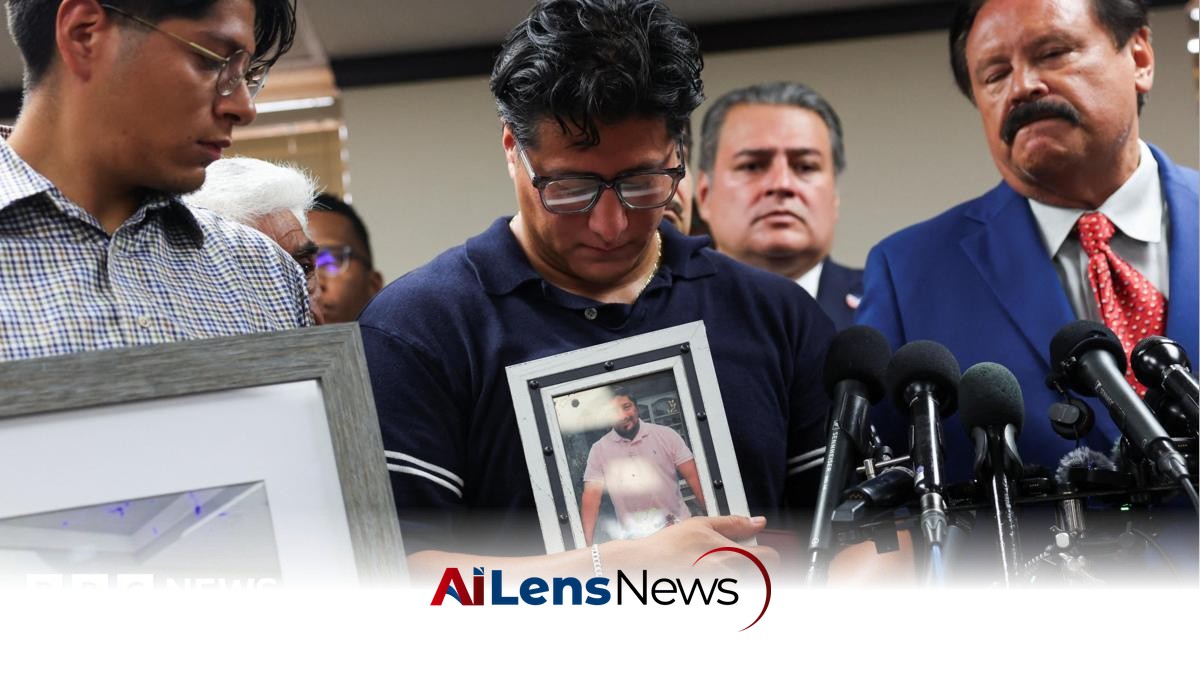


Lorenzo Salgado Araujo was killed during a traffic stop by immigration agents who were looking for a different individual, according to U.S. officials.
New Delhi, India Jul 11, 2026 ALN: A man who was fatally shot by immigration agents at a traffic stop in Houston on Tuesday was not the intended target, US officials say.
Lorenzo Salgado Araujo, a Mexican national, was stopped at 07:00 local time (12:00 GMT) while driving to work and was killed shortly afterwards. His death has raised significant concerns regarding the practices of U.S. Immigration and Customs Enforcement (ICE) and the broader implications of immigration enforcement in the United States.
The Department of Homeland Security (DHS) stated that the stop was initiated because agents observed "a white van with an individual who resembled the target" of their operation. They have claimed that the officer shot in self-defense. However, the circumstances surrounding the shooting have been contested by eyewitnesses and family members, leading to calls for accountability and transparency.
Passengers in the van and the victim's family have disputed the department's account, leading to an investigation by the agency's legal watchdog into the fatal shooting. This investigation is critical, as it aims to clarify the events that led to Salgado's death and to assess whether the use of deadly force was justified. The agents involved in the shooting were not wearing body cameras, and officials have not released any images or videos related to the incident. A DHS spokesperson mentioned that half of its field officers are now equipped with body cameras, with the remaining officers expected to receive them in the next 60 days. This lack of video evidence has fueled skepticism about the official narrative and has intensified calls for reform within ICE and DHS.
Salgado, 52, had been working as a builder for three decades in the Houston area after coming to the U.S. as an undocumented migrant, according to his family. They stated he had no criminal record and was close to obtaining a work permit. At the time of the incident, he was driving himself and three co-workers to a job site. His family’s description of Salgado as a hardworking individual who contributed to his community adds a personal dimension to the tragedy, highlighting the human cost of immigration enforcement practices.
In an earlier statement, DHS indicated that agents had "attempted to conduct a vehicle stop as part of a targeted enforcement operation to arrest an illegal alien." They alleged that Salgado "attempted to evade arrest" and rammed an ICE vehicle, prompting the officer to fire his weapon in self-defense. This assertion raises questions about the protocols followed by ICE agents during such operations and whether the situation could have been de-escalated without resorting to lethal force.
Salgado was taken to the hospital, where he succumbed to his injuries. The aftermath of the shooting has led to significant public outcry, with many community members questioning the justification for the use of deadly force in this instance. Activists argue that the incident reflects a broader pattern of aggressive tactics employed by ICE, particularly in urban areas where immigrant communities often feel targeted.
On Thursday, DHS reported that agents had seen two white vans weeks prior to the incident at an address they had surveilled. When they returned on Tuesday, they saw "a white van with an individual who resembled the target" and initiated the traffic stop. This detail has been met with skepticism, particularly by those who argue that the profiling of individuals based on appearance can lead to tragic outcomes, as evidenced by Salgado's death.
The attorney for the men inside the van with Salgado Araujo stated that their account contradicts the Department of Homeland Security's version of events. "All three of my clients reiterated that at no point was there ever an agent standing in front of the vehicle, nor was an agent ever placed in the line of danger," the attorney remarked. This discrepancy highlights the need for an independent investigation to ascertain the truth of what transpired during the traffic stop.
Salgado Araujo's sons have also disputed DHS' accounts, expressing their grief and frustration over the loss of their father and the circumstances surrounding his death. The incident has prompted protests in Houston, Texas's most populous city, with four Democratic members of Congress demanding an independent investigation into Salgado's death. In a letter to DHS, Sylvia Garcia, Al Green, Lizzie Fletcher, and Christian Menefee expressed concern that this was not the first time ICE agents have used unnecessary, deadly force. Their call for an independent investigation reflects a growing demand for accountability in cases involving law enforcement and immigrant communities.
They urged Markwayne Mullin, head of the Department of Homeland Security, to remember the cases of Renee Good and Alex Pretti, two U.S. citizens killed by federal agents in Minneapolis in January. Referring to Salgado's shooting, they stated that "instead of answers and accountability, DHS and ICE released a statement echoing the same stories we have heard before, claiming an evasion of arrest, weaponization of a vehicle, and that the fatal shooting was a result of self-defense." This pattern of responses from DHS and ICE has raised alarms about the agency's accountability and transparency, especially in light of past incidents involving the use of deadly force.
Federal investigations have already begun, but according to the Houston police chief, there are restrictions on a state probe. The Office of Inspector General for DHS is investigating the shooting death, while the FBI Houston is leading an investigation into the potential assault on a federal law enforcement officer. These investigations are critical not only for determining the facts of the case but also for restoring public trust in law enforcement agencies tasked with immigration enforcement.
At the request of the Houston mayor, the head of the Houston Police Department (HPD) sent a letter to DHS indicating that resources would be made available to support the investigation into the fatal shooting in a "timely, transparent, and thorough manner." Chief Noe Diaz's letter emphasized the seriousness of the matter and the need for a thorough investigation. This collaboration between local and federal authorities may help ensure that the investigation is conducted with the necessary rigor and impartiality.
In the aftermath of the shooting, the Mexican government announced plans to file criminal complaints in the U.S. regarding the deaths of more than a dozen of its citizens in U.S. custody. Mexican Foreign Minister Roberto Velasco stated that 14 Mexicans had died while in ICE custody and another three during ICE "arrest operations." Velasco mentioned that he had been instructed by Mexico's President Claudia Sheinbaum to file the complaints, aiming to have the deaths of Mexicans in ICE custody or operations investigated as criminal matters. This intervention by the Mexican government underscores the international implications of immigration enforcement practices in the U.S. and the potential for diplomatic tensions arising from incidents involving foreign nationals.
Salgado Araujo is at least the eighth person to die during the Trump administration's immigration operations, according to the Associated Press. No immigration officers have been charged in these deaths, raising concerns about the accountability of federal agents in cases involving the use of deadly force. The lack of accountability for officers involved in fatal incidents has been a point of contention among advocates for immigrant rights, who argue that systemic changes are necessary to prevent further tragedies.
The circumstances surrounding Lorenzo Salgado Araujo's death highlight the complexities and challenges of immigration enforcement in the United States. As the investigations continue and public scrutiny intensifies, the case serves as a reminder of the urgent need for reform within ICE and DHS, as well as the importance of protecting the rights of individuals within immigrant communities. The outcome of this situation may have lasting implications for immigration policy, community relations, and the treatment of migrants in the U.S.
To learn more about the latest developments in Migration & Refugees, stay updated with our exclusive reports and analyses on AiLensNews.

