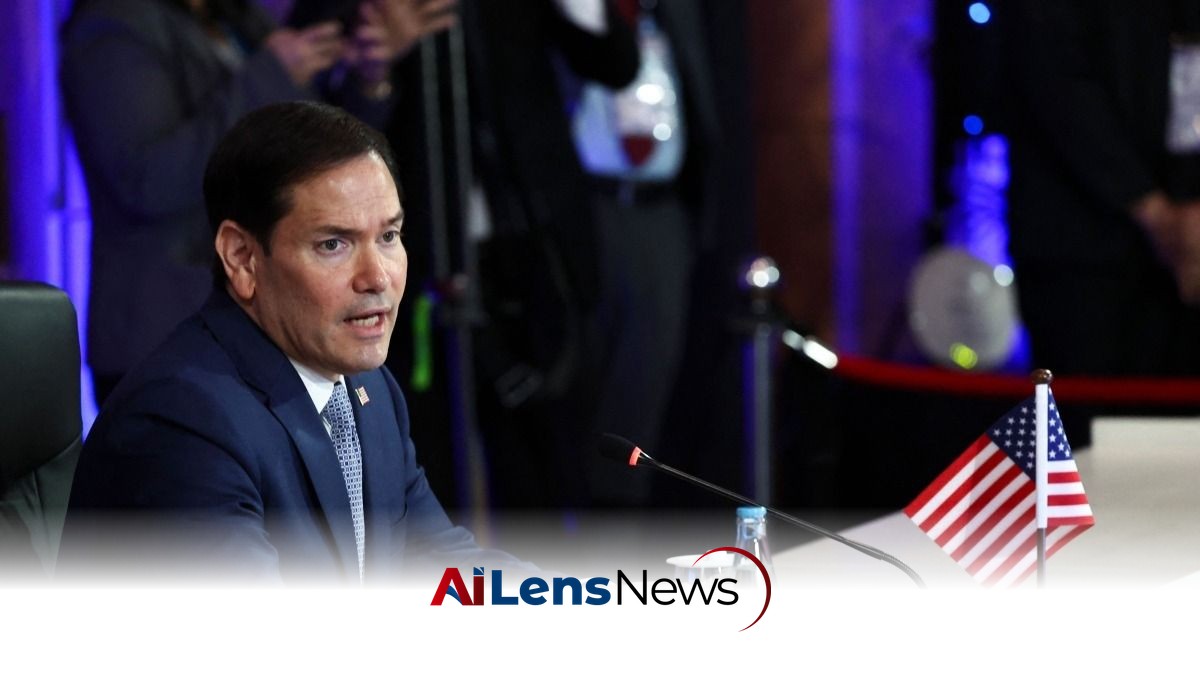


US Secretary of State Marco Rubio emphasizes readiness for dialogue with Iran if it shows genuine commitment, during a meeting with ASEAN ministers.
Kuwait City, Kuwait Jul 22, 2026 ALN: As the geopolitical landscape of the Middle East continues to evolve, the United States has reaffirmed its stance regarding diplomatic engagement with Iran. In a significant address, US Secretary of State Marco Rubio articulated Washington's willingness to enter negotiations with Tehran, contingent upon Iran's demonstrated commitment to meaningful dialogue. This development comes at a time of heightened military tensions in the region, with potential implications for international security and energy markets.
Rubio's remarks were made during a meeting with foreign ministers from the Association of Southeast Asian Nations (ASEAN) in Manila, where he emphasized the critical nature of diplomatic engagement in resolving conflicts. He stated, "If they are serious, we are serious," indicating that the US is prepared to engage in discussions if Iran shows a genuine willingness to negotiate. However, he also underscored the necessity for the US to protect its interests and those of its allies if Iran fails to engage in good faith. This dual approach highlights the delicate balance the US seeks to maintain between diplomacy and national security.
The context of Rubio’s statements reflects a broader trend in US foreign policy, particularly regarding Iran. The US has long viewed Iran's actions in the region with suspicion, particularly its support for proxy groups and its influence in conflicts across the Middle East. The ongoing tensions have raised questions about Iran's intentions and its commitment to international norms, particularly regarding maritime security.
One of the focal points of Rubio's address was the Strait of Hormuz, a strategically vital waterway through which a significant portion of the world's oil and liquefied natural gas exports pass. The Strait is not only crucial for global energy supplies but also serves as a barometer for regional stability. Rubio cautioned that any attempts by Iran to exert control over this international waterway would pose serious threats to maritime security, with potential repercussions that could extend far beyond the Middle East.
He warned that allowing any single nation to control such a critical shipping lane could set a dangerous precedent, potentially enabling similar actions in other regions of the world. The implications of this are profound, as it could lead to increased tensions in other maritime regions, where countries may feel emboldened to assert control over international waterways. The international community has consistently stressed the importance of freedom of navigation in these crucial maritime corridors, recognizing that disruptions could lead to broader geopolitical conflicts.
The situation in the Middle East has been exacerbated by a series of conflicts and power struggles, with Iran often at the center of these tensions. The US has consistently sought to counter Iran's influence, particularly through sanctions and military presence in the region. However, the effectiveness of these measures has been debated, with critics arguing that they have not significantly altered Iran's behavior. The sanctions regime has faced criticism for its humanitarian impact on the Iranian population, raising ethical questions about the effectiveness of coercive diplomacy.
Rubio's comments come amid a backdrop of renewed fighting in the Middle East, which has raised alarms among international leaders and organizations. The ASEAN foreign ministers, during their meeting, expressed deep concern over the escalating violence and urged all parties involved to exercise restraint. They emphasized the importance of dialogue as a means to achieve stability in the region, reflecting a shared understanding of the need for diplomatic solutions in the face of rising tensions.
The ASEAN bloc, comprising ten Southeast Asian nations, has historically played a role in promoting peace and stability in the region. Their position on the Middle East conflict underscores the interconnectedness of global security issues, where instability in one region can have far-reaching effects on others. The call for dialogue and restraint from ASEAN ministers highlights the importance of multilateral engagement in addressing complex geopolitical challenges. ASEAN's involvement is particularly noteworthy as it represents a collective voice from Southeast Asia, an area that is often seen as distant from Middle Eastern conflicts yet significantly impacted by global energy dynamics.
As the US navigates its foreign policy approach towards Iran, the emphasis on negotiation reflects a potential shift from a purely adversarial stance to one that seeks to incorporate diplomacy as a tool for conflict resolution. However, the effectiveness of such an approach remains contingent on Iran's response and willingness to engage in constructive discussions. The historical context of US-Iran relations, marked by events such as the 1979 Iranian Revolution and subsequent hostage crisis, continues to cast a long shadow over current diplomatic efforts.
The implications of these developments extend beyond the immediate context of US-Iran relations. The stability of the Strait of Hormuz and the broader Middle East is critical not only for regional actors but also for global economies that rely heavily on energy supplies from this area. Disruptions in this corridor could lead to significant fluctuations in oil prices, impacting economies worldwide. The potential for increased oil prices can have cascading effects on global markets, influencing everything from inflation rates to international trade dynamics.
In conclusion, the US's openness to negotiations with Iran, as articulated by Secretary of State Marco Rubio, represents a critical juncture in the ongoing tensions in the Middle East. The emphasis on dialogue, coupled with a firm stance on protecting national interests, reflects the complexities of international diplomacy in an era marked by uncertainty and conflict. The responses from Iran and the broader international community will likely shape the future trajectory of US-Iran relations and the stability of the region as a whole. As the situation unfolds, the world will be watching closely to see if this diplomatic overture will lead to a meaningful reduction in hostilities or if the cycle of tension will continue unabated.
To learn more about the latest developments in Culture & Society, stay updated with our exclusive reports and analyses on AiLensNews.

