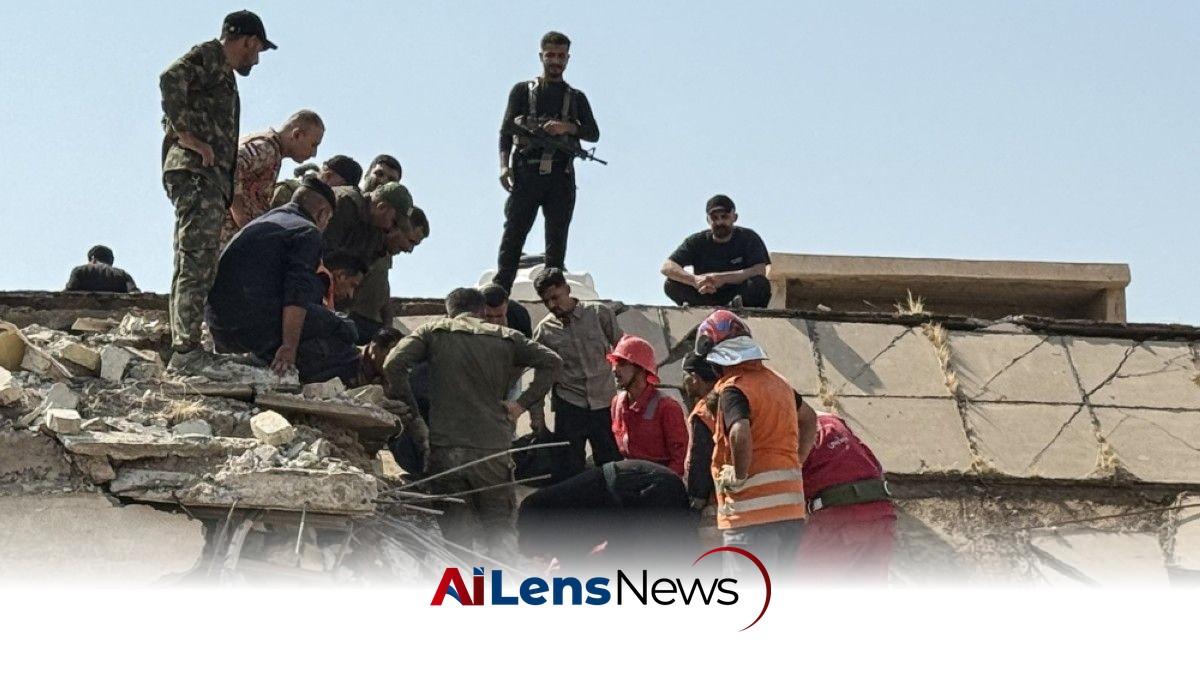


Despite escalating military actions, Pakistan confirms that negotiations between the US and Iran continue, focusing on de-escalation and the Strait of Hormuz.
Kuwait City, Kuwait Jul 31, 2026 ALN: Mediator Pakistan insisted on Thursday that negotiations between Iran and the United States were ongoing, even as Washington carried out a “heavy wave of strikes” on its foe in retaliation for fresh attacks targeting Jordan. The last two days have seen Saudi Arabia join the US in striking militant groups in Iraq, and Egypt come under fire for the first time with a drone attack at a Mediterranean port.
On Thursday morning, Jordan reported intercepting incoming Iranian missiles for a second day running, while Kuwait said an Iranian strike that hit a building belonging to a Chinese company killed one person. These developments highlight the escalating tensions in the region, which have been exacerbated by a series of military actions and retaliatory strikes.
The return to direct hostilities followed a brief pause in fighting meant to give talks a boost. “Negotiations between parties are ongoing, particularly on (the) Strait of Hormuz and to de-escalate,” Pakistani foreign ministry spokesman Tahir Andrabi told reporters in Islamabad. Pakistan had helped to broker a deal between the warring sides laying the groundwork for negotiations on a permanent resolution, and Andrabi said it was doing its “utmost to bring all parties back” to technical talks under the agreement. This involvement underscores Pakistan's role as a mediator in a conflict that has significant implications not only for the Middle East but also for global energy markets and international relations.
Previous talks between the two parties following an April truce stalled, with the ceasefire collapsing earlier this month and Iran again slamming shut the Strait of Hormuz, a vital conduit for Middle Eastern oil and gas. This strait is critical to global energy supplies, as approximately 20% of the world's oil passes through it. Iran’s Revolutionary Guards said on Thursday that two oil tankers attempting to transit the Strait of Hormuz with US support turned back after one of them caught fire. Such incidents raise concerns about the security of maritime navigation in one of the world's most strategically important waterways.
Strikes in Iran
Earlier, the US military said it had “successfully completed a heavy wave of strikes against Iran”, hitting dozens of Revolutionary Guard targets including military command centers. US President Donald Trump had vowed to hit Iran “hard” after Tehran’s previous attack on Jordan, its first in the region in days. Iran’s state news agency IRNA reported hits on several cities in the southwestern Khuzestan province, as well as on Qeshm island in the Gulf. The escalation of military actions raises questions about the potential for further conflict and the effectiveness of diplomatic efforts to resolve the situation.
Areas around the cities of Abadan, Shadegan, Arvandkenar and Ahvaz—all in Khuzestan—were struck, the agency said, citing provincial authorities. The Jordanian army reported a new volley of Iranian missiles on Thursday morning, saying five had been shot down, causing no casualties. Kuwait’s defense ministry, meanwhile, denounced a “heinous” Iranian attack that “targeted a building belonging to a Chinese company in the north of the country, resulting in the death of one worker and causing severe material damage.” This incident underscores the broader implications of the conflict, as it not only affects the nations directly involved but also impacts foreign entities operating in the region.
Egypt hit
Since it began in February with a wave of US-Zionist strikes on Iran, the Middle East war has touched every country in the region, and some outside it. While energy facilities elsewhere in the region have been repeatedly targeted by drones and missiles, Egypt had been spared until Wednesday, when an attack at a gas import hub sparked a fire that damaged two ships. The government confirmed on Thursday that a drone was responsible for the blaze, noting that no one had claimed responsibility. It added that an inquiry was ongoing “to determine the circumstances of the incident and to take the necessary measures to preserve Egypt’s interests and national security.” The attack on Egyptian facilities marks a significant escalation, as it indicates that the conflict is spreading and that even countries that were previously unaffected are now at risk.
Maritime trade tracking firm Kpler identified the damaged ships as the Energos Winter storage and regasification vessel and the GasLog Salem tanker, saying they had been moved offshore after the incident. A private security monitor, UK-based Ambrey, reported that the US-owned-and-operated floating storage vessel had been hit by at least one drone. The authority that manages the port stated that it remained fully operational “with all terminals and berths experiencing regular vessel arrivals and departures, along with ongoing loading, unloading, and cargo handling of all types.” This suggests that, despite the recent attacks, the maritime trade infrastructure in Egypt is resilient, though the threat of further attacks raises concerns about the safety of shipping routes in the region.
The broader context of these developments is rooted in longstanding tensions between Iran and the United States, which have been exacerbated by a series of military confrontations and geopolitical maneuvers. The US has consistently viewed Iran's influence in the region as a threat, particularly in relation to its support for militant groups and its nuclear ambitions. Conversely, Iran perceives US military presence in the Middle East as an encroachment on its sovereignty and a direct threat to its national security.
As the situation continues to evolve, the implications for regional stability and international relations are profound. The ongoing negotiations, while crucial, may be overshadowed by the immediate military actions and retaliatory strikes. The potential for further escalation remains high, and the international community is closely monitoring the situation, particularly given the strategic importance of the region's energy resources and the potential for a broader conflict that could involve multiple countries.
In conclusion, the ongoing negotiations between the US and Iran amidst heavy military strikes and regional tensions reflect a complex and volatile landscape. The involvement of mediators like Pakistan highlights the potential for dialogue, but the immediate reality of conflict poses significant challenges to achieving a lasting resolution. As the situation develops, the necessity for sustained diplomatic efforts and conflict de-escalation will be critical in preventing further violence and instability in the region.
To learn more about the latest developments in Culture & Society, stay updated with our exclusive reports and analyses on AiLensNews.

