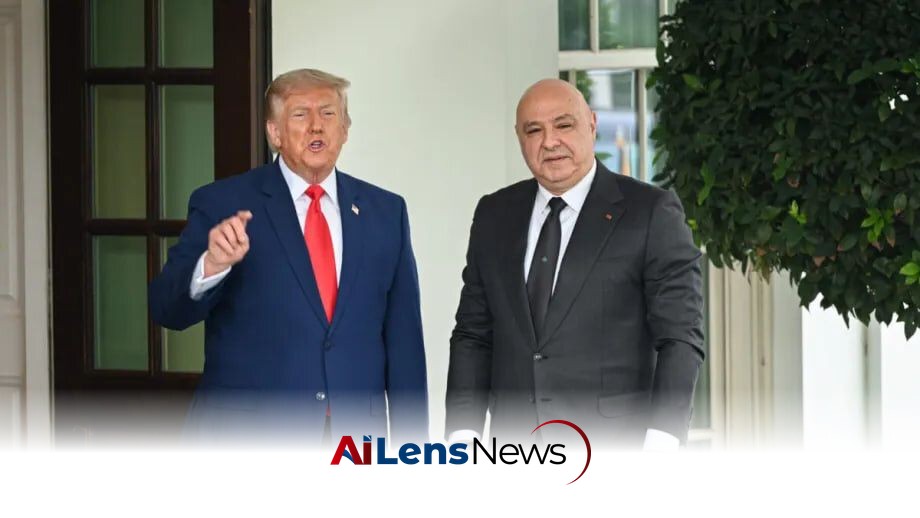


During a meeting with Lebanese President Joseph Aoun, US President Donald Trump expressed willingness to engage with Hezbollah if requested, emphasizing his approach to dialogue.
Tehran, Iran Jul 22, 2026 ALN: During a significant meeting at the Oval Office, US President Donald Trump expressed a willingness to engage in dialogue with Hezbollah, a group that is often characterized as a terrorist organization by the United States and many other countries. This statement came during a discussion with Lebanese President Joseph Aoun, who has a complex relationship with Hezbollah, which operates as both a political party and a militant group in Lebanon. Trump's openness to dialogue reflects a broader strategy of engaging with various factions in the Middle East, even those deemed controversial.
Hezbollah, founded in the early 1980s, emerged as a response to the Israeli invasion of Lebanon and has since positioned itself as a significant political and military force within the country. The group has been involved in numerous conflicts with Israel and is heavily supported by Iran, which complicates its standing in the eyes of the US and its allies. The US has imposed sanctions on Hezbollah and its leaders, citing their involvement in terrorism and destabilizing activities in the region. Trump's willingness to consider communication with such a group marks a departure from the traditional US stance, which has largely favored isolating organizations that are seen as threats to regional stability.
During the meeting, Trump stated, "I would speak to Hezbollah. I speak to everybody. I’ll speak to people that a lot of people think I shouldn’t be speaking to, and things work out." This comment not only underscores Trump's unconventional approach to diplomacy but also highlights his belief in direct communication as a means to resolve conflicts. The remark suggests that Trump sees potential pathways to peace or at least a reduction in hostilities through dialogue, even with groups that are widely criticized.
President Aoun's request for Trump to consider dialogue with Hezbollah is rooted in the complex political landscape of Lebanon. Hezbollah holds significant sway in Lebanese politics, having secured a considerable number of seats in the Lebanese parliament and maintaining a strong base of support among certain segments of the population. Aoun, who has sought to navigate Lebanon through its myriad challenges, including economic crisis and regional tensions, may view dialogue with Hezbollah as a necessary step to maintain stability within the country.
In addition to discussing Hezbollah, Trump addressed the issue of Israeli military presence in Lebanon. He noted that Israeli forces were in the process of redeploying to different sections, which reflects ongoing military operations and strategic adjustments by Israel in response to regional dynamics. Trump stated, "They’re in the process of redeploying to other sections, and again, they get along very well. That was a great agreement they signed with Lebanon, and they’re redeploying." This comment suggests that the US administration views the relationship between Israel and Lebanon as improving, despite the historical tensions that have characterized their interactions.
The complexities of US foreign policy in the Middle East are underscored by these discussions. The US has traditionally aligned itself with Israel and has been cautious in its dealings with groups like Hezbollah, which are often seen as impediments to peace. However, Trump's approach indicates a potential shift toward a more pragmatic engagement strategy, where dialogue is prioritized over isolation. This could have significant implications for US relations with both Lebanon and Israel, as well as for broader regional stability.
Moreover, the willingness to engage with Hezbollah could impact the US's relationships with its allies in the region, particularly Saudi Arabia and other Gulf states, which have taken a hardline stance against the group. The dynamics of US foreign policy are often influenced by these alliances, and any perceived shift in approach could lead to tensions among allies who may view engagement with Hezbollah as a concession to Iranian influence in the region.
The backdrop of this meeting is a Lebanon grappling with severe economic challenges, including a financial crisis that has led to widespread protests and calls for governmental reform. The Lebanese economy has been in freefall, with soaring inflation, currency devaluation, and a collapsing banking system. The political landscape is further complicated by the influence of various factions, including Hezbollah, which has been accused of exacerbating the crisis through its military engagements and political maneuvering.
In light of these challenges, Aoun's approach to engaging with Trump and seeking dialogue with Hezbollah can be seen as an attempt to stabilize Lebanon internally while navigating the pressures from external actors. The Lebanese leadership is under significant pressure to address the needs of its citizens, and maintaining a dialogue with influential groups like Hezbollah may be viewed as a strategic necessity.
As the situation in Lebanon continues to evolve, the implications of Trump's comments could reverberate throughout the region. Engaging with Hezbollah could lead to a more nuanced understanding of the group's role in Lebanese society and its influence over regional dynamics. However, it also raises questions about the potential for legitimizing groups that are viewed as adversaries by many in the international community.
Ultimately, this meeting between Trump and Aoun, and the subsequent comments regarding Hezbollah, reflect the complexities of diplomacy in the Middle East. The willingness to engage in dialogue with groups that have historically been marginalized or vilified could signal a shift in US foreign policy, one that prioritizes direct communication as a means to foster understanding and potentially resolve long-standing conflicts. However, the efficacy and consequences of such an approach remain to be seen, as the region continues to grapple with deep-seated tensions and challenges.
Hezbollah's dual role as a political party and a paramilitary organization complicates its perception both domestically and internationally. In Lebanon, it is seen by many as a defender against Israeli aggression, especially given its history of conflict with Israel, including the 2006 Lebanon War. However, its military capabilities and close ties to Iran have led to its designation as a terrorist organization by the US and several other nations. This dichotomy highlights the challenges of engaging with Hezbollah; while it wields substantial power in Lebanese politics, its militant activities are viewed with suspicion and hostility abroad.
Furthermore, the geopolitical landscape of the Middle East is increasingly complex, with shifting alliances and emerging threats. The Iranian influence in the region, particularly through groups like Hezbollah, poses a significant concern for many countries, including Israel, Saudi Arabia, and the US. As such, any dialogue with Hezbollah could be viewed as tacit acceptance of Iran's role in the region, which could strain US relations with its traditional allies.
The economic crisis in Lebanon, which has seen the country spiral into one of the worst financial collapses in modern history, adds another layer of urgency to the discussions. The Lebanese pound has lost over 90% of its value since late 2019, leading to widespread poverty and unemployment. The government has struggled to implement necessary reforms, and many Lebanese citizens have lost faith in their leaders, including President Aoun. In this context, the potential for dialogue with Hezbollah may be seen as a pragmatic approach to ensuring some level of stability amidst chaos.
Additionally, the historical context of US-Lebanon relations cannot be overlooked. The US has had a tumultuous relationship with Lebanon, especially during the Lebanese Civil War and the subsequent conflicts with Israel. The US has often been criticized for its lack of a coherent strategy in the region, oscillating between military intervention and diplomatic engagement. Trump's willingness to engage with Hezbollah may signal a departure from previous administrations' strategies, which often sought to isolate the group and its allies.
In conclusion, the meeting between President Trump and President Aoun, along with the discussions surrounding Hezbollah, represent a potential pivot in US foreign policy in the Middle East. The implications of such a shift could be profound, affecting not only Lebanon's internal dynamics but also the broader geopolitical landscape of the region. As the US navigates these complex waters, the balance between direct engagement and maintaining alliances with regional partners will be crucial in shaping future outcomes.
To learn more about the latest developments in Culture & Society, stay updated with our exclusive reports and analyses on AiLensNews.

