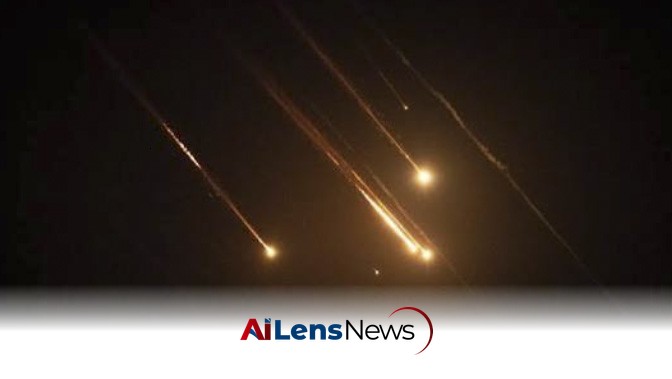


In a significant escalation, the US has initiated military strikes against Iran in response to attempted attacks on American forces in the Middle East.
New Delhi, India Jul 30, 2026 ALN: Washington, July 30 The United States has initiated a new series of military strikes against Iran in a move characterized by American officials as a direct retaliation for an attempted Iranian attack on US forces stationed in the Middle East. This escalation marks a significant development in the ongoing tensions between the two nations, which have been intensifying over the past several months.
The US Central Command (CENTCOM) confirmed that the military operation commenced at 8 p.m. Eastern Time on Wednesday. In a statement, CENTCOM emphasized that the strikes were a "powerful response" to the prior day's attempted missile attacks by Iran directed at US military positions in Jordan. This incident has been described by US officials as a critical juncture in the ongoing conflict, highlighting the precarious nature of security in the region.
Just hours before the US strikes, Iranian forces had launched ballistic missiles targeting American military installations in Jordan. Fortunately for US personnel, these missiles were intercepted by air defense systems, preventing any potential damage or casualties. In the aftermath, President Donald Trump had issued a stern warning that the United States would respond "very hard" to any aggression from Iran, indicating a shift towards a more aggressive military posture in the region.
While CENTCOM has not disclosed specific details regarding the locations or the extent of the strikes within Iran, reports from Iranian state media have indicated that explosions were reported in several southern provinces, including Hormozgan and Khuzestan. These areas are notable for their proximity to vital oil infrastructure, raising concerns over the potential impact of military actions on global oil markets and regional stability. Additionally, Iranian officials reported damage to residential areas on Qeshm Island, prompting rescue operations to locate individuals who may be trapped under debris.
This latest round of military action signifies the end of a brief period of reduced direct American strikes against Iran and underscores the ongoing challenges facing diplomatic efforts aimed at de-escalating tensions. The recent strikes are reflective of a broader trend of military engagement that has characterized US-Iran relations since the withdrawal of the United States from the Joint Comprehensive Plan of Action (JCPOA) in 2018, which aimed to limit Iran's nuclear capabilities in exchange for sanctions relief.
The Iranian missile barrage against US positions in Jordan was framed by Tehran as a response to what it labeled as "aggressive actions by the US military." This statement highlights the deep-seated animosity and mutual distrust that has characterized US-Iran relations for decades, particularly following the US's designation of Iran as a state sponsor of terrorism and its subsequent military interventions in the region.
In addition to the airstrikes, CENTCOM has reiterated its commitment to tightening maritime pressure on Iran through a naval blockade. This ongoing strategy aims to limit Iran's ability to engage in military operations and to curb its influence in the region. CENTCOM reported that as of July 29, it had redirected 20 commercial vessels, disabled two, and boarded another two in its efforts to enforce the blockade. These maritime measures are part of a broader strategy that seeks to combine military operations with economic and naval pressure against Tehran, aiming to deter further aggressive actions.
The implications of these military strikes and ongoing tensions are far-reaching. The escalation of hostilities could lead to a broader conflict that might involve other regional players, potentially destabilizing an already volatile Middle East. Moreover, the strikes could have significant repercussions for global oil markets, as any disruption to oil infrastructure in Iran could lead to increased prices and supply uncertainties. As Iran is a major oil producer, the international community is closely monitoring the situation.
Furthermore, the military actions come at a time when diplomatic avenues for resolving the conflict appear to be dwindling. The failure of negotiations surrounding Iran's nuclear program and its regional activities has left little room for dialogue, with both sides entrenched in their positions. The US has maintained a hardline stance against Iran, while Tehran has continued to assert its right to defend itself against perceived threats.
The international response to the US strikes and Iran's retaliatory actions will be crucial in shaping the future of this conflict. Allies in the region, particularly Israel and Gulf Arab states, may view the US actions as a necessary show of force against Iranian aggression. Conversely, adversaries of the US may perceive the strikes as an escalation that could provoke further instability and conflict in the region.
As the situation continues to evolve, it remains to be seen how both the US and Iran will navigate this complex landscape of military engagement, diplomatic efforts, and regional power dynamics. The potential for further military actions looms large, and both nations must consider the broader implications of their decisions in an increasingly interconnected world.
The historical context of US-Iran relations is critical to understanding the current situation. Following the 1979 Iranian Revolution, which resulted in the overthrow of the US-backed Shah, relations between the two countries soured significantly. The US has since imposed various sanctions on Iran, primarily aimed at curtailing its nuclear program and curbing its influence in the region. In response, Iran has often engaged in proxy conflicts across the Middle East, supporting groups such as Hezbollah in Lebanon and various militias in Iraq and Syria.
The ongoing conflict in Syria has further complicated US-Iran relations, as both nations have supported opposing factions in the civil war. The US's support for Israel and its military presence in the Gulf region are seen by Iran as direct threats, leading to a cycle of aggression and retaliation. The situation is further exacerbated by Iran's ballistic missile program and its alleged support for terrorist organizations, which the US and its allies view as a destabilizing factor in the region.
The economic sanctions imposed by the US have significantly impacted Iran's economy, leading to widespread protests and dissatisfaction among the Iranian populace. However, the Iranian government has often used these sanctions as a rallying point, portraying itself as a victim of US aggression. This narrative resonates with many Iranians and has helped to strengthen the regime’s grip on power despite economic hardships.
In this context, the recent military strikes by the US can be seen as part of a broader strategy to deter Iranian aggression while simultaneously signaling to regional allies that the US remains committed to their security. The strikes also serve to reinforce the US's stance against what it perceives as Iranian expansionism in the region, particularly in light of Iran's support for groups that are hostile to US interests.
As both nations continue to engage in military posturing, the potential for miscalculation remains high. A single incident could escalate into a larger conflict, drawing in additional regional players and complicating the already intricate web of alliances and enmities in the Middle East. The international community's response, particularly from key players such as Russia and China, will also play a significant role in shaping the future dynamics of this conflict.
In summary, the military strikes launched by the US against Iran represent a significant escalation in a long-standing conflict characterized by deep-rooted animosity and mutual distrust. The implications of these actions extend beyond the immediate military engagement, potentially impacting global oil markets, regional stability, and the broader geopolitical landscape. As both nations navigate this complex and dangerous situation, the need for diplomatic solutions remains more pressing than ever, although the path forward appears increasingly fraught with challenges.
To learn more about the latest developments in Culture & Society, stay updated with our exclusive reports and analyses on AiLensNews.

