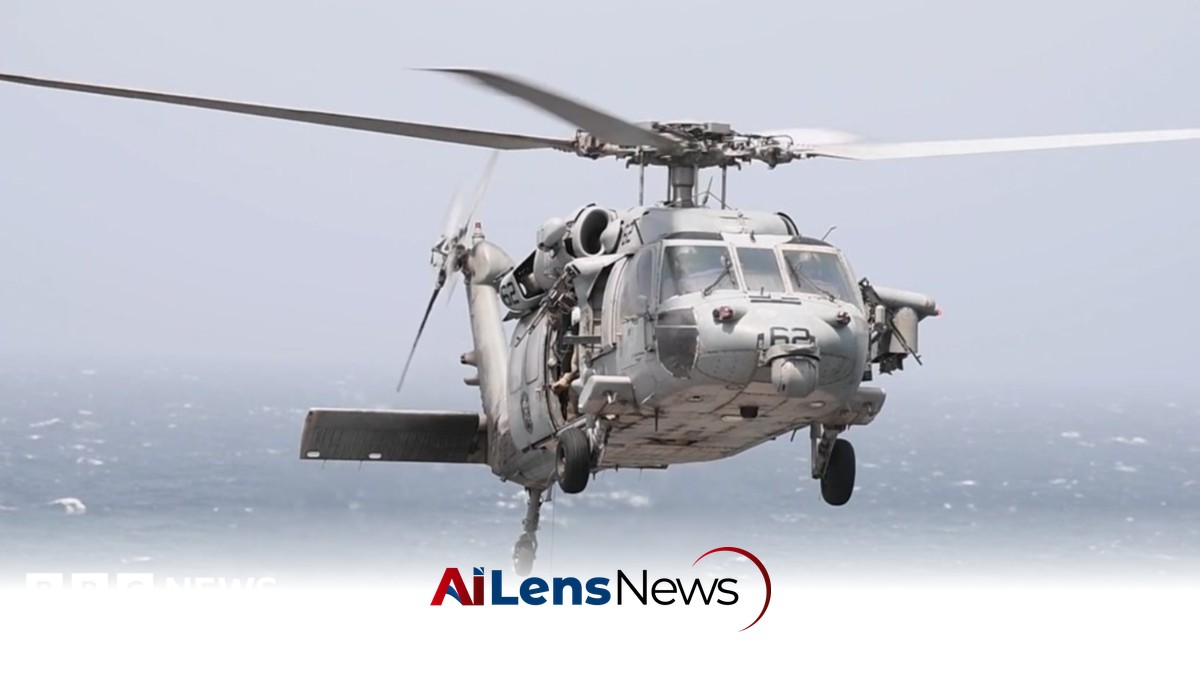



The US military disabled a cargo ship attempting to breach its blockade of Iranian ports, escalating tensions in the Gulf region.
New Delhi, India Aug 12, 2026 ALN: The US military has confirmed that one of its helicopters fired missiles at a cargo ship attempting to violate the blockade imposed on Iranian ports.
According to a statement from US Central Command (Centcom), an MH-60 helicopter launched two Hellfire missiles into the engine room of the Panama-flagged M/V Vela Nova while it was navigating the Gulf of Oman. This action was taken after the ship's civilian crew allegedly ignored multiple warnings from American forces.
Centcom reported that the vessel is no longer heading towards Iran, although Iran has yet to respond to the incident. The blockade has been enforced by the US following a series of conflicts that escalated after February 28, when the US and Israel initiated military actions in the region. This blockade is part of a larger strategy by the US to counter Iranian influence in the Middle East, particularly concerning Iran's nuclear program and its support for militant groups throughout the region.
The enforcement of the blockade is a response to ongoing concerns regarding Iran's activities in the region, which the US government has long accused of destabilizing actions. These include the provision of arms and support to proxy groups that threaten US interests and allies. The situation is further complicated by the historical context of US-Iran relations, which have been fraught with tension since the 1979 Iranian Revolution and the subsequent hostage crisis that ensued. The US has maintained a policy of containment against Iran, particularly in light of its nuclear ambitions and regional military activities.
In recent years, tensions have risen significantly between the US and Iran, particularly following the US withdrawal from the Joint Comprehensive Plan of Action (JCPOA) in 2018. This agreement was aimed at curbing Iran's nuclear ambitions in exchange for sanctions relief. The collapse of the JCPOA has led to increased hostilities, with Iran ramping up its nuclear activities and expanding its military capabilities, including missile technology. The US has responded with a series of sanctions and military posturing designed to deter Iranian aggression.
In retaliation for perceived aggression, Iran has conducted attacks against Israel and US-aligned nations throughout the Gulf, effectively closing the Strait of Hormuz, a critical passage for oil shipments. Prior to the conflict, this strait accounted for approximately one-fifth of the ’s oil and liquefied natural gas transit. The closure of this vital shipping lane not only impacts global oil prices but also raises concerns about energy security for many nations dependent on oil imports. The strategic significance of the Strait of Hormuz cannot be overstated, as it serves as a crucial chokepoint for global energy supplies.
Since the collapse of a ceasefire in June, both the US and Iran have engaged in intermittent exchanges of fire. Centcom's statement indicated that as of August 11, it has redirected 55 commercial vessels attempting to breach the blockade, disabled three non-compliant vessels, and boarded two others. These actions reflect a heightened military posture in the region, with the US seeking to deter Iranian aggression and ensure the safe passage of commercial shipping through strategic waterways. The US Navy has increased its presence in the Gulf, conducting patrols and exercises to demonstrate its commitment to maintaining freedom of navigation in international waters.
The escalation of military engagements has also prompted reactions from international bodies and regional allies. Many nations are closely monitoring the situation, as any prolonged conflict could have far-reaching implications for global trade and security. The United Nations has expressed concern over the rising tensions and the potential for a broader conflict that could destabilize the already volatile region. Diplomatic efforts by various countries, including those in Europe and the Gulf Cooperation Council, have sought to mediate the situation, but progress has been limited due to entrenched positions on both sides.
In a related incident, Yemen's internationally recognized government reported that six individuals were killed and ten injured due to strikes by Iran-backed Houthis on a cargo ship in the Red Sea. The Houthis claimed responsibility for targeting a vessel believed to be carrying Saudi military supplies, marking the first deadly attack on a ship by the group since the onset of the war. This incident underscores the multifaceted nature of the conflict in the region, where various actors are involved in a complex web of alliances and hostilities. The Houthis, who control significant portions of northern Yemen, have been engaged in a protracted conflict against a Saudi-led coalition since 2015. Their attacks on shipping in the Red Sea represent a direct challenge to Saudi Arabia and its allies, further complicating the security landscape in the region.
The international community has called for restraint from all parties involved to prevent further escalation and loss of life. The situation remains tense, with mediators struggling to facilitate discussions aimed at reopening the Strait of Hormuz, as both sides continue to navigate a complex landscape of military and diplomatic challenges. Efforts to broker peace have been hampered by mutual distrust and ongoing hostilities, with both the US and Iran unwilling to make significant concessions that could lead to a de-escalation of tensions.
As the US continues to enforce the blockade and Iran responds with military actions, the potential for miscalculation remains high. Analysts warn that any further escalation could lead to a broader conflict, drawing in regional powers and impacting global energy markets. The international community is watching closely, as the implications of these actions extend beyond the immediate region, affecting global trade, security, and diplomatic relations. The interconnected nature of global economies means that disruptions in the Gulf can lead to ripple effects felt wide, particularly in energy-dependent nations.
In conclusion, the recent missile strike by the US on the M/V Vela Nova is a significant development in the ongoing conflict between the US and Iran. It highlights the risks associated with enforcing maritime blockades and the complex geopolitical dynamics at play in the Gulf region. As both sides continue to assert their military presence, the need for diplomatic engagement becomes increasingly urgent to prevent further escalation and to seek a peaceful resolution to the ongoing tensions. The situation remains fluid, and the actions taken in the coming weeks and months will be crucial in determining the trajectory of US-Iran relations and the overall stability of the Middle East.
To learn more about the latest developments in International Politics, stay updated with our exclusive reports and analyses on AILensNews.

