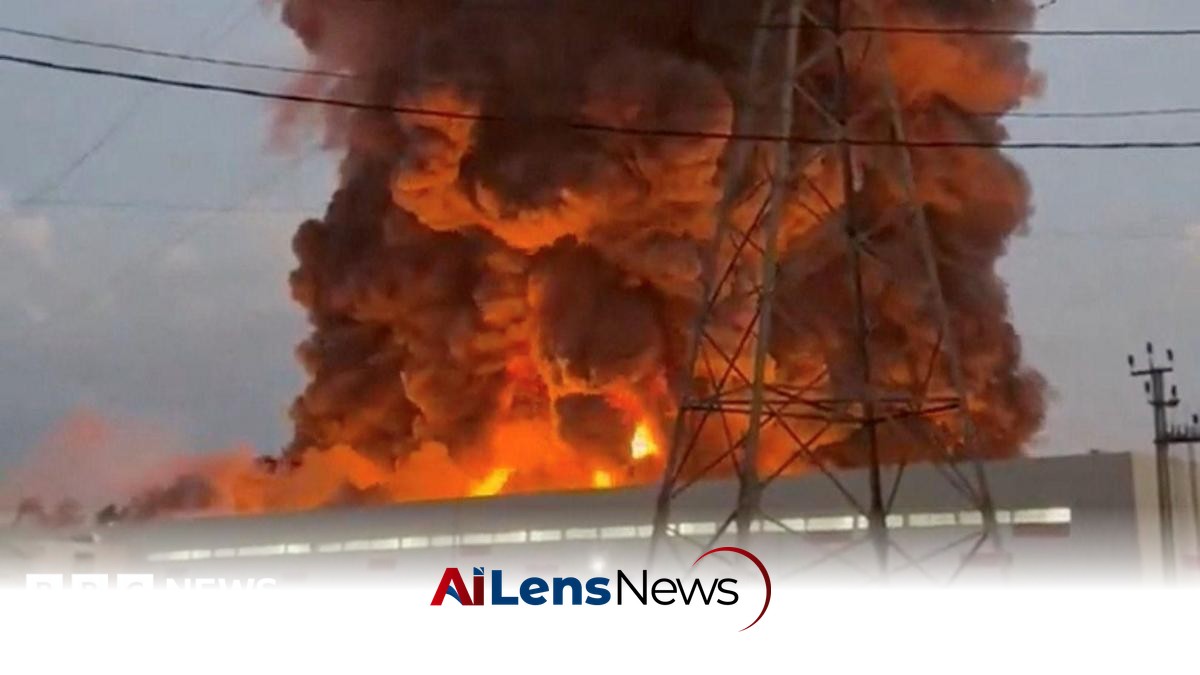


Ukrainian drone attacks on Wildberries warehouses in Krasnodar and Stavropol regions injure 15, marking the second strike in four days.
New Delhi, India Jul 22, 2026 ALN: Ukrainian drones have hit warehouses belonging to Russia's biggest online retailer again, injuring 15 people, according to the company's founder and regional governors.
Logistics hubs run by Wildberries in two south-west cities were impacted by overnight attacks and workers evacuated, the founder said. These strikes represent a significant escalation in Ukraine's ongoing conflict with Russia, particularly in targeting infrastructure that supports the Russian military effort.
This incident marks the second time Ukraine has attacked the firm's facilities in just four days, with warehouses in Tambov and Elektrostal previously hit over the weekend, resulting in the tragic deaths of eight people. The frequency and intensity of these drone strikes underscore a strategic shift in Ukraine's military operations, as the country seeks to disrupt not only military logistics but also the economic foundations that support the Russian war effort.
Ukrainian President Volodymyr Zelensky stated on Wednesday that the strikes targeted logistics hubs in the Krasnodar and Stavropol regions, which he claimed were involved in providing the Russian army with essential components used for drones, navigation equipment, and other military gear. This pointed justification for the attacks highlights Ukraine's focus on dismantling supply chains that bolster Russian military capabilities.
Following the attacks on logistics centers in Krasnodar and Nevinnomyssk in the Stavropol region, Wildberries founder Tatyana Kim expressed her distress on Telegram, stating, "There are no words to describe all the feelings and emotions caused by the attacks on ordinary people, on our employees, on us, who are simply doing our jobs. But these situations demonstrate the most important thing: we must continue to do what we do for the benefit of people." Her remarks reflect the broader human cost of the conflict, where civilians and workers find themselves caught in the crossfire of military operations.
Reports indicate that five individuals were injured in a warehouse complex on the outskirts of Nevinnomyssk, with local Governor Vladimir Vladimirov confirming that all received outpatient treatment. In Krasnodar, the situation was more severe, with ten people injured in an attack on a warehouse complex, three of whom were reported to be in serious condition, according to the region's governor Veniamin Kondratyev. This incident illustrates the potential for significant civilian casualties in urban areas when military operations are conducted.
BBC Verify has analyzed footage from the attacks and confirmed that substantial fires broke out in the two targeted locations. The strikes were reported shortly after midnight GMT, with the Russian state agency TASS announcing that air defenses had been activated in Nevinnomyssk. Dramatic footage filmed by locals began circulating soon after, capturing the chaos and destruction wrought by the drone strikes.
In both locations, the impact appears substantial, with large fires engulfing the buildings and huge columns of smoke rising into the air, signaling the intensity of the attacks. Krasnodar's governor described the region as having experienced a "massive attack last night," with drone debris also impacting a company in Armavir, where one employee tragically lost their life. Additionally, an oil depot was struck, causing a fire that further complicates the region's logistics and supply chain capabilities.
Drone fragments also reportedly hit two apartment buildings in Krasnodar and two homes in the nearby village of Dinskaya, although no injuries were reported from these incidents. This collateral damage raises concerns about the safety of civilians in areas targeted by military operations, as the boundaries between military and civilian infrastructure become increasingly blurred.
President Zelensky further claimed that Ukraine had successfully struck an oil depot, as well as a tanker and four cargo ships belonging to what is referred to as the Russian shadow fleet in the waters of the Sea of Azov and Black Sea. This shadow fleet has been a crucial element in Russia's attempts to circumvent international sanctions imposed on its oil exports following its full-scale invasion of Ukraine in 2022. By targeting these vessels, Ukraine aims to undermine Russia's economic resources and its ability to fund its military operations.
The overnight drone strikes against Wildberries' facilities represent a continuation of Ukraine's strategy to disrupt Russian logistics and supply chains, particularly those involving dual-use goods, critical electronics, and sanctioned items that could be utilized by the Russian military. Recently published satellite imagery has provided visual evidence of the damage inflicted on other Wildberries sites that were struck over the weekend, with three buildings in Elektrostal, near Moscow, completely gutted.
Serhii Kuzan, chairman of the Ukrainian Security and Cooperation Centre, previously told the BBC that Wildberries' website had been utilized by Russian volunteers to procure military equipment. This connection between a civilian marketplace and military logistics underscores the complexities of the current conflict and the multifaceted nature of supply chains in wartime. Kuzan explained, "The primary rationale for striking Wildberries' warehouses is to disrupt Russian logistics and the supply of dual-use goods, critical electronics, sanctioned goods and the like to the Russian army and Russian arms manufacturers."
The implications of these strikes extend beyond immediate military objectives. As Kuzan noted, the collateral damage from such operations could significantly impact the Russian economy, further straining resources and potentially diminishing public support for the war. The psychological effect on Russian society cannot be underestimated, as ongoing attacks on civilian and commercial infrastructure may foster discontent and dissent among the population.
Unlike retail giant Amazon, Wildberries and its primary competitor Ozon operate primarily as marketplaces, facilitating connections between independent sellers and buyers across Russia. They manage storage, delivery, and payment processes, which makes their infrastructure critical for many small businesses and entrepreneurs. The recent strikes have disrupted operations for hundreds of sellers who rely on these online marketplaces for their livelihoods. One trader, who requested anonymity and went by the name Elena, shared her distress with BBC Russian, stating that she had lost a significant amount of clothing inventory in the attacks, which represents her only source of income. She expressed her fear about the future, saying, "If there are more strikes, I probably won't manage. It's terrifying to keep loading my goods into what feels like a furnace."
The ongoing conflict in Ukraine continues to evolve, with military strategies adapting to target not only enemy combatants but also the economic infrastructure that supports them. As each side escalates its tactics, the toll on civilian life and the broader implications for regional stability and economic well-being become increasingly pronounced. The situation continues to develop, and the international community watches closely as the conflict unfolds, with potential ramifications extending far beyond the borders of Ukraine and Russia.
To learn more about the latest developments in Wars & Conflicts, stay updated with our exclusive reports and analyses on AiLensNews.

