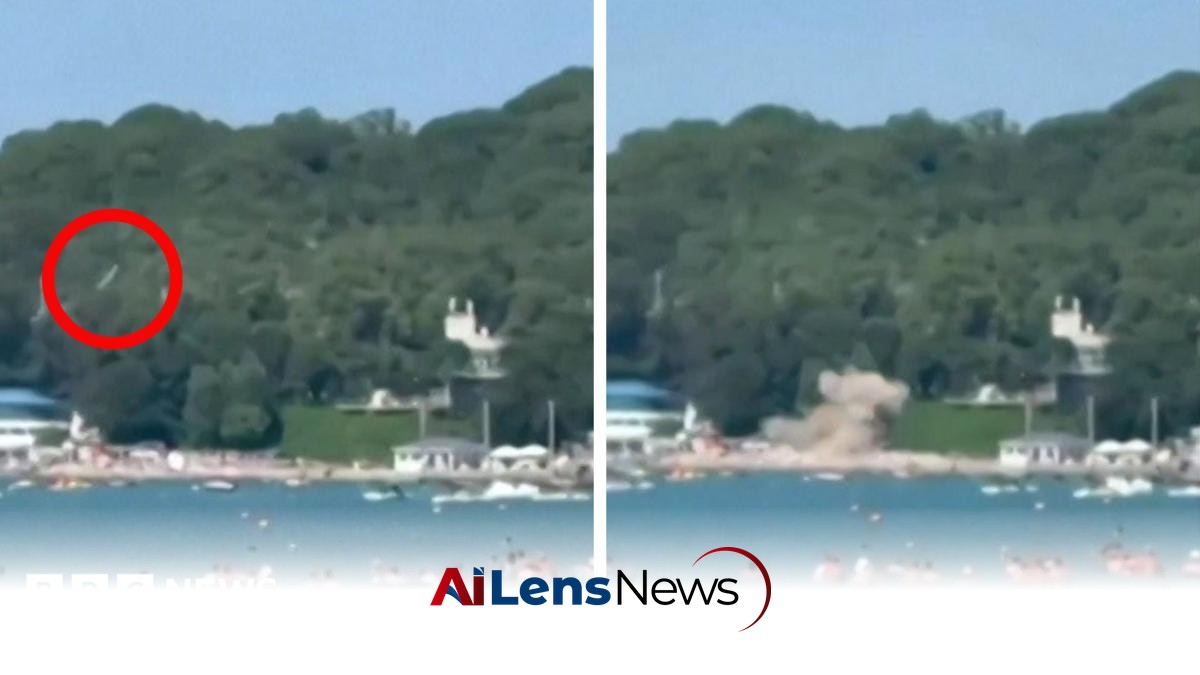


A drone strike on a busy beach in southern Russia has resulted in seven fatalities, including three children, and left 40 others injured.
New Delhi, India Aug 3, 2026 ALN: A drone hit a busy beach in southern Russia, killing seven people including three children, local authorities have said.
The incident, which occurred on a sunny day at a popular tourist destination, has drawn widespread attention both within Russia and internationally. In social media footage verified by the BBC, a drone can be seen hurtling towards a cliffside before crashing into a fireball on the beach below, as shocked tourists look on from the shore and in the water. The chaotic scene was captured in real-time, highlighting the suddenness of the attack and the vulnerability of civilians in conflict zones.
The total number of injured reached 40, with 17 people hospitalized, according to the governor of the Krasnodar region, Veniamin Kondratyev. This tragic event has raised concerns about the safety of civilians in areas that are not directly involved in military operations, as well as the potential for further escalation in the ongoing conflict between Ukraine and Russia. Governor Kondratyev accused Ukraine of "a deliberate strike on civilians," a claim that underscores the heightened tensions between the two nations. Ukraine has not commented on the incident, and both sides have consistently denied targeting civilians deliberately, a contentious point in the broader narrative of the war.
It remains unclear what the drone was specifically targeting, if anything at all. Some Ukrainian Telegram channels have claimed that the drone crashed onto the beach as a result of electronic warfare that jammed its signal. Eyewitness accounts reported that gunfire preceded the explosion, suggesting that Russian air defenses may have attempted to shoot the drone down. This raises questions about the effectiveness of Russia's air defense systems and the potential for collateral damage in civilian areas.
The crash occurred on a beach near the village of Arkhipo-Osipovka on the Black Sea. This area is known for its warm climate, long beaches, and developed tourist infrastructure, making it a popular holiday destination for Russians, especially since international travel options have been curtailed due to sanctions and ongoing conflict. The incident has not only resulted in loss of life but has also instilled fear among tourists and residents, who may now reconsider their safety when visiting such locations.
Local media outlets reported that tourists and residents of Arkhipo-Osipovka stated that no warning sirens sounded ahead of the drone attack. "We covered ourselves with sun loungers, and didn't see where it exploded," recounted one holidaymaker, illustrating the shock and confusion that enveloped the beachgoers. Another individual mentioned hearing "gunfire, like a machine gun" followed by the explosion, indicating a chaotic scene that left many scrambling for safety. The emotional toll of such violence is profound, with one parent expressing distress over the impact on their child: "This all happened in front of my children. My child is having a nervous breakdown."
Over the course of the last year, Ukraine has increasingly demonstrated its capability to carry out long-range strikes deep into Russian territory. These operations have targeted energy infrastructure and commercial warehouses that Ukraine claims are used for military purposes. The implications of these strikes are significant, as they not only disrupt Russian supply lines but also serve as a psychological tool in the ongoing conflict. However, such operations have also resulted in civilian casualties, with reports indicating that eight people were killed in different Russian cities over the weekend due to similar strikes.
Meanwhile, Russia has launched numerous attacks on residential areas and cities since the beginning of its full-scale invasion of Ukraine in February 2022, resulting in the deaths and injuries of thousands of civilians. This pattern of violence has drawn international condemnation and has raised questions about war crimes and the treatment of non-combatants in conflict. On Saturday, at least nine people were reported killed and dozens injured in Russian ballistic missile strikes on Kyiv, according to Ukrainian President Volodymyr Zelensky. The city's mayor confirmed that a residential building in the Shevchenkivskyi district was partially destroyed, trapping people inside. This ongoing cycle of violence underscores the grim reality of the conflict, where both sides have suffered significant losses.
In recent weeks, Ukrainian strikes have particularly focused on warehouses belonging to Wildberries, a large online retailer often referred to as the "Russian Amazon." The latest strike hit a warehouse in the Vladimir region, east of Moscow, overnight into Monday. Dozens of Wildberries warehouses, many located thousands of kilometers from the Ukrainian border, have now been targeted. Kyiv has asserted that these depots are used to supply the Russian military, a claim that Moscow denies. However, it is worth noting that Wildberries had previously sold a variety of military-related goods such as body armor, alongside civilian products and items used in drone production. This dual-use nature of some commercial products complicates the narrative surrounding the legitimacy of targeting such facilities in wartime.
The implications of these events extend beyond immediate casualties and injuries. They reflect the evolving nature of warfare, where civilian areas are increasingly becoming battlegrounds, and the lines between combatants and non-combatants are blurred. As both Ukraine and Russia continue to engage in military operations that result in civilian casualties, the international community faces challenges in addressing humanitarian concerns and ensuring accountability for violations of international law. The tragic drone strike on the Russian beach serves as a stark reminder of the human cost of this protracted conflict, raising urgent questions about the future of warfare and the protection of civilians in such scenarios.
The ongoing conflict has also led to a significant humanitarian crisis, with millions of people displaced and in need of assistance. As the war continues, the international response will play a crucial role in shaping the future of both nations and the broader region. Diplomatic efforts aimed at achieving a ceasefire and addressing the underlying issues of the conflict are urgently needed to prevent further loss of life and to begin the process of reconciliation and rebuilding in the war-torn areas.
To learn more about the latest developments in Wars & Conflicts, stay updated with our exclusive reports and analyses on AiLensNews.

