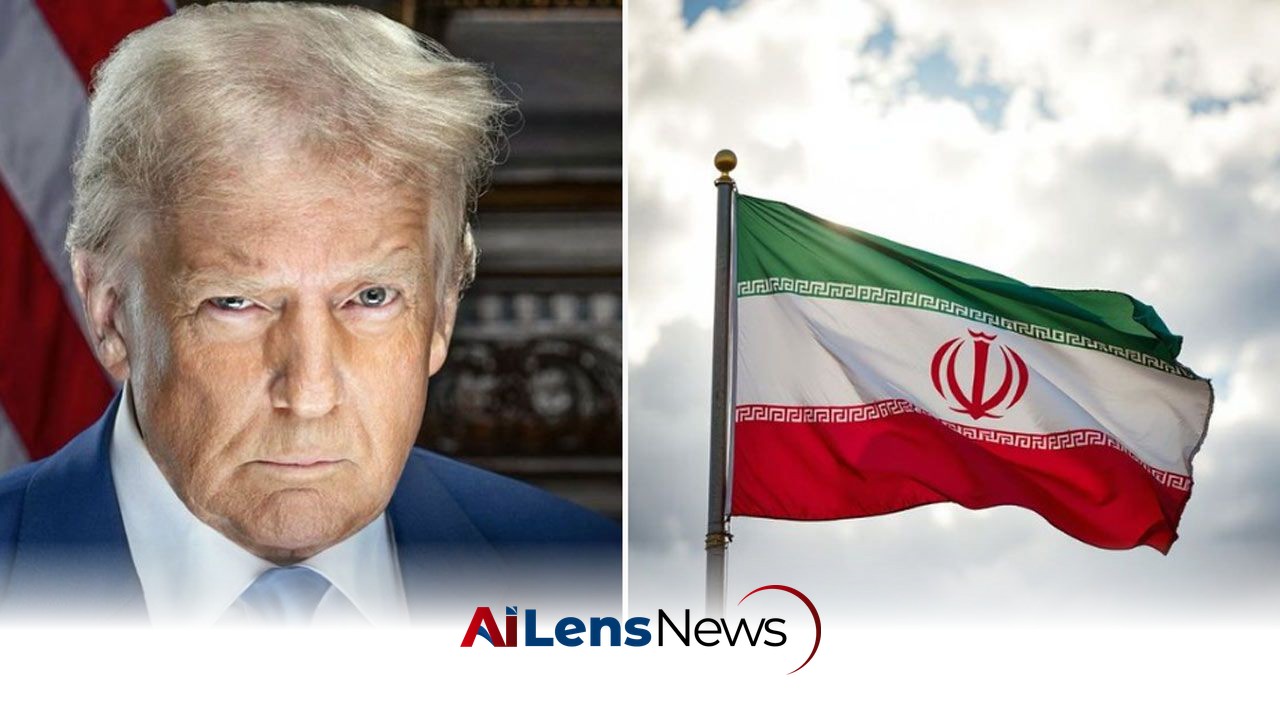



US President Donald Trump warns of escalated military action against Iran as tensions flare in the Strait of Hormuz, following drone attacks and strikes on Gaza.
New Delhi, India Aug 2, 2026 ALN: Cairo: US President Donald Trump has issued a stark warning of intensified military strikes against Iran as tensions escalate in the Strait of Hormuz. This warning comes on the heels of recent drone attacks reported by Kuwait and an incident involving a tanker in the strategic waterway. The Strait of Hormuz is a crucial maritime corridor through which a significant portion of the world's oil supply is transported, making it a focal point for geopolitical tensions.
On Saturday, Kuwait confirmed it had responded to a new wave of drone assaults attributed to Iran, while a tanker was struck in the Strait of Hormuz. The situation has prompted heightened military readiness in the region. The drone attacks are indicative of the ongoing hostilities between Iran and its regional adversaries, particularly the United States and its allies. The Strait of Hormuz has seen increased military activity as nations bolster their defenses amidst fears of potential conflict.
In a press briefing at Camp David, Trump emphasized the US's commitment to achieving victory against Iran, stating, "We just want to win." His rhetoric suggests a willingness to escalate military operations if necessary, indicating that the US might pursue a strategy aimed at crippling Iran's military capabilities. He indicated that military operations would likely continue for an extended period, asserting that the US would strike Iran "very hard" until they could no longer withstand the pressure. This statement underscores the administration's aggressive stance towards Iran, which has been characterized by a series of sanctions and military posturing since Trump took office.
White House Press Secretary Karoline Leavitt echoed Trump's sentiments, expressing frustration over Iran's actions, which included a recent breach of a truce agreement. "President Trump is not going to stand by and allow this terrorist behavior to occur," she stated, reinforcing the administration's stance on Iran's provocations. This characterization of Iran as a terrorist entity reflects the broader US narrative that seeks to delegitimize Iranian influence in the region, particularly in Iraq, Syria, and Lebanon.
In response to the escalating tensions, the US State Department has issued security alerts for American citizens in ten countries across the region, advising them to exercise heightened caution due to potential disruptions in travel. The alerts reflect concerns about retaliatory actions against US interests and citizens in the wake of increased military operations in the area.
New Attacks on Kuwait and Shipping
Kuwait's military reported that its forces were actively responding to drone attacks, which targeted several vital facilities, including a government structure. Fortunately, no casualties were reported. However, the scale of the attacks indicates a significant threat to national security and raises questions about the effectiveness of existing defense measures. The ability of Iran to conduct drone strikes underscores its capabilities and willingness to project power in the region.
The British Navy also confirmed that a tanker was struck, with another explosion occurring near a vessel in the Strait of Hormuz. No injuries were reported in either incident, although the attacks have raised alarms about maritime safety in the area. The Strait of Hormuz is a vital shipping lane, and any disruptions can have far-reaching implications for global energy markets, potentially leading to increased oil prices and economic instability.
Iran has a history of targeting vessels transiting through the Strait of Hormuz without its authorization, which it views as part of its ongoing conflict with the US. The Iranian government has consistently argued that it is acting in defense of its sovereignty and regional interests, often framing its military actions as necessary responses to perceived threats from the US and its allies.
Israel Strikes Gaza Following Hamas Disarmament Announcement
In a related development, Israel has conducted heavy airstrikes on the Gaza Strip, resulting in multiple casualties. This military action follows Hamas's announcement that it would disarm, a potential breakthrough in the ongoing conflict. The disarmament of Hamas, which has been a significant player in Palestinian politics and armed resistance, could represent a shift in the dynamics of the Israeli-Palestinian conflict.
Local health officials reported that at least four people were killed and dozens more injured in the strikes, which targeted Hamas facilities across the territory. The Israeli government has justified its military actions as necessary to protect its citizens from rocket attacks and other forms of aggression. However, such strikes often result in civilian casualties, raising concerns about the humanitarian impact of military operations in densely populated areas.
Hamas's decision to disarm is part of a US-brokered ceasefire agreement announced last October, which also called for the establishment of an independent Palestinian administration. However, skepticism remains among Palestinians regarding the feasibility of this agreement, particularly in light of ongoing violence and humanitarian challenges. Many Palestinians question whether a lasting peace can be achieved while settlement expansions continue and military operations persist.
As the situation continues to unfold, both regional and international observers are closely monitoring developments in the Strait of Hormuz and Gaza, with implications for broader geopolitical stability. The heightened tensions in these areas reflect the complexities of Middle Eastern politics, where historical grievances and contemporary conflicts intersect. The potential for escalation remains a significant concern, as military actions by one party often provoke retaliatory measures from another, creating a cycle of violence that is difficult to break.
The implications of these developments extend beyond the immediate region, affecting global oil markets, international relations, and the prospects for peace in the Israeli-Palestinian conflict. As the US maintains its military presence in the region and continues to support its allies, the likelihood of confrontation remains high, with the potential for unintended consequences that could destabilize the broader Middle East.
To learn more about the latest developments in Culture & Society, stay updated with our exclusive reports and analyses on AILensNews.

