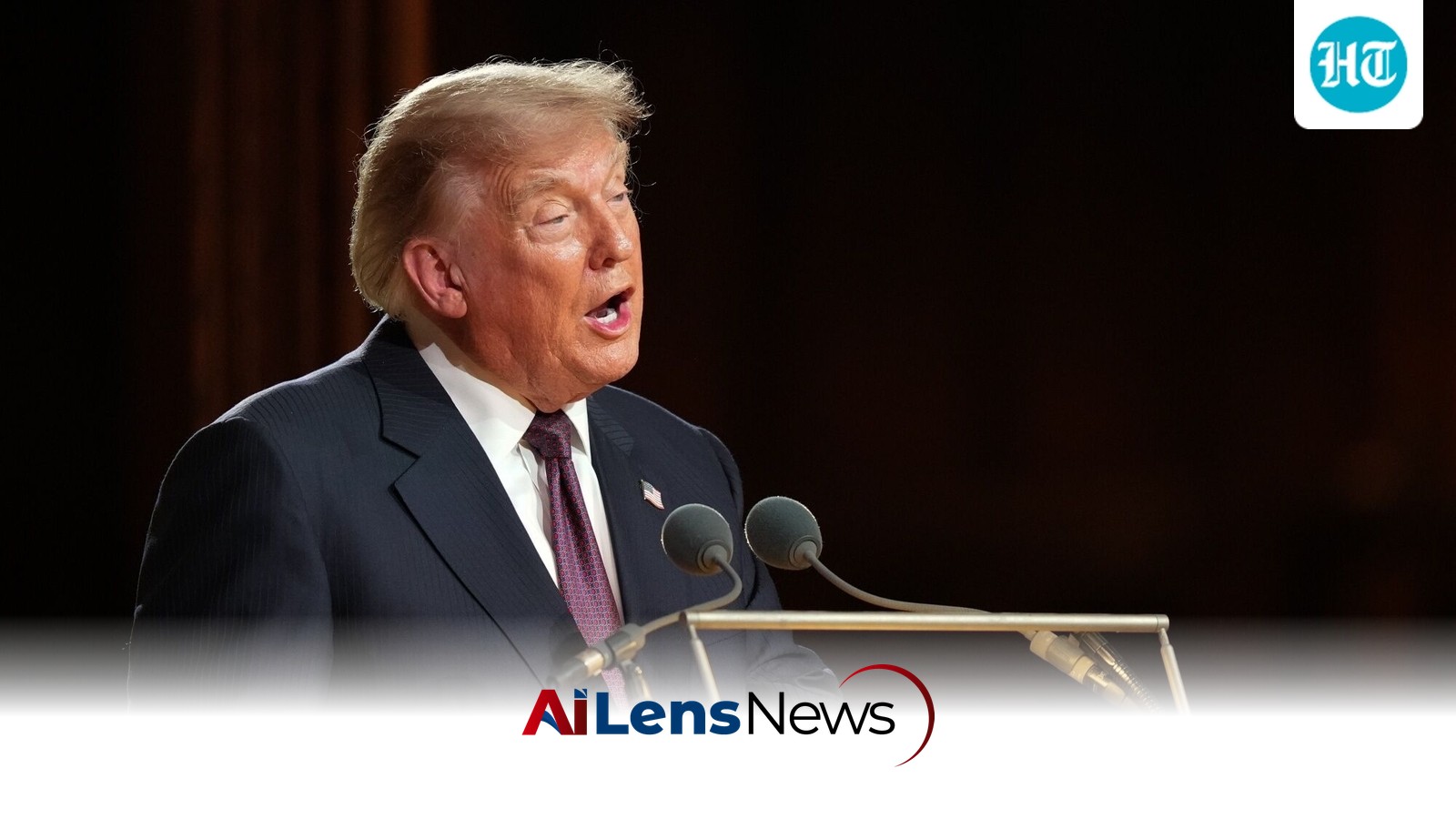


In response to missile attacks by Iran's IRGC on US bases in Jordan, Trump vows a decisive military response, asserting the US will hit back hard.
New Delhi, India Jul 30, 2026 ALN: US President Donald Trump on Wednesday vowed a forceful response against Iran following a ballistic missile attack that targeted US bases in Jordan. This incident marks a significant escalation in tensions between the two nations, which have been fraught with conflict since the US withdrew from the Iran nuclear deal in 2018.
In an interview with Fox News, Trump expressed his outrage over the attack, stating emphatically, “We're going to beat the f------ s--- out of them.” He further asserted that the US military would respond decisively, declaring, “We’ll be hitting them hard. They’re going to get a beating.” Such rhetoric reflects Trump's often confrontational stance towards Iran, a country he has frequently labeled as a state sponsor of terrorism.
Trump's comments came in the wake of the Islamic Revolutionary Guard Corps (IRGC) claiming responsibility for the missile strikes. The IRGC stated that it had launched “several ballistic missiles” at the Muwaffaq Salti Air Base, a critical US military installation in Jordan that plays a vital role in the US Central Command's operations in the region. The IRGC described the missile strike as a retaliatory action against what it termed aggressive actions by the United States.
According to Iranian state media, the IRGC's missile attack was a direct response to ongoing threats against Iran and its interests. The statement from the IRGC emphasized that as long as perceived threats from the US persisted, Iran would continue its resistance. This declaration underscores the longstanding animosity between the two nations, which has been exacerbated by various geopolitical conflicts in the Middle East.
Jordan's military reported that it successfully intercepted and destroyed five Iranian missiles, with no immediate reports of casualties or damage. This incident highlights the strategic importance of Jordan as a host for US military operations and its role as a buffer state in the volatile region.
In retaliation for the missile attack, the US, in coordination with Saudi Arabia, launched strikes against Iran-backed militias in Iraq. This operation was described as a necessary response to the threat posed by these militias, which have been accused of targeting US forces and interests in the region.
Reports indicate that at least four military advisers from Iran's Revolutionary Guards were killed in the overnight strikes, along with over 20 fighters from Iran-aligned groups. The US confirmed that the strikes targeted locations used for logistics and weapons operations by these militias, which have been linked to the IRGC.
The US Central Command (CENTCOM) stated that the precision strikes were conducted on July 28 against groups described as Iran-aligned terrorists. CENTCOM characterized these strikes as a strong response to over 30 IRGC-directed aerial drone attacks that occurred in the preceding 72 hours. The US military emphasized that Iran's initial missile attack on US bases had been intercepted successfully and had not resulted in any damage.
CENTCOM's statement reiterated that the unwarranted attacks against US forces would not be tolerated and warned that further military responses would follow if such actions continued. This reflects a broader strategy by the US to deter Iranian aggression in the region while simultaneously maintaining its military readiness.
In response to the US-Saudi strikes, Iran condemned the attacks vehemently, asserting that they violated Iraq's sovereignty and constituted a breach of international law. Iran's Foreign Ministry issued a statement characterizing the strikes as a clear affront to Iraq's national sovereignty and territorial integrity, invoking Article 2, Paragraph 4, of the United Nations Charter, which prohibits the use of force against the territorial integrity of any state.
The Iranian Foreign Ministry expressed solidarity with the Iraqi government and its people, condemning the loss of life among Iraqi civilians as a result of the strikes. This condemnation underscores Iran's positioning as a regional power that seeks to portray itself as a defender of Iraqi sovereignty, especially amid perceptions of US overreach in the region.
Furthermore, the Islamic Resistance in Iraq, an alliance of pro-Iran armed groups, issued a warning that a response to the US-Saudi strikes was “inevitable.” This group has a history of targeting US facilities in the region, and its threats suggest a potential escalation of violence in the already tense environment. The statement indicated that retaliatory actions could extend beyond Iraq and possibly target US interests in Saudi Arabia.
In a further escalation, Iran reportedly launched a barrage of missiles at American forces in West Asia early Wednesday. This development raises alarms about the potential for a wider conflict, as both sides appear to be engaged in a tit-for-tat exchange of hostilities.
The latest escalation between the United States and Iran has significant implications for the broader West Asia region. It raises concerns about the potential depletion of US military resources, particularly advanced munitions, which are crucial for the protection of US bases and allies in the region. The ongoing conflict has already strained US military capabilities, and further engagements could exacerbate these challenges.
Prior to the recent flare-up, there had been some optimism among mediators regarding the possibility of bringing the US and Iran back to the negotiating table. However, those hopes have dimmed following the collapse of an interim agreement in recent weeks, amid renewed fighting in the strategically important Strait of Hormuz. This waterway is crucial for global oil transportation and has been a flashpoint for US-Iran tensions, with both sides accusing each other of hostile actions.
As the situation continues to evolve, the international community watches closely, aware that further escalations could have dire consequences not only for the US and Iran but for the stability of the entire region. The potential for miscalculation or unintended consequences remains high, emphasizing the need for diplomatic efforts to de-escalate tensions and prevent a broader conflict.
To learn more about the latest developments in Culture & Society, stay updated with our exclusive reports and analyses on AiLensNews.

