


President Trump announced plans to declare the Hormuz Strait a US territory, asserting control over a key global oil passage amid ongoing tensions with Iran.
New Delhi, India Aug 15, 2026 ALN: New York, August 15 President Donald Trump has declared that the US will be taking over as its territory the Hormuz Strait, a key artery for petroleum and gas where his country's almost half-year-long war with Iran has staunched global supplies.
"After we finish defeating Iran, which is being very badly defeated, pretty soon, I'll be declaring the Hormuz Strait a territory of the United States," he said on Friday. This statement comes amid ongoing tensions between the US and Iran, with the Hormuz Strait being a focal point due to its strategic significance for global oil transportation. Approximately one-fifth of the world's oil supply passes through this narrow waterway, making it a vital economic corridor.
Hormuz would be the third major international territory that Trump has laid claim to. His administration has previously made bold assertions regarding US territorial ambitions, reflecting a broader strategy that emphasizes American military and economic dominance on the global stage. The declaration of Hormuz as a US territory, however, raises significant legal and diplomatic questions, particularly regarding international law and the rights of nations bordering the strait.
Trump asserted that Hormuz has already become a virtual US territory. "Essentially, that's what it is. We have the blockade. No ships get through unless we want them to," he said. This statement underscores the militarized approach the US has taken in the region, where naval presence and blockades have been employed as tools of foreign policy. The US Navy has been actively engaged in monitoring and controlling maritime traffic in the Strait of Hormuz, which has led to heightened tensions with Iran.
He further claimed that the US was acting on behalf of the world in the Strait, stating, "What we're doing is a great service for the world, not only for ourselves." Such rhetoric aligns with the US's longstanding justification for its military presence in the Middle East, often framed as protecting global trade routes and ensuring energy security for allied nations. However, critics argue that this justification often masks underlying motives related to geopolitical strategy and resource control.
On Wednesday, Trump had hinted at his plan to take over Hormuz, writing on Truth Social, "The USA has total control over the Strait of Hormuz. I THINK WE WILL KEEP IT!" His bold claims have sparked international concern and criticism, particularly from Iran, which views such statements as provocative and indicative of an aggressive US foreign policy. The Iranian government has consistently maintained that it holds sovereignty over the Strait and has threatened to respond to any perceived encroachments on its territorial waters.
Trump said on August 3 that the Strait would be "open literally" the next day, but it is still virtually closed. This statement reflects the complex reality on the ground, where military engagements and diplomatic negotiations are often at odds. According to media reports, only nine ships had gone through on Friday as the virtual stalemate continues between the US and Iran – Washington using a blockade, while Tehran attacks ships, reportedly hitting two on Thursday. The ongoing conflict has led to increased military activity in the region, with both sides engaging in maneuvers that could escalate tensions further.
Iran's Deputy Foreign Minister Kazem Gharibabadi called Trump’s assertion of Hormuz takeover "fantasies." He stated, "This strait will be opened and closed only under Iran's command, and so long as you do not accept the reality of defeat and stop indulging in fantasies, Iran will continue to enforce the blockade." This response highlights Iran's determination to assert its control over the Strait and its willingness to challenge US assertions of dominance. The Iranian government has also indicated that it would respond to any military threats with force, raising the stakes for US military operations in the area.
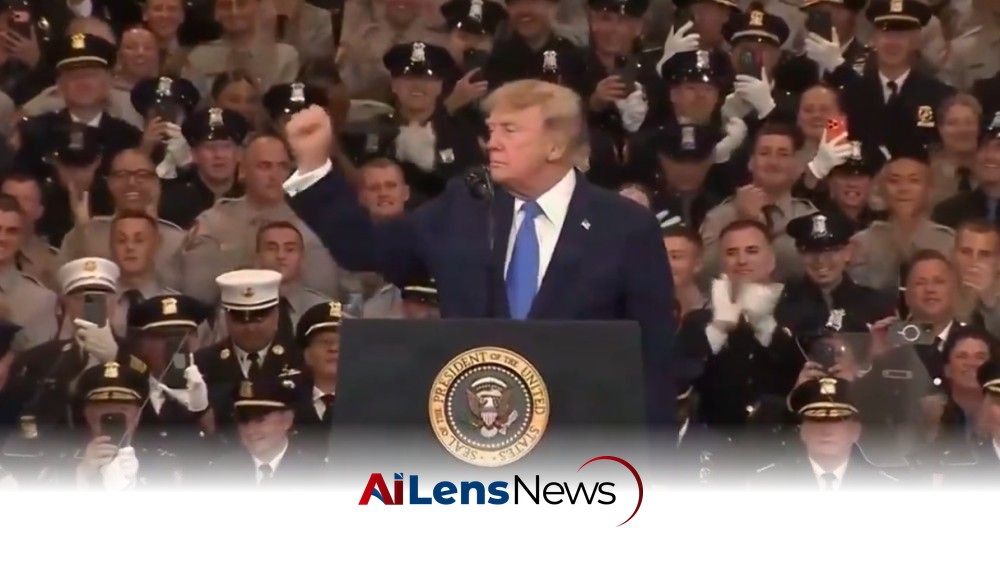
Trump’s speech at a police academy in a New York suburb on Long Island with his party’s candidate for the state’s governorship was delivered with the November mid-term election in focus. The political implications of his statements are significant, as rising fuel prices have become a central issue in the upcoming elections. The price rise, especially of petrol, has become a campaign point for the Democrats, who are making what they call the "affordability crisis" a central electoral theme. This situation places pressure on the Trump administration to address economic concerns while maintaining its aggressive foreign policy stance.
Trump was unapologetic about the petrol price hikes sparked by the Iran War that he began on February 28 alongside Israel, and said it was the price Americans have to pay to keep Iran from getting nuclear weapons. "For you to pay a tiny little bit more for your gasoline, just remember you’re doing it so that a very evil country cannot have a -- really, it’s the No. 1 state sponsor of terror in the world -- we don’t want them to have a nuclear weapon," he told the crowd. This framing of the issue is part of a larger narrative that seeks to justify military action as necessary for national security, despite the economic costs to American consumers.
The average price of petrol in the US on Friday was $1.08 per litre, while the benchmark Brent crude oil rose to $88 a barrel, up about 5 percent for the week. Such price fluctuations are closely monitored by both consumers and policymakers, as they can have significant implications for the economy. Rising oil prices can lead to increased transportation costs, affecting the prices of goods and services across the board, which in turn can influence voter sentiment in upcoming elections.
The practicalities make Hormuz – 11,000 kilometres from Trump’s White House – a US territory moot. The 170 kilometre-long Strait includes the territorial waters of Iran, Oman, and the United Arab Emirates, as well as international waterways. To incorporate all of that into the US, he would need to get the agreements of Oman and the UAE, exercise a total disregard of international law, and militarily control the Iranian coastal waters. Such actions would likely provoke a strong international backlash and could lead to further military conflicts in the region.
Another practical issue is the reach and sustainability of US military power in the region. The aircraft carrier USS Abraham Lincoln, the sole ship of that capability in the region, is already under strain from an almost nine-month deployment that has taken a toll on the crew and the vessel. The demands of maintaining a military presence in such a volatile region are significant, and the US must balance its military commitments with the well-being of its personnel. Asked by reporters about the ship’s problems from the long deployment, he said it was "not nearly long enough." But he added, "It’s being replaced with another very similar ship." This statement suggests that the US is committed to maintaining its military presence, despite the challenges faced by its forces in the region.
Trump has boasted of his ambitions for expanding US territory. Soon after he began his second term as president, he threatened to take over Canada and make it the 51st state of the US, and taunted the then Prime Minister Justin Trudeau by calling him "governor." Such statements reflect a broader theme of nationalism and territorial ambition that has characterized Trump's presidency. After his proposals to buy Greenland from Denmark during his first term went nowhere, he threatened early this year to annex it. These claims have often been met with skepticism and criticism, as they challenge established norms of international relations and raise questions about the future of US foreign policy under Trump's administration.
As the situation in the Strait of Hormuz continues to develop, the implications of Trump's statements and actions will be closely scrutinized by both domestic and international observers. The potential for escalation in military conflict, the impact on global oil prices, and the response from Iran and other nations will all play a crucial role in shaping the future of US-Iran relations and the geopolitical landscape of the Middle East.
To learn more about the latest developments in Culture & Society, stay updated with our exclusive reports and analyses on AILensNews.

