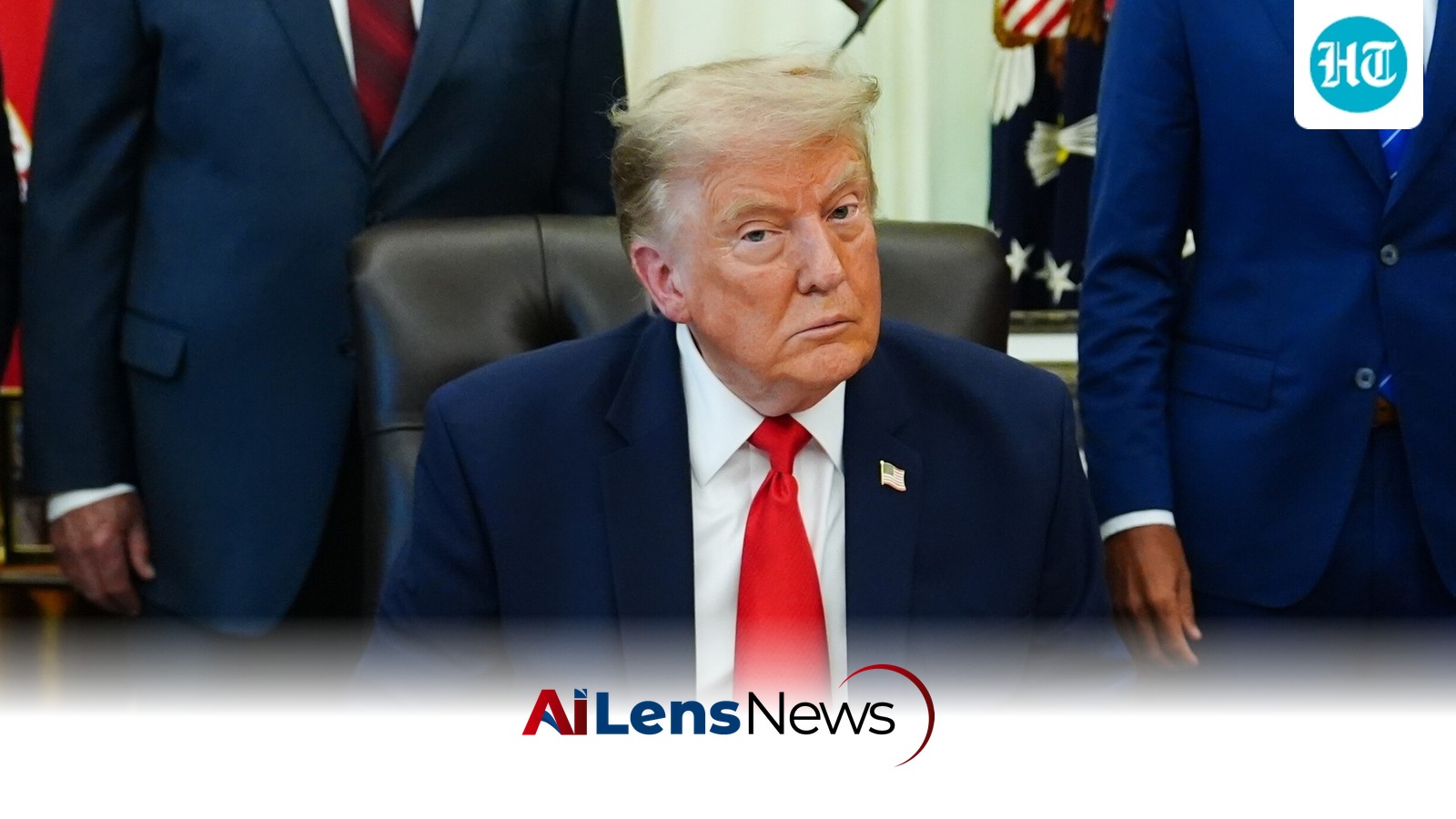


US President Donald Trump has unveiled a significant peace plan for Gaza, emphasizing the complete disarmament of Hamas as a crucial step towards establishing a new Palestinian government.
New Delhi, India Jul 31, 2026 ALN: US President Donald Trump on Thursday announced an agreement for the "complete disarmament" of Hamas, calling it a critical step toward a new Palestinian government in Gaza. This announcement marks a significant moment in the long-standing conflict between Israel and Hamas, a militant group that has governed Gaza since 2007 and is considered a terrorist organization by Israel, the United States, and several other countries.
Hamas's disarmament has been a contentious issue in peace negotiations between Israel and Palestinian factions for years. The militant group has been involved in numerous conflicts with Israel, including rocket attacks and armed confrontations, which have led to significant casualties on both sides. Trump's announcement comes amid ongoing violence in the region, with reports indicating that Israeli airstrikes continue to target Gaza, resulting in civilian casualties, including children. This backdrop of violence complicates efforts to reach a lasting peace agreement.
There was no immediate statement from Hamas regarding the agreement, but Trump's announcement followed reports from sources familiar with ongoing negotiations in Cairo. These sources indicated that Hamas was making progress toward a deal that would involve the decommissioning of its weapons. This development is crucial, as the group has historically resisted disarmament, viewing its military capabilities as essential for its defense against Israeli aggression.
Trump wrote on his Truth Social platform, "Today, the Board of Peace reached a HISTORIC agreement for the COMPLETE DISARMAMENT of Hamas and all other armed groups in Gaza. This is a monumental step toward lasting PEACE and SECURITY," emphasizing that disarmament would occur in "carefully structured phases." The phased approach aims to ensure that the process is manageable and that all parties can adhere to the agreement without escalating tensions.
As disarmament is completed, Israeli forces are expected to withdraw, and an International Stabilization Force (ISF) will collaborate with a newly established Palestinian police force to ensure the safety of Gaza's residents and its neighboring areas. The establishment of an ISF is a significant move, as it indicates a shift towards international involvement in maintaining peace and security in the region, which has often been marred by violence and instability.
The thorny issue of Hamas's disarmament has been one of the key sticking points in the advancement of the ceasefire deal that has been in place between Israel and the group in Gaza since October. Despite the ceasefire, violence has persisted, with Israeli strikes resulting in casualties on the ground. This ongoing violence raises questions about the effectiveness of the ceasefire and the willingness of both parties to adhere to any new agreements.
Cairo is set to host a meeting "soon" of the Gaza truce mediators, which include the United States, Qatar, and Turkey. The meeting aims to discuss the implementation of the second phase of the Gaza ceasefire plan, a roadmap that Hamas and other Palestinian factions have reportedly agreed upon. The involvement of multiple countries in mediating the conflict highlights the international community's interest in achieving a resolution to the long-standing issues in Gaza.
Under Trump's 20-point peace plan for Gaza, the second phase of the ceasefire is expected to involve Hamas's disarmament and a gradual withdrawal of Israeli forces from the territory. The plan also envisions the establishment of a group of Palestinian technocrats, known as the National Committee for the Administration of Gaza (NCAG), which would assume day-to-day governance during Gaza's transitional phase out of war. This governance model aims to provide stability and a semblance of normalcy for the residents of Gaza, who have faced years of conflict and humanitarian crises.
Earlier Thursday, a source within Hamas indicated that the group was still in the process of making amendments to the proposal. The source stated, "We continue to advance the implementation roadmap that offers a balanced and pragmatic path forward, with all weapons decommissioned and a phased transition of responsibilities taking place to hand over full authority to the technocratic government." This statement reflects Hamas's cautious approach to the negotiations, as the group seeks to ensure that its interests are protected while also moving towards a potential agreement.
The roadmap proposed by Hamas includes provisions for the elimination of all tunnels, depots of weapons, and any weapons production facilities. This comprehensive approach to disarmament indicates a recognition of the need for a thorough and systematic process to ensure compliance from all parties involved. The source emphasized that there would be "no exceptions for certain weapons or certain people. One authority, one law, one weapon." This statement underscores Hamas's commitment to a unified approach to governance and security in Gaza.
All weapons, both heavy and light, are to be placed under the full control of the NCAG, in coordination with and with the support of the ISF. The establishment of a verification mechanism to ensure compliance by each side is also a crucial aspect of the proposed agreement. This mechanism aims to build trust between the parties and provide assurances that the terms of the agreement will be upheld.
A Hamas source familiar with the talks stated earlier that the movement is "awaiting the Israeli response to the amendments we recently submitted to the mediators." This statement highlights the ongoing nature of the negotiations and the need for continued dialogue between the parties. The source noted that the amendments pertained to two articles in the roadmap presented by the Board of Peace, indicating that both sides are actively engaging in discussions to reach a mutually acceptable agreement.
In contrast, an Israeli political source expressed skepticism about the proposed deal, stating that it does not "satisfactorily" address Israeli demands. Israel's primary demand remains the complete disarmament of Hamas, including the removal of weapons from Gaza and full demilitarization of the Strip as a precondition for any process. This insistence on disarmament reflects Israel's longstanding security concerns regarding Hamas and its military capabilities.
The Israeli source also noted that "the issue of Gaza did not come up at all" in a recent meeting between Israeli Prime Minister Netanyahu and Trump in Washington this week. This lack of discussion on such a critical issue raises questions about the level of commitment from both the US and Israeli leadership to resolving the ongoing conflict in Gaza. It also highlights the complexities of the negotiations, as multiple stakeholders with differing priorities and concerns are involved in the process.
In conclusion, Trump's announcement of a historic peace deal for Gaza, centered on the complete disarmament of Hamas, marks a significant development in the ongoing Israeli-Palestinian conflict. However, the path to achieving lasting peace remains fraught with challenges, including ongoing violence, differing priorities among stakeholders, and the need for effective governance in Gaza. As negotiations continue, the international community will be closely watching the developments and the responses from both Hamas and Israel, as the consequences of these discussions will have far-reaching implications for the region's future.
To learn more about the latest developments in Culture & Society, stay updated with our exclusive reports and analyses on AiLensNews.

