

US President Donald Trump claims a deal for Hamas disarmament has been reached, but Israel and Hamas remain silent on the announcement.
New Delhi, India Jul 31, 2026 ALN: US President Donald Trump has announced that the Board of Peace has reached an agreement for the "complete disarmament" of Hamas and other armed groups in Gaza.
The announcement comes amid ongoing tensions in the region, particularly following a series of violent confrontations between Israel and Hamas. The conflict has deep historical roots, with decades of territorial disputes, political disagreements, and cycles of violence contributing to the current state of affairs. In this context, the disarmament of Hamas is seen by some as a crucial step toward achieving lasting peace, while others remain skeptical about the feasibility and sincerity of such an agreement.
However, it remains unclear whether Hamas and Israel are part of this agreement, as neither party has commented on the announcement. The lack of clarity raises questions about the legitimacy and enforceability of the proposed disarmament. Without the buy-in of both Hamas and Israel, the agreement may lack the necessary foundation to be successful.
Trump stated that Israel would withdraw from Gaza "as disarmament is completed," calling the agreement "a critical step towards Gaza finally being governed by a new Palestinian government." The prospect of a new Palestinian government is a contentious issue, as various factions within the Palestinian territories have differing views on governance, representation, and the future of Israeli-Palestinian relations.
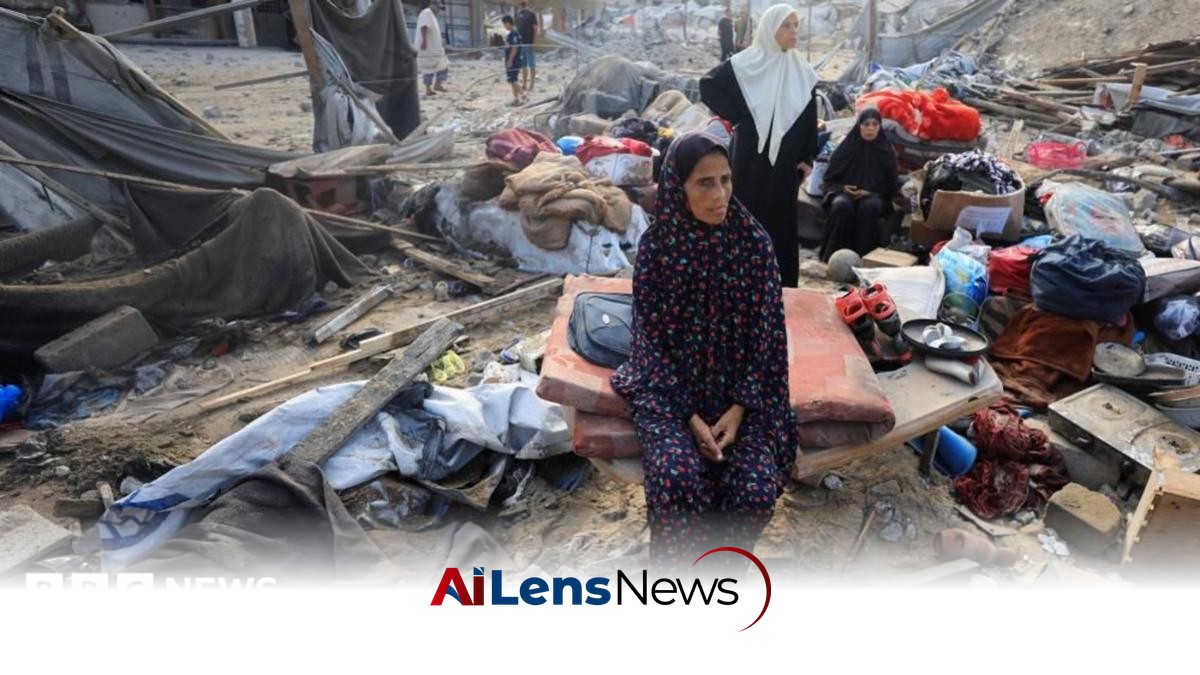
The second phase of a US-brokered Gaza ceasefire plan includes the disarmament of Hamas and the reconstruction of Gaza. This plan is seen as ambitious, especially given the ongoing humanitarian crisis in the region. Gaza has faced significant destruction and loss of life due to the recent conflict, and the need for reconstruction is urgent. However, the path to rebuilding is fraught with challenges, including securing funding, ensuring safety for construction workers, and addressing the political complexities that come with governance in a post-conflict environment.
In a post on Truth Social, Trump remarked: "This is a major milestone in the implementation of the Trump 20-Point Plan. The agreement will be carried out in carefully structured phases. As disarmament is completed, Israeli forces will withdraw, and the International Stabilization Force will work with a new Palestinian police force to ensure Gaza is safe for its residents and its neighbors." The mention of an International Stabilization Force indicates a desire for international involvement in maintaining peace and security in the region, although the specifics of such a force's mandate and structure remain unclear.
He also expressed gratitude to mediators Egypt, Qatar, and Turkey. These nations have historically played significant roles in mediating between Hamas and Israel, and their involvement in the current agreement underscores the importance of regional diplomacy in addressing the Israeli-Palestinian conflict. Egypt, in particular, has been a key player, often acting as a broker for ceasefires and negotiations due to its geographical proximity and historical ties to both parties.
Cairo is set to host a Gaza mediator meeting regarding the second phase of the ceasefire plan, according to reports from Egyptian state media. This meeting may provide a platform for further discussions on the implementation of the disarmament agreement and the overall peace process. However, the success of such talks will depend on the willingness of all parties to engage constructively and compromise on contentious issues.
Earlier, unnamed sources told Reuters that discussions between the mediators and Hamas leaders in Cairo regarding the US-brokered Gaza peace plan had made rare progress, although an Israeli official stated that the proposed terms were unsatisfactory. This highlights the complexities involved in reaching a consensus, as differing priorities and demands from each party can hinder negotiations. The Israeli government's concerns about security and the disarmament of Hamas are paramount, while Hamas's priorities often center around recognition and legitimacy.
Following Trump's announcement, the Times of Israel reported that the agreement had been signed between negotiators from Hamas and the mediating countries. However, an Israeli office issued a statement claiming that the disarmament proposal did not meet Jerusalem's demands. This contradiction raises further questions about the actual status of the agreement and the extent to which it has been accepted by the involved parties.
Israeli media previously reported that Israel was opposed to the deal being discussed with Hamas. The Israeli government has historically maintained a hardline stance against Hamas, viewing the group as a terrorist organization responsible for numerous attacks against Israeli civilians. This perspective complicates any potential for dialogue or compromise, as Israel seeks assurances regarding its security before considering any concessions.
In April of this year, Hamas rejected a disarmament plan proposed by a senior figure in Trump's Gaza peace efforts, according to a senior Palestinian official familiar with the negotiations. This rejection underscores the challenges of negotiating with Hamas, which may view disarmament as a threat to its political and military identity. The group's leadership has consistently emphasized its resistance to Israeli occupation and its commitment to armed struggle, complicating efforts to reach a peaceful resolution.
Earlier this month, Hamas elected a new leader, Khalil al-Hayya, who replaced Yahya Sinwar, killed by the Israeli military in Gaza in October 2024. As the chief negotiator for Hamas, Hayya led the group's delegations at indirect ceasefire talks, meeting with mediators in Egypt and Qatar. His leadership may influence the group's approach to negotiations, but it remains to be seen whether he will adopt a more conciliatory stance or maintain the organization's traditional hardline position.
Reports earlier this year indicated that the Board of Peace was initially thought to be aimed at helping end the war between Israel and Hamas in Gaza and oversee reconstruction. However, its proposed charter does not mention the Palestinian territory and seems designed to supplant functions of the UN. This raises concerns about the legitimacy of the Board of Peace and its ability to effectively address the needs and rights of the Palestinian people, who have long sought self-determination and recognition of their statehood.
Hamas led an attack on Israel on 7 October 2023, resulting in 1,200 deaths and 251 hostages taken. This attack marked a significant escalation in violence and prompted a strong military response from Israel. The loss of life on both sides has been devastating, and the ongoing conflict has exacerbated the humanitarian crisis in Gaza, where basic services and infrastructure have been severely impacted.
In response, Israel launched a massive military campaign in Gaza, during which more than 73,290 people have been killed, including 21,280 children, according to the territory's Hamas-run health ministry. The scale of the casualties has drawn international condemnation and raised urgent questions about the humanitarian situation in Gaza. The international community has called for ceasefires and humanitarian access, but achieving a lasting peace remains a complex and elusive goal. As the situation continues to evolve, the implications of the disarmament agreement and the broader peace process will be closely monitored by stakeholders both in the region and around the .
To learn more about the latest developments in International Politics, stay updated with our exclusive reports and analyses on AiLensNews.

