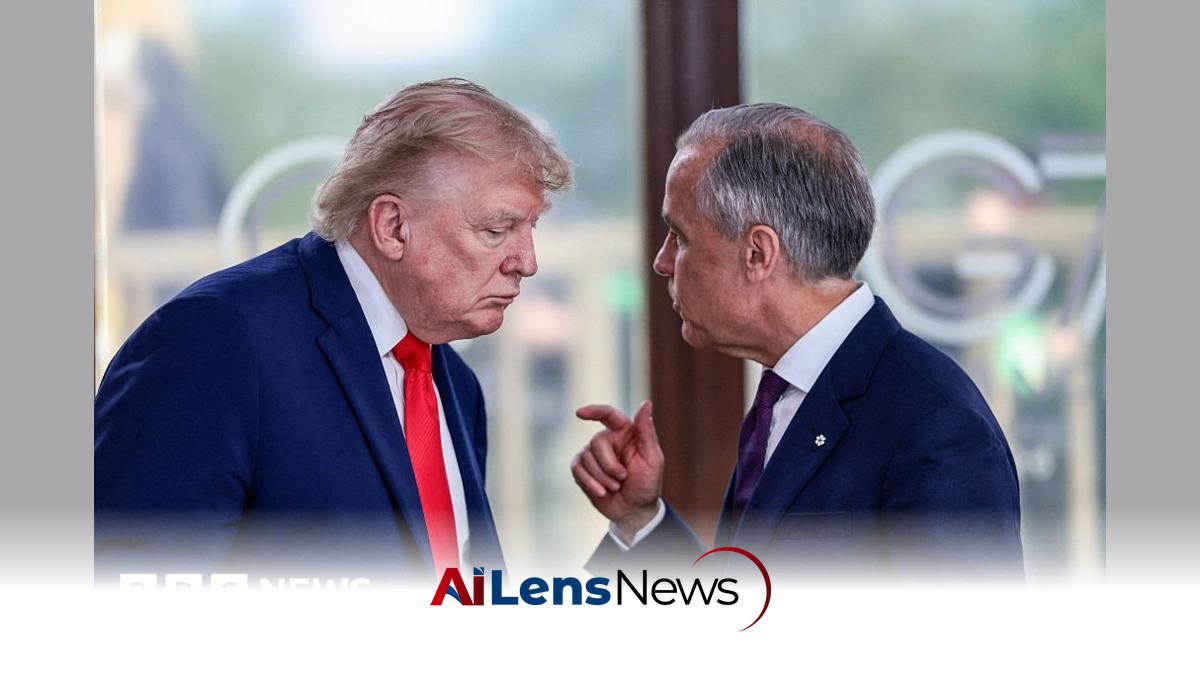


US President Donald Trump has announced a significant 50% tariff on various Canadian imports, intensifying trade disputes between the two countries.
New Delhi, India Jul 21, 2026 ALN: US President Donald Trump has imposed a 50% tariff on a wide range of goods imported from Canada, in retaliation for what he called "unequal treatment" of US cars, dairy, and alcohol.
The duties take effect within 30 days and mark a major escalation in trade tensions between the North American neighbours. This latest move is part of a series of trade-related actions that have characterized Trump's presidency, reflecting his administration's broader approach to international trade, which emphasizes protectionism and a focus on bilateral agreements over multilateral ones.
The White House stated that the tariffs were necessary to protect American businesses. This justification aligns with Trump's long-standing narrative that American workers and industries have been disadvantaged by trade agreements that favor other countries. The administration has often framed its trade policies as a means to restore fairness and balance in international trade relations.
The goods targeted by the tariffs range from everyday consumer items like wine and hockey sticks to industrial goods such as commercial cement. However, several key exports will be spared, including energy, potash, critical minerals, and fish. This selective approach indicates a strategic calculation aimed at minimizing the economic impact on American consumers while still applying pressure on Canadian industries.
The new duties apply to all covered goods regardless of whether the product was included under the existing free trade agreement between Canada, the US, and Mexico, known as the USMCA. This is significant as it undermines the principles of free trade that the USMCA was designed to promote, raising concerns about the future of trade agreements in the region.
Monday's import taxes build on trade barriers already in place between the two nations. The US has been maintaining active tariffs ranging from 15% to 50% on Canadian steel, aluminum, and copper. Washington also charges a 35% tariff on Canadian softwood lumber, alongside a 25% tax on non-US parts in cars. These existing tariffs have already strained relations and contributed to a broader sense of uncertainty in cross-border trade.
In response, Canada has its own 25% counter-tariff on selected imports of American steel, aluminum, and vehicles. This tit-for-tat approach highlights the escalating nature of trade disputes and the challenges of finding a resolution that satisfies both parties. The Canadian government has expressed its commitment to defending its trade interests while seeking to engage in negotiations to address the underlying issues.
Monday's duties come in the wake of President Trump's threat to impose tariffs over Canadian wildfire smoke drifting into US cities. However, there is no mention of wildfires in the executive orders that Trump signed on Monday. Instead, the three proclamations list US trade irritants that were previously known to Canada related to cars, dairy, and alcohol—signaling a breakdown of trade negotiations between the two countries.
On cars, Trump is accusing Canada of charging a tax on US motor vehicles and parts that are not covered under USMCA. He argues it is "unreasonable" and that Canada has discriminated against the US by not charging other countries a similar tax. This assertion reflects a broader concern among US manufacturers about the competitive landscape in the automotive industry, where cross-border supply chains are deeply intertwined.
Automotive manufacturing in North America is highly integrated between Canada, the US, and Mexico. This integration has been a hallmark of the region's economic landscape, with many companies relying on a seamless flow of parts and components across borders. Disruptions caused by tariffs can have cascading effects on production schedules, costs, and ultimately consumer prices.
Trump's Commerce Secretary Howard Lutnick has previously stated that he believes Canada should "come second" to the US. This sentiment encapsulates the administration's approach to trade, which prioritizes American interests and often views international agreements through a lens of zero-sum competition. The implications of this mindset extend beyond just Canada, as it influences the US's relationships with other trading partners as well.
Dairy has long been a contentious issue for the US, specifically Canada's supply management system, which sets limits on foreign imports. Those that exceed the limit are charged a tariff upwards of 300%. This system has been criticized by American farmers and producers who argue that it restricts their access to the Canadian market and undermines their competitiveness.
Additionally, the ongoing boycott of US alcohol by most Canadian provinces has become a significant sore point for Americans since it was imposed last year. This boycott was seen as a retaliatory measure in response to previous US tariffs and has further complicated the trade relationship. Canadian premiers have repeatedly stated that the boycott will be lifted if the US removes its tariffs on key Canadian sectors, including metals and automobiles. This linkage underscores the interconnected nature of the trade disputes and the difficulty of resolving them in isolation.
Canadian trade negotiators have been working to secure a deal that would at least reduce some of the current US tariffs. Despite ongoing discussions, the recent actions by the Trump administration suggest a hardening of positions that may complicate efforts to reach a mutually agreeable solution. The complexities of international trade negotiations often require compromise and flexibility, which can be challenging in a politically charged environment.
In February, the US Supreme Court struck down sweeping international tariffs imposed by Trump through the International Emergency Economic Powers Act of 1977. The justices ruled that the president had exceeded his authority when he announced the duties under a law reserved for national emergencies. This ruling was a significant legal setback for the administration and raised questions about the limits of executive power in trade policy.
The White House vowed at the time that it would invoke other mechanisms to impose import taxes. Monday's duties have been introduced under Section 338 of the 1930 Tariff Act, which covers trade discrimination rather than national emergencies. This strategic shift reflects the administration's determination to pursue its trade agenda despite legal challenges and opposition.
Candance Laing, head of the Canadian Chamber of Commerce, called the move a "regrettable decision," but urged officials to make "meaningful progress" in talks before the new duties take effect in 30 days. Her comments highlight the concerns of the business community in Canada, which fears the economic repercussions of escalating trade tensions. The potential for increased costs for consumers and businesses alike could have ripple effects throughout the economy.
The BBC has contacted the White House and the Canadian government for comment. The responses from both governments will be closely watched as they may provide insights into the potential for further negotiations or escalation of tensions. As the situation develops, the implications for businesses, consumers, and the broader economic landscape in North America will continue to unfold, underscoring the complexities of international trade in a globalized economy.
To learn more about the latest developments in International Politics, stay updated with our exclusive reports and analyses on AiLensNews.

