

Jared Kushner meets Hamas leader Khalil al-Hayya in Egypt, discussing the US-backed Gaza peace plan following Israel's rejection of the proposal.
New Delhi, India Aug 17, 2026 ALN: US President Donald Trump's Middle East envoy Jared Kushner has held rare talks with Hamas to discuss the implementation of the US-backed Gaza peace plan.
A Palestinian official confirmed that Kushner met a delegation led by Hamas's new leader Khalil al-Hayya in Egypt on Sunday. This meeting is significant as it marks a rare instance of high-level engagement with Hamas, an organization that has been designated a terrorist group by Israel, the United States, and several other countries. The discussions are part of ongoing efforts to address the complex and longstanding conflict between Israel and the Palestinian territories, particularly in Gaza, which has been a focal point of tension and violence.
Last month, Trump's Board of Peace announced an agreement for the "complete disarmament" of Hamas and other armed groups in Gaza. The proposal includes a series of measures aimed at stabilizing the region, including the withdrawal of Israeli troops and the reconstruction of Gaza under a new civilian Palestinian administration. However, Israel rejected Trump's 15-point plan last week, indicating significant hurdles in the peace process. Israeli Prime Minister Benjamin Netanyahu has repeatedly emphasized the need for Hamas to be fully disarmed before any further progress can be made, reflecting Israel's longstanding security concerns regarding Hamas's military capabilities.
In response to Israel's rejection, eight Muslim countries issued a statement condemning the decision. This collective response underscores the broader geopolitical implications of the conflict, as regional powers have a vested interest in the stability of Gaza and the Palestinian territories. The involvement of these countries also highlights the significance of international diplomacy in addressing the Israeli-Palestinian conflict, which has been a source of tension in the Middle East for decades.
Trump leads the Board of Peace, which was initially created to facilitate peace in Gaza but has since expanded its focus to address broader conflicts in the region. The board's efforts are part of a larger strategy aimed at fostering stability and promoting economic development in the Palestinian territories, which have faced significant challenges due to ongoing violence, blockades, and political divisions. The Board of Peace's approach has included a mix of diplomatic engagement, economic incentives, and security guarantees, although its effectiveness has been questioned by various stakeholders.
Kushner's meeting with Hayya marks the first high-level engagement since last year's ceasefire agreement for the Gaza Strip, which was brokered after a series of intense hostilities between Israel and Hamas. The ceasefire, effective since October 10 of last year, has been fragile, with reports of sporadic violence and military operations continuing despite the truce. This ongoing volatility complicates efforts to achieve a lasting peace and raises concerns about the humanitarian situation in Gaza, where the population has suffered greatly due to the conflict.
Reports indicate that Board of Peace envoys Nickolay Mladenov and former UK Prime Minister Tony Blair participated in the meeting, alongside representatives from Egypt, Qatar, and Turkey, who have been mediating peace efforts. The involvement of these nations reflects their strategic interests in the region and their roles as key players in the peace process. Egypt, in particular, has historically played a crucial role in mediating between Israel and Hamas, given its geographic proximity and political ties to both parties.
No official statement has emerged from the talks, but they reportedly focused on concrete actions to decommission Hamas's weapons, the withdrawal of Israeli troops, and humanitarian efforts. These discussions are critical as they seek to address the immediate needs of the civilian population in Gaza while also tackling the underlying security concerns that have perpetuated the cycle of violence. Humanitarian access to Gaza has been severely restricted, leading to widespread suffering among its residents, with shortages of food, medical supplies, and essential services.
While in Egypt, Kushner also met with Egyptian President Abdel Fattah al-Sisi. According to Israeli media, Kushner, Mladenov, and Blair are scheduled to meet with Israeli Prime Minister Benjamin Netanyahu on Monday to advance Trump's plan. This upcoming meeting is expected to be pivotal, as it will likely address Israel's security concerns while attempting to find common ground for a potential agreement. Netanyahu has stated that he seeks full disarmament of Hamas before implementing the deal, reiterating Israel's position that any peace plan must prioritize its security.
"Israel rejects the Board of Peace's 15-point document on Gaza. The IDF will not carry out any withdrawal until Hamas is genuinely disarmed," Netanyahu asserted last week, defying the position of Israel's closest ally. This statement highlights the deep-seated mistrust that exists between Israel and Hamas, as well as the challenges faced by international mediators in bridging the gaps between the two sides.
In a joint statement, Egypt, UAE, Qatar, Saudi Arabia, Jordan, Turkey, Pakistan, and Indonesia expressed that Israel's rejection of the US plan jeopardizes Trump's peace efforts. This collective condemnation indicates a growing frustration among Arab nations regarding the stalled peace process and the humanitarian crisis in Gaza. The international community continues to call for a renewed commitment to dialogue and negotiation, emphasizing the need for a comprehensive solution that addresses both the security concerns of Israel and the aspirations of the Palestinian people.
The conflict escalated following a Hamas-led attack on southern Israel on October 7, 2023, resulting in approximately 1,200 deaths and 251 hostages taken. This attack marked a significant escalation in violence and prompted a swift and severe military response from Israel. In retaliation, Israel launched a military campaign in Gaza, leading to over 73,000 fatalities, according to the territory's health ministry, whose figures are deemed reliable by the UN. The scale of the casualties underscores the devastating impact of the conflict on both sides, with civilians bearing the brunt of the violence.
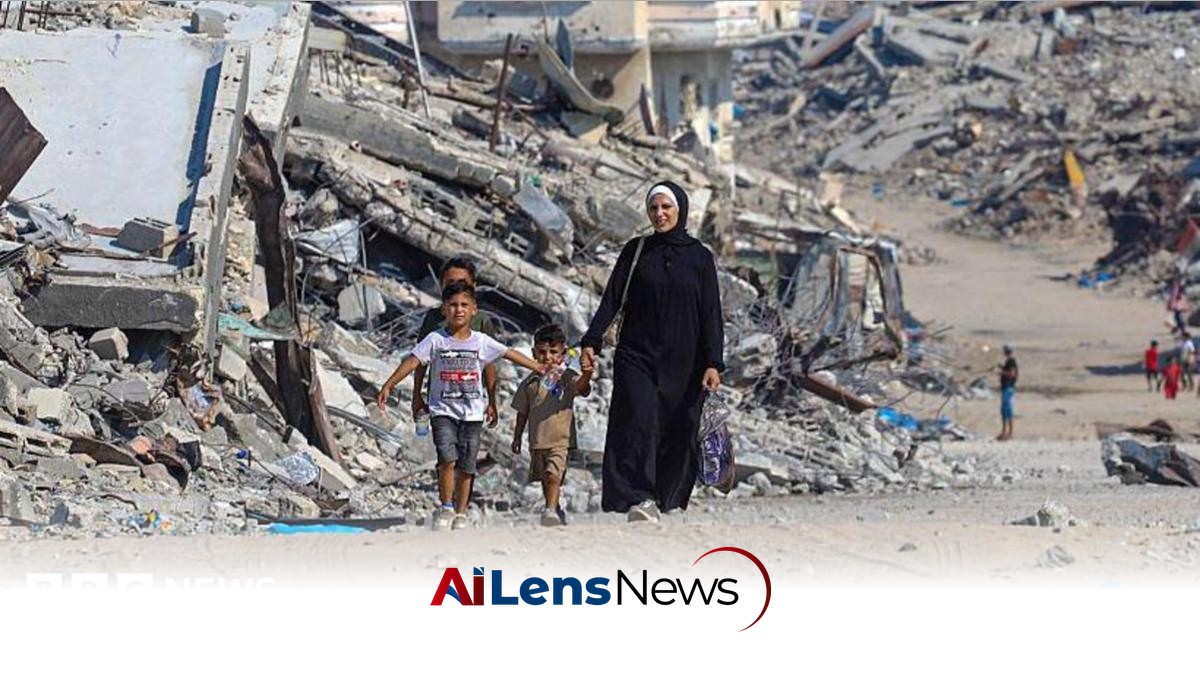
The UN estimates that around 1.9 million people, or 90% of Gaza's population, have been displaced since the onset of the war. The humanitarian situation in Gaza is dire, with widespread destruction of infrastructure, limited access to healthcare, and a lack of basic necessities. The international community has called for urgent humanitarian assistance to address the needs of those affected by the conflict, while also advocating for a sustainable resolution to the underlying issues that have fueled the violence.
As peace efforts continue, the path forward remains fraught with challenges. The divergent positions of Israel and Hamas, coupled with the complex geopolitical dynamics of the region, make it difficult to envision a lasting resolution. However, the engagement of key international players in the peace process, including the United States, Egypt, and other regional powers, underscores a continued commitment to finding a way to achieve stability and peace in Gaza and the broader Middle East.
To learn more about the latest developments in International Politics, stay updated with our exclusive reports and analyses on AiLensNews.

