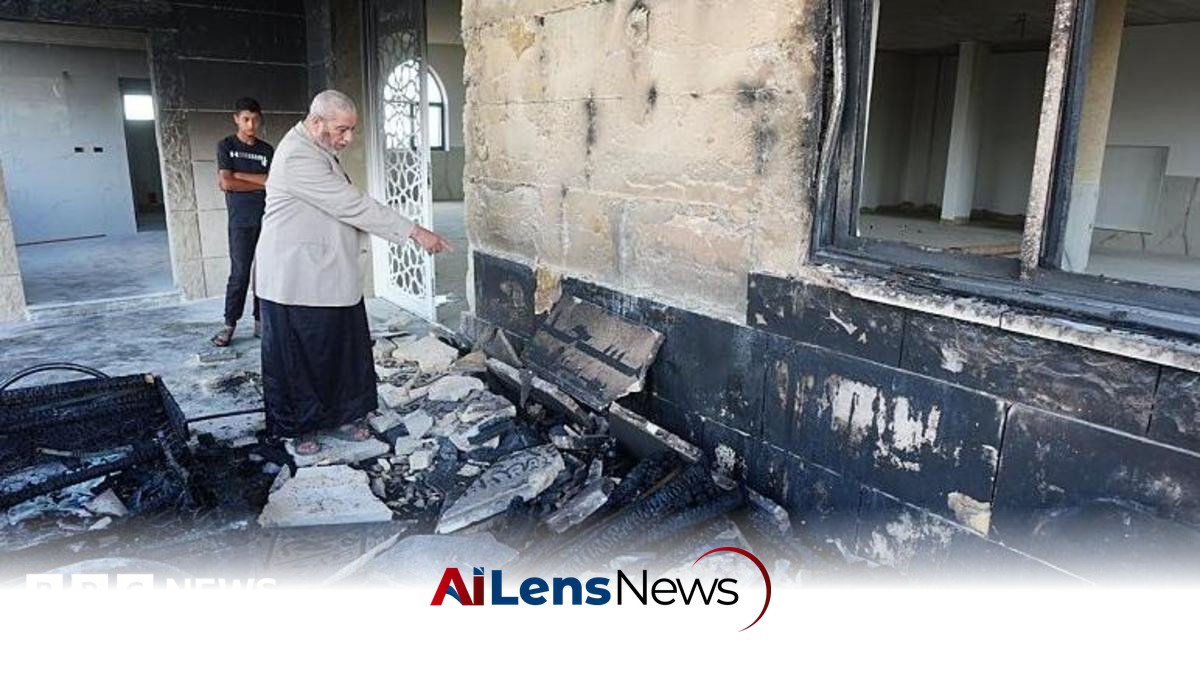


Recent assaults by Israeli settlers in the West Bank have intensified tensions, with multiple attacks on mosques and Palestinian properties following deadly clashes.
New Delhi, India Jul 27, 2026 ALN: Israeli settlers have set fire to two mosques, as well as cars and agricultural land in the occupied West Bank, Palestinian officials say, as tensions in the territory continue to flare.
The latest attacks come two days after a clash between settlers and Palestinians near the village of Tal, which left four Palestinians and two Israelis dead. This incident has been described as particularly violent, with both sides accusing each other of provoking the violence, highlighting the deeply entrenched animosities and the cycle of retaliation that characterizes the Israeli-Palestinian conflict.
The confrontation has further inflamed the situation in the West Bank, which has seen ever-growing violence by extremist settlers against Palestinians, encouraged by far-right elements in the current Israeli government. This escalation is part of a broader trend observed over recent years, where extremist settler violence has reportedly increased, often going hand in hand with a perceived lack of accountability for such actions.
Palestinian reports indicate that two villages in the occupied West Bank came under attack from settlers overnight, with cars vandalized, property stolen, and hate graffiti spray-painted on walls. Such acts of vandalism are not isolated incidents but are part of a pattern of settler violence that has been documented over the years, often targeting Palestinian property, places of worship, and agricultural land.
The mayor of Qusra reported that settlers set fire to a mosque that was under construction. Abdul Azim Wadi, a local resident, stated that the attackers spray-painted graffiti that included the word "revenge" on the walls of the mosque, an act that underscores the charged atmosphere and the motivations behind such violence. The incendiary language used in the graffiti reflects the deep-seated grievances and hostilities that permeate the region.
The Israeli military has stated that troops were dispatched to Qusra and that police would investigate and collect evidence. However, the effectiveness and impartiality of such investigations have been questioned by many Palestinians and human rights organizations, who argue that there is often a lack of accountability for settler violence and that investigations frequently do not lead to meaningful consequences for those responsible.
In a separate incident, Palestinian officials reported that settlers set fire to another mosque in the village of Kour and sprayed slogans on its walls. These attacks have occurred in the context of a broader pattern of violence that has escalated since the outbreak of hostilities between Israel and Hamas in October 2023. The situation has become increasingly volatile, with reports of multiple settler attacks on villages across the West Bank following the deadly clash in Tal.
The Israel Defense Forces (IDF) have carried out raids and arrested more than 130 individuals over the weekend in what they have labeled a "counter-terrorism" operation. This military response, while aimed at addressing security concerns, has often resulted in further tensions and violence, as Palestinians view these actions as collective punishment rather than targeted operations against specific individuals.
Israeli Prime Minister Benjamin Netanyahu responded to the incident in Tal by vowing to take "powerful action," which includes the possible demolition of the homes of two Palestinians allegedly involved in the clash. Home demolitions have been a controversial aspect of Israeli policy in the West Bank, often criticized for their punitive nature and the impact they have on families and communities.
The Palestinian village of Sarra sits adjacent to Tal, with the outpost of Havat Gilad clearly visible on the hill next door. Residents of Sarra have expressed fears about their safety, especially following the recent escalation in violence. Hanan Turabi, a local resident, spoke to reporters in tears beside her house, which was one of six buildings torched by settlers that day, with more than a dozen others reportedly attacked with stones. Her account of the attack reveals the terror and chaos experienced by Palestinians during such incidents.
Hanan described seeing crowds of settlers running towards her across the hillside. She said she stayed in her house until the last moment before fleeing with four children. Her story illustrates the immediate dangers faced by Palestinian families living in areas prone to settler violence, where the threat can escalate suddenly and without warning.
Kaied Ahmad Turabi, a visitor from Miami, was present during the attack and was filmed fighting with settlers on a neighbor's porch. He sustained injuries during the confrontation, which he described in detail, highlighting the physical toll that such violence takes on individuals and families. His experience reflects the broader context of fear and insecurity that many Palestinians feel in their daily lives, particularly in areas with a significant settler presence.
As the situation unfolded, residents organized to defend their village, with dozens of young men streaming up the road in response to calls for help. Israeli soldiers stood guard to separate the groups, while Palestinians faced crowd control measures that included repeated firing of tear gas. This dynamic illustrates the stark divisions and confrontations that characterize life in the West Bank, where clashes between settlers and Palestinians often draw in military forces and escalate rapidly.
Israel's military stated that it was working to prevent "incidents of nationalist crime," a term it uses to describe attacks by extremist Israeli settlers. However, despite public condemnations from Israeli leaders regarding extremist violence, the rapid growth of wildcat settlement outposts has continued. Human rights groups have pointed to this expansion as a key factor fueling violence against Palestinians, creating an environment where tensions can easily flare up.
In response to the recent violence, Israel's Prime Minister indicated a commitment to expedite the establishment and legalization of farm outposts in the West Bank. This policy shift has been met with criticism domestically and internationally, as it is seen as exacerbating tensions and undermining the prospects for peace and stability in the region.
Since the outbreak of violence following the Hamas-led attacks on Israel on October 7, 2023, settler violence in the West Bank has noticeably escalated. The United Nations reports that 1,114 Palestinians have been killed in the West Bank, the majority by the IDF, with at least 35 of those deaths attributed to settler attacks. In contrast, the UN states that 41 Israelis, including civilians and security personnel, have been killed in Palestinian attacks or during Israeli military operations in the West Bank since the commencement of the Gaza war.
The broader context of the Israeli-Palestinian conflict is critical to understanding the dynamics at play in the West Bank. Israel has constructed hundreds of settlements housing approximately 700,000 Jews since it occupied the West Bank and East Jerusalem during the 1967 Middle East war. These settlements are considered illegal under international law, and their expansion has been a significant point of contention in peace negotiations. An estimated 3.3 million Palestinians live alongside these settlements, often facing restrictions on their movement, access to resources, and basic rights.
The implications of the current situation are profound, not only for those directly affected by the violence but also for the broader peace process and regional stability. The ongoing cycle of violence, retaliation, and settlement expansion raises questions about the future of Israeli-Palestinian relations and the possibility of achieving a lasting resolution to the conflict. As tensions remain high, the international community continues to call for restraint and dialogue, but the path forward remains fraught with challenges and uncertainties.
To learn more about the latest developments in Regions & Countries, stay updated with our exclusive reports and analyses on AiLensNews.

