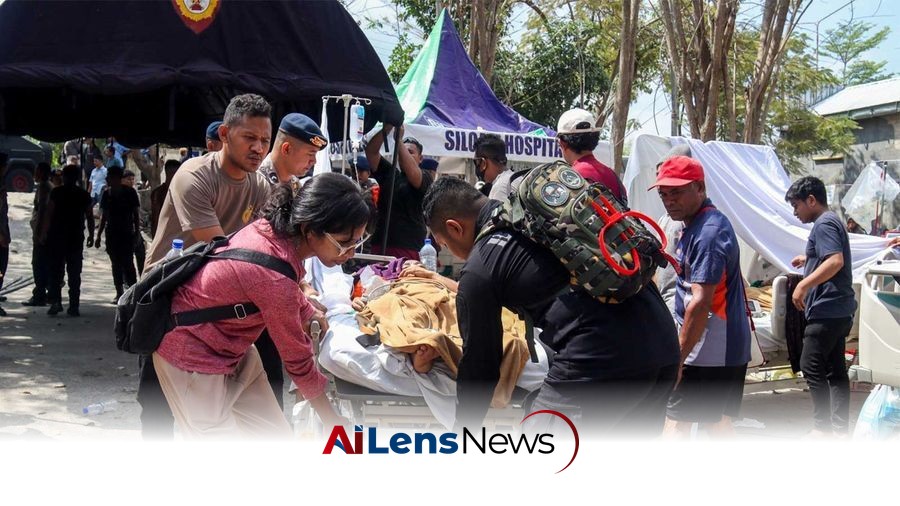


A powerful 7.7-magnitude earthquake in Indonesia has resulted in at least 47 fatalities and extensive structural damage across East Nusa Tenggara province.
New Delhi, India Aug 16, 2026 ALN: At least 47 people have been confirmed dead following a powerful 7.7-magnitude earthquake that struck Indonesia on Saturday morning, according to preliminary data released by the National Disaster Management Agency (BNPB). This earthquake is part of a series of seismic events that have plagued the region, highlighting Indonesia's vulnerability to natural disasters due to its location along the Pacific Ring of Fire, an area known for its high seismic activity.
The Pacific Ring of Fire is a horseshoe-shaped zone that encircles the Pacific Ocean and is home to about 75% of the world's active and dormant volcanoes. Indonesia, situated at the convergence of several tectonic plates, experiences frequent earthquakes and volcanic eruptions. This particular earthquake is one of the most significant in recent years, drawing attention to the need for better preparedness and response mechanisms in the region.
According to official figures released by the BNPB as of Saturday, the highest casualties were recorded in Manggarai Regency, where 24 people lost their lives, followed by East Manggarai with 17 fatalities. Deaths were also reported in Sikka (3), West Manggarai (1), Ngada (1), and Ende (1) regencies. The distribution of casualties indicates that the impact was felt unevenly across the affected areas, with some regions experiencing more devastation than others.
The quake left a trail of severe structural destruction across Indonesia's East Nusa Tenggara (NTT) province. Preliminary BNPB data indicated that 157 homes were severely damaged, 41 suffered moderate damage, and 148 sustained light damage. Critical public infrastructure was also impacted, including 87 educational facilities, 18 healthcare centers, six administrative offices, and five places of worship. The destruction of these facilities not only affects the immediate living conditions of the survivors but also poses long-term challenges for recovery and rebuilding efforts.
In response to the disaster, the BNPB has dispatched extensive emergency supplies to the affected region. This includes food, clean water, medical supplies, and temporary shelter materials for those displaced by the earthquake. The logistical challenges of delivering aid in remote areas, particularly in the aftermath of such a disaster, cannot be understated. Many roads may be blocked due to landslides and debris, complicating relief efforts.
In Jakarta, a major airlift operation was launched from Halim Perdanakusuma Air Force Base to transport a total relief shipment of 50,000 aid packages weighing 275 tons. President Prabowo Subianto oversaw the initial dispatch of 10,500 packages that arrived at the airbase for immediate deployment. The government’s swift action in mobilizing resources demonstrates the urgency of the situation and the need to provide timely assistance to those affected.
Following the initial tremor, the Meteorology, Climatology, and Geophysics Agency (BMKG) issued a Tsunami Early Warning, which was officially lifted at 7:30 AM (local time) after monitoring confirmed no dangerous sea-level rise along affected coastal areas. The issuance of a tsunami warning is a critical part of disaster response in Indonesia, given the country's history of devastating tsunamis that have followed major earthquakes.
Earlier, Indonesia was struck by the third earthquake within hours on Saturday night as the country continues to reel from the devastation of the natural calamity. Sharing the details in a post on X, the National Center for Seismology said that the earthquake of magnitude 6.0 struck the Gulf of Tomini on Saturday night. As per the NCS, the earthquake occurred at a depth of 68 kilometers at 21:55 IST. This pattern of aftershocks is common following a major earthquake, and they can further complicate rescue and recovery efforts.
It said, "EQ of M: 6.0, On: 15/08/2026 21:55:18 IST, Lat: 0.174 N, Long: 120.312 E, Depth: 68 Km, Location: Gulf of Tomini." This comes as a magnitude 6.5 quake struck Indonesia on Saturday afternoon, hours after a devastating 7.7-magnitude quake in the morning. The frequency and intensity of these earthquakes raise concerns about the region's seismic stability and the preparedness of local communities to respond to such disasters.
According to the US Geological Survey (USGS), the earlier earthquake struck Indonesia's Flores region at 5:58 am (local time), with its epicenter located roughly 68 kilometers north-northwest of Ende city in East Nusa Tenggara province. Several aftershocks followed the initial quake, which can lead to further damage to already weakened structures and increase the risk of landslides.
The head of the Maumere Search and Rescue Agency, Fathur Rahman, said rescuers continued searching for two villagers believed to be buried under mud following a landslide triggered by the earthquake. The search and rescue operations are critical, especially in the immediate aftermath of a disaster, as the chances of finding survivors decrease significantly with time. The emotional toll on families awaiting news of their loved ones can be profound.
East Nusa Tenggara Police Chief Rudi Darmoko said the earthquake caused severe damage and collapsed buildings. Power outages in cities and villages disrupted communication and hampered search and rescue operations. The loss of electricity can severely impact the coordination of relief efforts, as communication systems may fail and emergency services may struggle to operate effectively.
Footage on local television showed patients being evacuated from several hospitals as a precaution. Hospital staff moved equipment, including beds, IV stands, and oxygen cylinders, outdoors and established temporary treatment areas. This highlights the immediate need for medical care and the importance of ensuring that healthcare facilities can continue to operate during and after such disasters.
The implications of this earthquake extend beyond the immediate loss of life and property. It raises questions about Indonesia's disaster preparedness and the resilience of its infrastructure. As the country continues to develop, ensuring that buildings, roads, and public facilities can withstand seismic events is crucial. This disaster may prompt a reevaluation of building codes and disaster response strategies, as well as increased investment in early warning systems and community education about earthquake preparedness.
As the recovery efforts continue, the international community may also respond with aid and support, further emphasizing the global interconnectedness in addressing natural disasters. The resilience of the Indonesian people and their ability to rebuild will be tested in the coming months as they face the challenges of recovery and reconstruction in the wake of this tragedy.
To learn more about the latest developments in Culture & Society, stay updated with our exclusive reports and analyses on AiLensNews.

