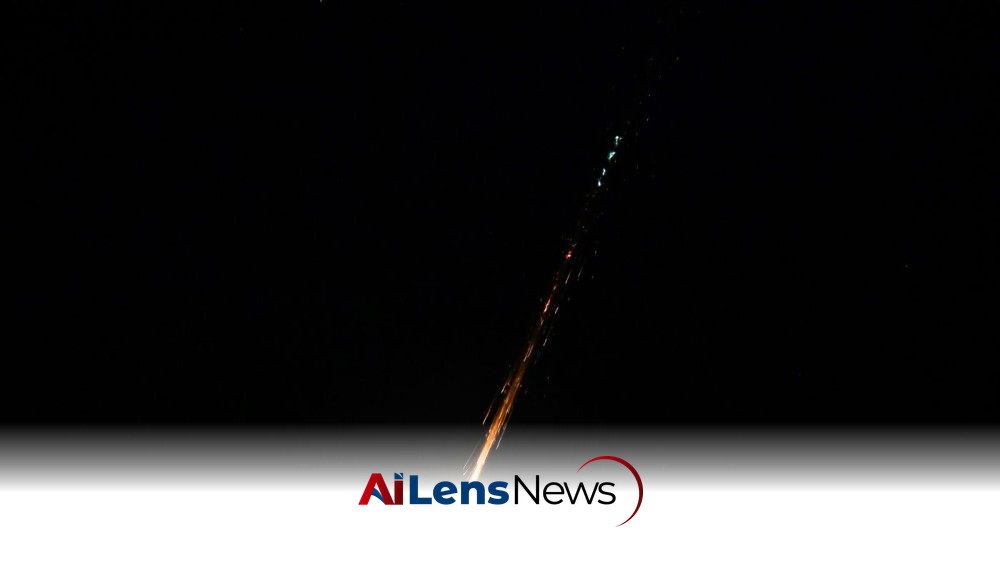


Multiple explosions were heard in Iran as US Central Command announced new strikes aimed at degrading Iranian military capabilities for the seventh consecutive night.
New Delhi, India Jul 18, 2026 ALN: Explosions were reported in several Iranian provinces on Friday night as the US Central Command (CENTCOM) announced the initiation of a new round of strikes against Iran, according to Iranian media outlets. The situation marks a significant escalation in the already tense relations between the United States and Iran, which have been fraught with conflict and hostility for decades.
The semi-official Mehr news agency reported explosions in Bushehr province and in the Sirik and Qeshm counties of Hormozgan province. Details regarding the specific targets, casualties, or damage caused by these explosions remain unclear. The lack of information regarding the impacts of these strikes raises concerns about the potential for civilian casualties and the broader implications for regional stability.
Additionally, the official IRNA news agency indicated that five blasts were heard in Iran's central Yazd province. The occurrence of multiple explosions across various provinces suggests a coordinated effort in the strikes, aiming to disrupt Iranian military operations and capabilities significantly.
CENTCOM confirmed via a post on the social media platform X that this marks the seventh consecutive night of strikes against Iran, stating that these operations are aimed at further degrading Iranian military capabilities. The sustained nature of these attacks indicates a shift in US military strategy, suggesting a long-term commitment to countering Iranian influence in the region.
On Thursday night, CENTCOM reported that US forces, including fighter jets, drones, and warships, executed precision strikes targeting numerous Iranian military installations. These included coastal surveillance and air defense sites, military logistics infrastructure, and maritime assets. The focus on these specific targets highlights the US's intent to undermine Iran's ability to project power in the Gulf region, particularly in the strategic Strait of Hormuz, through which a significant portion of the world's oil supply transits.
Among the targets was a surveillance tower located at Chah Bahar Shahid Kalantari Port, which is part of a maritime surveillance network along Iran's Gulf of Oman coastline. CENTCOM noted that the Islamic Revolution Guard Corps (IRGC) utilized this tower to monitor and target commercial vessels navigating the Strait of Hormuz. The targeting of such infrastructure raises questions about the legality of the strikes under international law, particularly concerning the principle of proportionality and the protection of civilian infrastructure.
In a separate statement, the IRGC announced that its forces had earlier targeted a depot in Bahrain housing US unmanned surface vessels, claiming to have destroyed a significant number of them. This information was reported by Xinhua news agency. The IRGC's claim of having successfully struck US assets in Bahrain indicates a potential escalation in the conflict, as it suggests that Iran is willing to extend its military operations beyond its borders in response to US actions.
The IRGC further stated that its retaliatory missile and drone strikes also targeted a primary artificial intelligence center in Bahrain, which it accused the United States of using to identify targets and commit "war crimes," asserting that the facility was completely destroyed. This assertion highlights the increasing complexity of modern warfare, where technology plays a crucial role in military operations, and raises concerns about the ethical implications of using AI in conflict.
Moreover, the IRGC reported that its air defense units successfully shot down an AeroVironment RQ-11 Raven drone over Ramshir County in the southwestern Khuzestan province. The downing of a US drone illustrates the ongoing cat-and-mouse game between US and Iranian forces, where both sides are actively seeking to assert their dominance in the airspace and gather intelligence on each other's movements.
As tensions escalate, the situation remains fluid, with ongoing military actions and retaliatory strikes from both sides. The potential for miscalculations and unintended escalations is significant, particularly given the high stakes involved. The conflict not only impacts US-Iran relations but also has broader implications for regional security, particularly in the Gulf region, where several countries are closely monitoring the developments.
The historical context of US-Iran relations is essential to understanding the current situation. The two nations have been adversaries since the 1979 Iranian Revolution, which saw the overthrow of the US-backed Shah and the establishment of the Islamic Republic. The US has since imposed various sanctions on Iran, particularly targeting its nuclear program and military capabilities. In recent years, tensions have escalated further, particularly following the US withdrawal from the Joint Comprehensive Plan of Action (JCPOA) in 2018, which aimed to limit Iran's nuclear ambitions in exchange for sanctions relief.
In this context, the current military actions can be seen as part of a broader strategy by the US to contain Iran's influence in the region, which it views as destabilizing. Iran, on the other hand, perceives these strikes as acts of aggression and a violation of its sovereignty, prompting a strong military response. The cycle of retaliation between the two nations raises concerns about the potential for a larger regional conflict, especially given the involvement of other actors in the region, including proxy groups supported by Iran.
As the situation develops, the international community is closely watching for signs of escalation or potential diplomatic resolutions. The ongoing military operations underscore the fragility of peace in the region and the challenges of navigating complex geopolitical dynamics. Efforts at diplomacy have often been undermined by mutual distrust and conflicting interests, making the prospect of a peaceful resolution increasingly elusive.
In conclusion, the recent explosions across Iran amid ongoing US strikes represent a significant escalation in a long-standing conflict between the two nations. The implications of these developments extend beyond the immediate military actions, affecting regional stability and international relations. As both sides continue to engage in military operations, the potential for further escalation remains high, underscoring the urgent need for dialogue and diplomatic engagement to prevent a larger conflict.
To learn more about the latest developments in Culture & Society, stay updated with our exclusive reports and analyses on AiLensNews.

