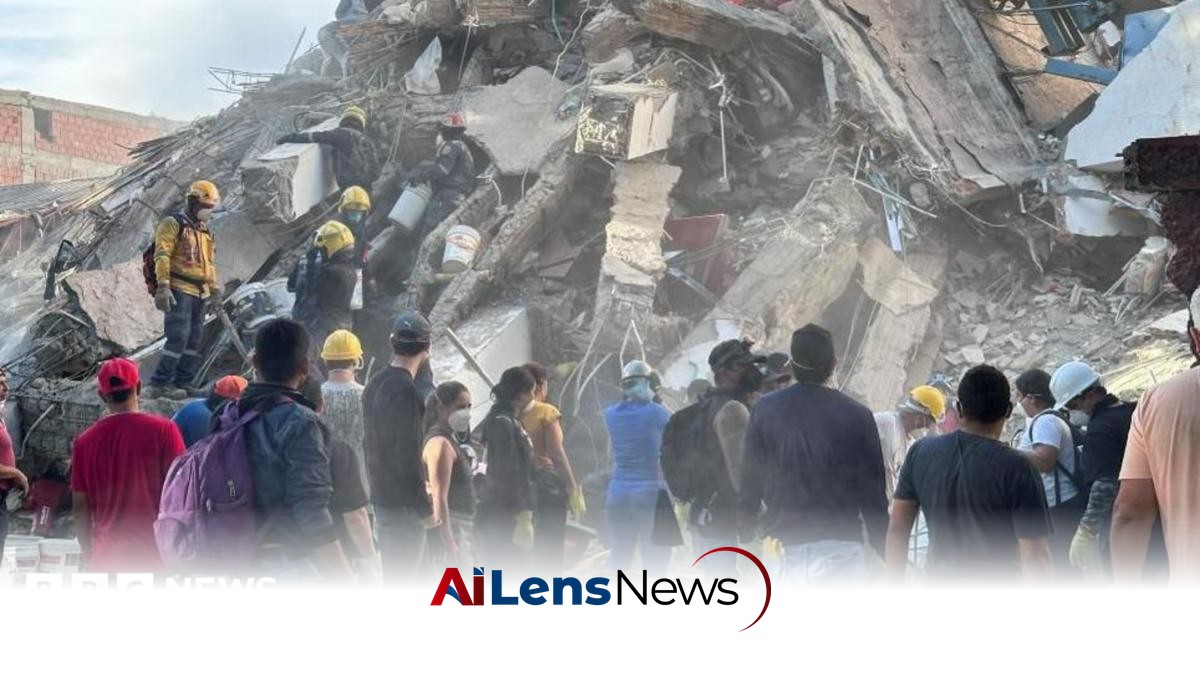


Rescue operations continue in Colombia following a devastating earthquake that has left over 180 dead and many more injured or missing.
New Delhi, India Aug 12, 2026 ALN: Rescue workers in Colombia are working against the clock to free survivors trapped in buildings and under rubble following Monday's powerful earthquake.
More than 180 people have been confirmed dead - most in the cities of Cali and Pereira. The earthquake, which struck with a magnitude of 7.4, occurred at 07:34 local time (12:34 GMT), and its effects were felt across an enormous area, extending hundreds of miles across western Colombia. The aftermath has been compounded by fresh aftershocks that continued to rattle the region on Tuesday, leaving residents in a state of fear and uncertainty.
As the situation develops, the official death toll remains at 181, but local officials have reported higher figures, suggesting that the number of fatalities could exceed 240. In light of the devastation, President Abelardo de la Espriella has declared a state of emergency, allowing for expedited resources and assistance to be mobilized in the affected areas. This declaration is a critical step in coordinating the national response to the disaster.
In an update delivered from Pereira, one of the cities hardest hit by the quake, President Espriella highlighted the scale of the disaster, reporting that nearly 2,600 individuals have sustained injuries, and approximately 200 people remain unaccounted for. The physical destruction is staggering, with more than 1,100 homes reported as completely destroyed and over 8,000 others suffering damage. Such widespread devastation underscores the challenges that rescue teams face as they sift through the debris in search of survivors.
As night fell on Monday and into Tuesday, many residents in cities like Pereira and Cali opted to sleep outdoors. This decision was driven by the destruction of their homes or the fear of additional collapses following the initial quake. The emotional toll on these communities is immense, as individuals grapple with the loss of loved ones, homes, and a sense of security.
In Cali, a bustling city with a population of approximately 2.2 million, the impact of the earthquake has been particularly severe, with at least 95 confirmed deaths. In response to the crisis, a unified command post has been established to streamline rescue operations and resource allocation. Mayor Alejandro Eder announced that 239 individuals remain trapped under the rubble, while 949 others have been reported injured. The collapse of 45 buildings, some of which were residential and commercial structures, has further complicated rescue efforts.
Tragically, the earthquake's effects reached into the educational sector as well. In Calima, a neighborhood in northern Cali, a section of the Gimnasio Calima school collapsed, resulting in the deaths of four children. Mayor Antonio Cadavid indicated that many other children sustained serious injuries, with a total of 30 being referred to medical care centers for treatment. This incident highlights the vulnerability of schools and the critical need for structural integrity in buildings, especially in earthquake-prone areas.
To address rising concerns over potential looting amid the chaos, Mayor Cadavid has implemented a curfew that began at 20:00 local time and will last until 06:00 on Wednesday morning. Such measures are intended to maintain order and ensure that emergency services can operate effectively without the added burden of crime during this critical time.
As the situation evolves, additional tremors have continued to be felt in Cali and surrounding areas. The Colombian geological service has reported more than 70 aftershocks since the initial earthquake, with two significant quakes of magnitude 3.6 occurring early on Tuesday in San José del Palmar and Santander. These aftershocks not only impede rescue efforts but also contribute to the anxiety and fear among residents who are already in a state of distress.
Pereira has reported 79 fatalities, according to the city's fire department, and has implemented a car-free day to facilitate search and rescue operations. This initiative is crucial for allowing emergency vehicles and personnel to navigate the city and reach those in need of assistance. Footage from Pereira has depicted the extensive scale of the rescue efforts, with hundreds of volunteers joining forces to remove rubble and locate survivors.
In the hours following the earthquake, a resident of the Parque Industrial neighborhood near Pereira's airport described the overwhelming shock and disruption experienced in the area. "It's impossible to get around the city center. In Bolívar Square, at least one building collapsed, and there are structures where buses and trucks are trapped, with people fearing those structures will collapse as well," he recounted. Such firsthand accounts illustrate the chaotic and dangerous conditions that residents are facing in the aftermath of the quake.
In Manizales, another city affected by the earthquake, Mayor Jorge Eduardo Rojas confirmed that five individuals have died, with 60 buildings reported as partially or totally collapsed. Rojas has urged the public to exercise caution regarding aftershocks and to refrain from sharing unverified information on social media, which could exacerbate public anxiety and confusion during this critical time.
In the wake of the disaster, international support has begun to pour in for Colombia. A statement from a spokesperson for UN Secretary-General António Guterres expressed solidarity with the Colombian people and government, emphasizing the UN's commitment to assisting in the response efforts. The international community's support is crucial in providing additional resources and expertise to aid in recovery and rebuilding efforts.
Spain's Foreign Minister, José Manuel Albares, reported that 164 Spaniards are still unaccounted for in the wake of the earthquake. Fortunately, there have been no reports of injuries or fatalities among Spanish citizens. The attention from foreign governments highlights the global implications of such disasters and the interconnectedness of nations when responding to humanitarian crises.
In a show of support, the Donald Trump administration announced a donation of $15.5 million to Colombia to aid in the recovery efforts. This financial assistance is intended to provide immediate relief and support for those affected by the earthquake, demonstrating the importance of international solidarity in times of crisis.
Offers of assistance have also been extended by neighboring countries, including Ecuador, Brazil, El Salvador, and Venezuela. The regional response underscores the shared challenges faced by nations in the wake of natural disasters and the importance of collaboration in disaster relief efforts.
As rescue operations continue, the full extent of the damage and the long-term implications for the affected communities will become clearer. The recovery process will likely require significant time, resources, and support from both national and international entities. The resilience of the Colombian people will be tested in the days and weeks to come as they work to rebuild their lives and communities in the face of such a devastating event.
To learn more about the latest developments in Regions & Countries, stay updated with our exclusive reports and analyses on AiLensNews.

