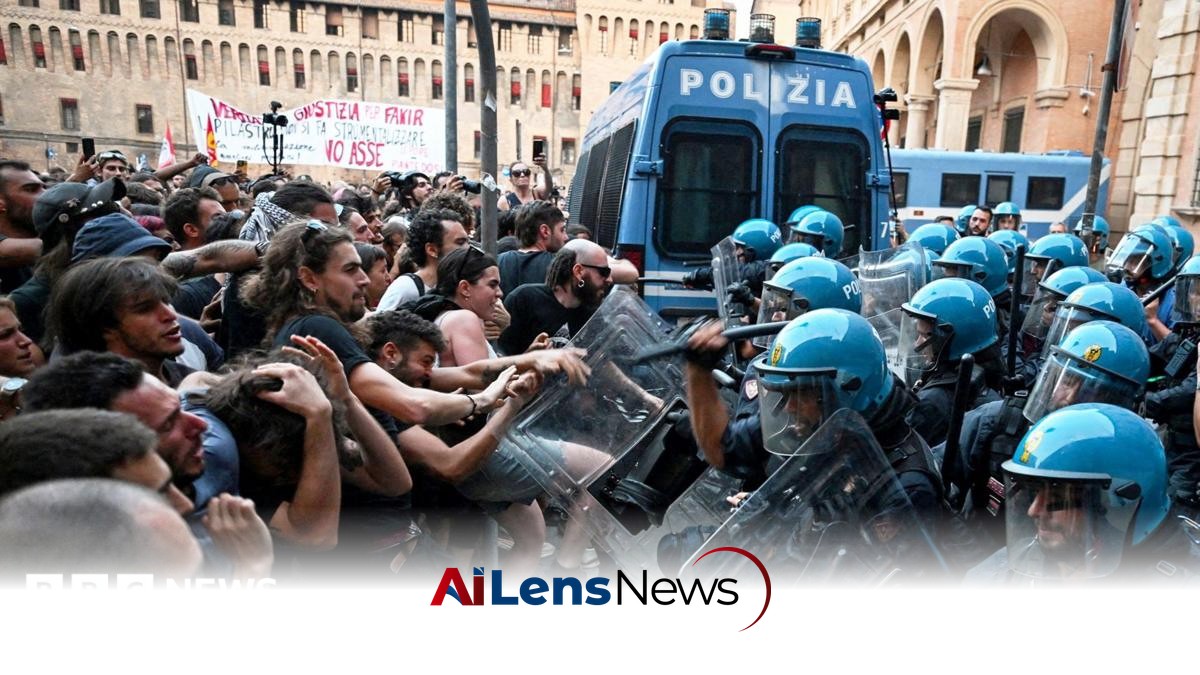


Thousands demand justice for Abderrahim Fakir, who died during police restraint, leading to clashes and injuries among protesters and officers.
New Delhi, India Jul 21, 2026 ALN: Protests have erupted in Bologna, Italy, following the death of a Moroccan-born man, Abderrahim Fakir, while being forcibly restrained by police.
On Monday night, several thousand demonstrators took to the streets, calling for justice for Fakir, who died on Sunday after police intervention. The protests began peacefully but escalated when a smaller faction clashed with law enforcement, resulting in injuries to 64 police officers. This incident has sparked widespread outrage and has drawn attention to the ongoing issues surrounding police accountability and the treatment of individuals in custody.
Prime Minister Giorgia Meloni emphasized the need for a thorough investigation into the circumstances surrounding Fakir's death, while also condemning the violence against law enforcement. She stated, "Nothing can justify violence against police." This statement reflects a common stance among government officials who often seek to balance the need for public safety with the rights of citizens, especially during times of civil unrest.
Police were summoned on Sunday morning after a neighbor reported Fakir behaving erratically. Officers attempted to calm him down but resorted to using pepper spray. A disturbing video circulating on social media shows two officers restraining Fakir, who was face down, while a civilian held his legs. The video captures the moment Fakir stops struggling, leading to concerns about his well-being. This visual evidence has fueled public anger and has raised questions about the appropriateness of the police's response to the situation.
Prosecutors in Bologna have initiated a manslaughter investigation against the police officers involved and the medical personnel present at the scene. Eyewitness accounts indicate that while Fakir appeared distressed, he posed no threat and was unarmed. This aspect of the case is critical, as it challenges the justification for the use of force by the police and raises fundamental questions about training and protocols for handling individuals in crisis.
"You can't die like this," said Fakir's sister, Khadija. "They killed him mercilessly, and I want the truth." Her emotional plea underscores the personal impact of this tragedy and highlights the demand for accountability from law enforcement. Bologna's mayor, Matteo Lepore, expressed shock at the video and invited Fakir's family to participate in the demonstration, emphasizing that he was a beloved individual, not just a statistic. This sentiment resonates with many who feel that victims of police violence are often reduced to mere numbers in larger discussions about crime and law enforcement.
While the main protest remained largely peaceful, approximately 100 individuals clashed with police, resulting in property damage, including two cars being set ablaze. Lepore described the situation as having two distinct narratives: one of peaceful protest and another of violence. This duality is often seen in protests, where the actions of a small group can overshadow the larger message of the majority and complicate public perception of the events.
Domenico Pianese, Secretary-General of the police union, criticized the mayor's call for a demonstration so soon after the incident, suggesting it incited further unrest. He defended the police's actions, stating that the use of force was justified given the circumstances. This defense reflects a broader tension between police unions and community activists, who often have opposing views on the appropriateness of police tactics and the need for reform.
Prime Minister Meloni labeled the events as "unacceptable" and reiterated the importance of investigating Fakir's death thoroughly. She condemned those who used the incident as an excuse for violence, asserting that they were not seeking truth but confrontation. Her remarks highlight the delicate balance that leaders must maintain in addressing public grievances while also ensuring the safety and security of law enforcement personnel.
Fakir's family has lived in Italy for over three decades, and he operated a small logistics company near Bologna. His lawyer described him as a hardworking and kind individual, questioning why he died in the hands of those meant to protect him. This personal narrative adds depth to the story, reminding the public that behind every statistic is a life with family, dreams, and aspirations.
Protest signs referenced other cases of individuals who died in police custody, highlighting a broader concern regarding police accountability in Italy. Ilaria Cucchi, a senator and sister of a man who died in police custody in 2009, criticized the government's support for law enforcement in light of these events. Her comments reflect a growing movement among activists and lawmakers advocating for systemic changes in policing practices and greater accountability for officers involved in misconduct.
As the investigation continues, the protests in Bologna reflect growing tensions surrounding police conduct and the demand for justice in cases of alleged misconduct. The situation is emblematic of a larger global conversation about police reform, racial justice, and the protection of civil rights. In many countries, similar incidents have led to widespread protests and calls for change, suggesting that the issues at play in Bologna are part of a broader pattern that transcends national borders.
The aftermath of these protests will likely influence public opinion on policing in Italy and may prompt legislative discussions regarding police practices and oversight. As communities grapple with the implications of this tragic event, the demand for transparency and accountability in law enforcement remains a central theme in the ongoing dialogue about justice and civil rights.
The protests in Bologna are not an isolated incident but rather a reflection of a growing global movement against police violence and systemic racism. This movement has gained momentum in recent years, particularly following high-profile cases in the United States and other countries, where individuals have died during police encounters. The Black Lives Matter movement, for instance, has highlighted the need for reform in policing practices and has inspired similar movements across Europe, including Italy.
In Italy, the issue of police violence has been a longstanding concern, with various cases of alleged misconduct drawing public scrutiny and calls for reform. Activists argue that the current system often protects officers from accountability, creating a culture where excessive force can go unpunished. This perception has fueled protests and demands for greater oversight of police practices, including the implementation of body cameras and independent investigations into incidents of police violence.
The Bologna protests have also reignited discussions about the treatment of immigrants and marginalized communities in Italy. Fakir's background as a Moroccan immigrant adds another layer to the narrative, as many activists argue that individuals from minority backgrounds often face harsher treatment by law enforcement. This intersection of race, immigration status, and police conduct is a critical aspect of the ongoing dialogue about justice and equality in Italy.
As the investigation into Fakir's death unfolds, the implications for police reform and community relations in Bologna and beyond will be closely monitored. The outcomes of this case may set a precedent for how similar incidents are handled in the future and could influence public trust in law enforcement. The protests serve as a reminder that calls for justice are not just about individual cases but are part of a broader struggle for systemic change in policing practices, accountability, and civil rights.
In conclusion, the protests in Bologna following the death of Abderrahim Fakir highlight the urgent need for a reassessment of police practices and accountability in Italy. As communities continue to demand justice and transparency, the implications of this tragic incident will resonate far beyond the streets of Bologna, contributing to a larger global conversation about the future of policing and the protection of civil rights for all individuals, regardless of their background.
To learn more about the latest developments in International Politics, stay updated with our exclusive reports and analyses on AiLensNews.

