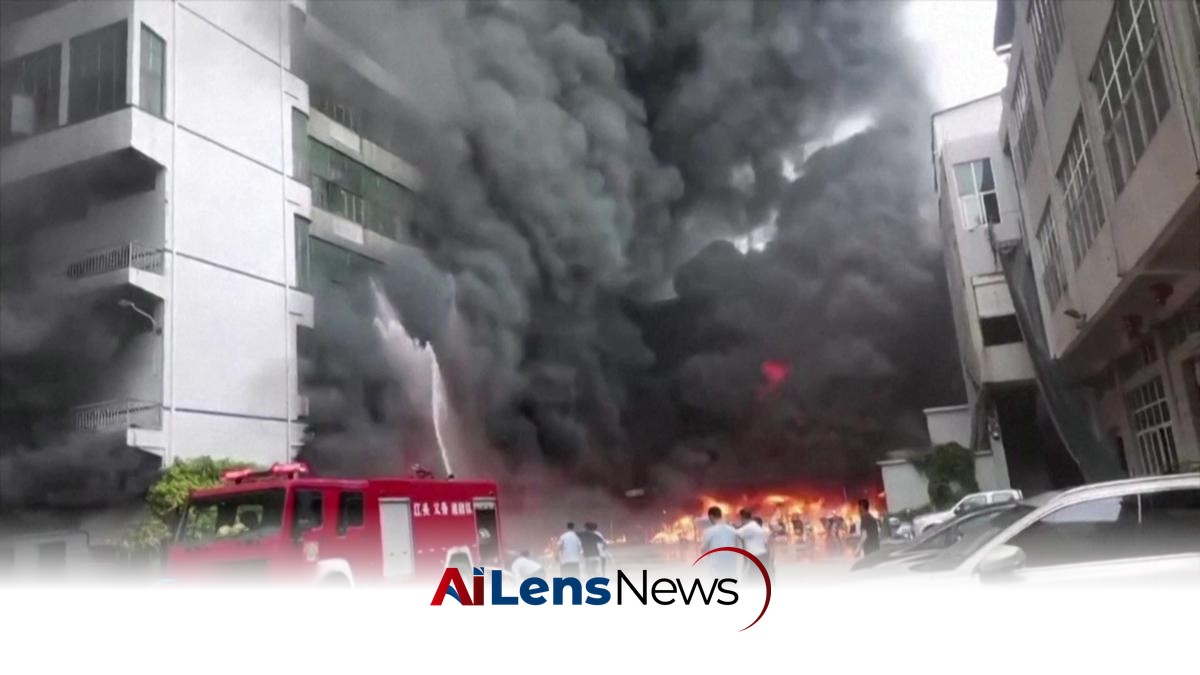


A devastating fire at a shoe factory in Jinjiang, China, has resulted in at least 28 fatalities, prompting a call for accountability from President Xi Jinping.
New Delhi, India Jul 9, 2026 ALN: A fire at a shoe factory in the south-eastern Chinese city of Jinjiang has killed at least 28 people, according to the state agency.
This tragic event has drawn significant attention not only for the loss of life but also for its implications on workplace safety regulations in China. The scale of the disaster highlights ongoing concerns regarding fire safety practices in industrial settings, particularly in regions known for high-volume manufacturing. The incident raises alarms about the effectiveness of existing safety protocols and the enforcement of regulations designed to protect workers in hazardous environments.
Dramatic footage posted by Xinhua showed huge plumes of black smoke rising from a building as well as people who appeared to be trapped on the roof. Eyewitness accounts describe chaotic scenes as workers attempted to escape the rapidly spreading flames. The presence of smoke and the difficulty of evacuation are stark reminders of the dangers inherent in factory environments, especially those that handle flammable materials. Such incidents are not isolated; they reflect a broader pattern of safety lapses that have plagued the manufacturing sector in China, which is known for its expansive and often unregulated industrial landscape.
President Xi Jinping said the blaze had caused "major casualties", adding those responsible must be held "strictly accountable". His statement reflects a broader governmental concern regarding the enforcement of safety standards in industries across China. In recent years, there has been increased scrutiny over factory conditions, particularly in light of several high-profile incidents that have raised alarms about worker safety and regulatory compliance. The Chinese government has pledged to improve workplace safety, but the effectiveness of these measures remains to be seen, especially in light of ongoing tragedies such as this one.
Jinjiang, in the province of Fujian, is often referred to as China's "shoe capital" as it reportedly manufactures 20% of the 's sports shoes. This city has grown to become a hub for footwear production, attracting numerous domestic and international brands that rely on its manufacturing capabilities. The economic implications of such a disaster could be significant, impacting not just the local economy but also supply chains that depend on timely production and delivery of goods. The loss of life and potential disruptions could lead to increased scrutiny from international partners who may question the safety and reliability of sourcing from such regions.
The blaze erupted at the Huiteng Footwear factory at around noon local time (05:00 BST) on Thursday. The timing of the incident may have contributed to the high number of casualties, as many workers would have been present during the peak hours of production. Understanding the factors that led to the fire's outbreak is crucial for preventing similar tragedies in the future. Investigations will likely focus on the factory's operational practices, maintenance of equipment, and the training provided to employees regarding emergency procedures.
Hundreds of rescue workers were rushed to the scene, state broadcaster CCTV reports, and more than 200 people were evacuated. The response from emergency services illustrates the urgency with which authorities are treating the situation. Rescue operations in such scenarios are often complicated by the structural integrity of the building and the presence of toxic fumes, which can pose additional risks to both workers and rescuers. The effectiveness of the emergency response could also be scrutinized, as it is vital for local authorities to have robust plans in place for such disasters.
It is unclear how many have been injured. The ambiguity surrounding the number of injuries highlights the chaotic nature of the event and the challenges faced in accounting for all individuals present at the time of the fire. As rescue efforts continue, the focus will likely shift to the health and safety of survivors and the psychological impact of such a traumatic event. The aftermath of such incidents often leaves lasting scars on communities, with survivors requiring psychological support and counseling to cope with the trauma experienced.
Initial reports suggest the fire may have started on the factory's ground floor where flammable materials were stored. This detail raises critical questions about the adherence to safety regulations concerning the storage and handling of hazardous materials. The presence of flammable substances in a factory setting necessitates strict compliance with safety protocols to mitigate the risk of fire. Investigations into the cause of the fire will need to scrutinize the factory's safety measures and emergency preparedness, including whether proper fire exits were accessible and whether employees had received adequate training in evacuation procedures.
Authorities have detained a number of people who work for the factory's owners, and the firm's bank account was frozen, according to Xinhua. Such actions are indicative of the legal and financial repercussions that can follow incidents of this nature. Detaining individuals connected to the factory may be part of a broader investigation into potential negligence or violations of safety laws. The freezing of the company's assets could also serve as a means to ensure that funds are available for compensation to victims and their families. This approach reflects a commitment to holding individuals accountable for lapses in safety that lead to such tragedies.
China started a campaign to prevent fires in high-rise buildings after a blaze ripped through several Hong Kong apartment buildings in November, killing 168 people. This previous incident has underscored the importance of stringent fire safety regulations across all types of buildings, not just residential ones. The government's response to the Jinjiang factory fire will likely include a reevaluation of existing safety protocols in industrial sectors, particularly in areas with a high concentration of manufacturing facilities. The effectiveness of such measures will be closely monitored by both domestic and international observers, as the pressure mounts on the government to demonstrate a commitment to worker safety.
The implications of this tragedy extend beyond immediate safety concerns; they also touch upon broader issues of labor rights and corporate accountability in China. As the nation continues to position itself as a global manufacturing leader, ensuring safe working conditions for employees will be paramount in maintaining both domestic stability and international reputation. The incident may also catalyze labor movements advocating for enhanced protections and rights for workers, as civil society increasingly demands accountability from corporations and the government.
In conclusion, the fire at the Huiteng Footwear factory in Jinjiang serves as a tragic reminder of the ongoing challenges related to workplace safety in China's manufacturing sector. As investigations unfold, the focus will be on understanding the causes and ensuring that measures are implemented to prevent such incidents in the future. The loss of life and the impact on the community will resonate for years to come, prompting calls for systemic change in how industrial safety is approached in the region. The tragedy underscores the urgent need for comprehensive reforms to improve safety standards and protect the lives of workers in one of the 's largest manufacturing hubs.
To learn more about the latest developments in Regions & Countries, stay updated with our exclusive reports and analyses on AiLensNews.

