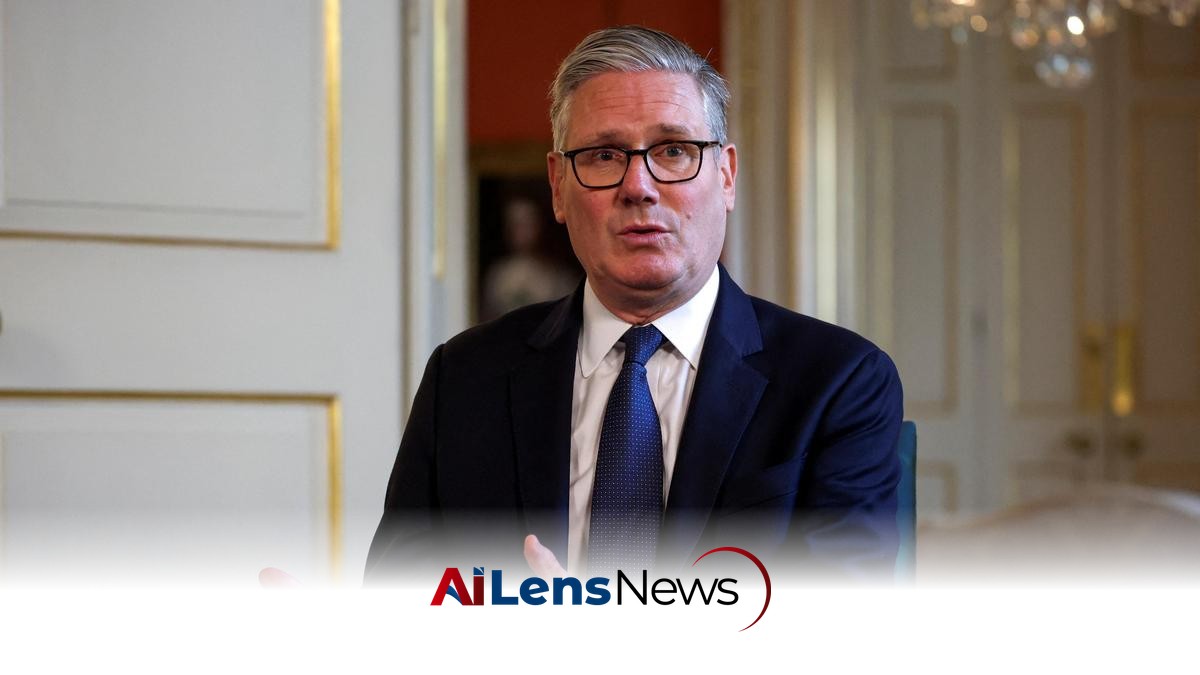


Keir Starmer describes his resignation as U.K. Prime Minister as an intensely personal decision made during a family weekend.
London, United Kingdom Jul 5, 2026 ALN: Keir Starmer has spoken of his decision to resign as Labour Party leader and British Prime Minister as an “intensely personal” one, which he took with his wife and children at a family weekend away.
In his first interview since his Downing Street statement that fired the starting gun for a leadership election, Mr. Starmer told the BBC on Friday (July 3, 2026) evening that he would complete his current term as a central London member of Parliament.
However, while on the backbenches of Parliament, the 63-year-old politician plans on “keeping his mouth shut” to allow his successor — widely expected to be former Greater Manchester Mayor Andy Burnham — to get on with the job.
“I grappled with what was the best thing to do for me, for the country, for the government,” said Mr. Starmer.
“In the end, it became an intensely personal decision. And that's why it was a decision taken ultimately when [my wife] Vic and I were away with the kids,” he said.
The weekend before June 22, when he announced his resignation on the steps of 10 Downing Street in London, the Starmer family was at Chequers — the U.K. PM’s countryside retreat in Buckinghamshire.
“We just spent two days together as a family and that's when I came to my final decision... Taking the decision that your political career is over, it is an intensely personal matter, or at least it was for me,” he shared.
In the interview, which marks exactly two years since he won Labour a landslide general election victory, Mr. Starmer cautioned his successor that they would be faced with similar global challenges that he had been consumed by during his truncated tenure as PM.
“Whoever is my successor is going to face the same global conflict. We keep saying, and it's true, we're in a more dangerous and volatile situation than we've been in for probably most of my lifetime. That's not just a phrase, that's reality.
“That's not going to change. And the domestic challenges aren't going to change,” he said.
Despite being shunted out of office by what was effectively an internal coup, Mr. Starmer insisted he “never had any personal animosity” towards Andy Burnham and would “do everything I possibly can to make sure” that the next government succeeds.
“[I will be] keeping my mouth shut, rather than giving constant advice to my successor about what they should be doing,” he stated.
The caretaker PM also highlighted that his four years as Labour leader in Opposition prior to winning the July 2024 general election were “absolutely core” to his legacy.
“The Labour Party arguably could have been lost, but I stepped up as leader and with others we saved the Labour Party,” he asserted, admitting that he had been ousted because his party MPs no longer believed he was “the right person to take us into the next election.”
After an initial phase of popularity, Mr. Starmer was hit by some controversial decision-making and policy U-turns, which intensified an internal rebellion within the Labour Party ranks as MPs demanded tougher action on the country's cost-of-living crisis.
Mr. Burnham has so far emerged as the only candidate for the top job, which could see him elected unopposed once the process formally closes on July 16.
This resignation marks a significant moment in British politics, particularly for the Labour Party, which has experienced a tumultuous period since Starmer took the helm in April 2020. His leadership followed the resignation of Jeremy Corbyn, who faced considerable criticism for the party's performance in the 2019 general election. Starmer's ascent was initially met with optimism, as he promised a return to traditional Labour values while also appealing to a broader electorate.
Starmer's tenure as Labour leader was characterized by a series of challenges, including navigating the party through the COVID-19 pandemic and addressing the economic repercussions that followed. His government was tasked with managing not only health crises but also the subsequent economic downturn that left many families struggling with rising living costs. The cost-of-living crisis, exacerbated by global inflation and energy price hikes, became a focal point for criticism from both the public and members of his party.
Starmer's leadership style has been described as pragmatic, yet it has not been without its controversies. His decisions to shift policy positions on key issues, such as public spending and taxation, were seen by some as necessary adaptations to changing circumstances, while others interpreted them as a lack of clear direction. This perception of indecisiveness contributed to growing frustrations within the party, culminating in calls for a leadership change.
As Starmer prepares to step back from the forefront of political life, there are questions about the future direction of the Labour Party. Andy Burnham, widely regarded as a popular figure within the party, brings with him the experience of running Greater Manchester and a reputation for being in touch with local issues. His candidacy represents a potential shift back towards the grassroots engagement that many party members crave.
The implications of Starmer's resignation extend beyond the Labour Party and into the broader political landscape of the U.K. As the country grapples with significant challenges, including economic recovery, social inequality, and international relations, the new leader will need to navigate these complex issues while uniting a party that has experienced significant internal strife.
Moreover, the resignation comes at a time when public trust in political leaders is waning, and there is a growing demand for transparency and accountability. The new leader will not only have to address the immediate concerns of party members but also rebuild public confidence in Labour as a viable alternative to the ruling Conservative Party.
In conclusion, Keir Starmer's decision to resign reflects a deeply personal and complex interplay of family considerations, political pressures, and the evolving landscape of British politics. As the Labour Party prepares for a new chapter under potential leadership from Andy Burnham, the challenges ahead will require a careful balance of responsiveness to public needs and the internal dynamics of the party itself. The coming weeks will be critical as Labour seeks to redefine its identity and strategy in the face of ongoing national and global challenges.
To learn more about the latest developments in International Politics, stay updated with our exclusive reports and analyses on AiLensNews.

