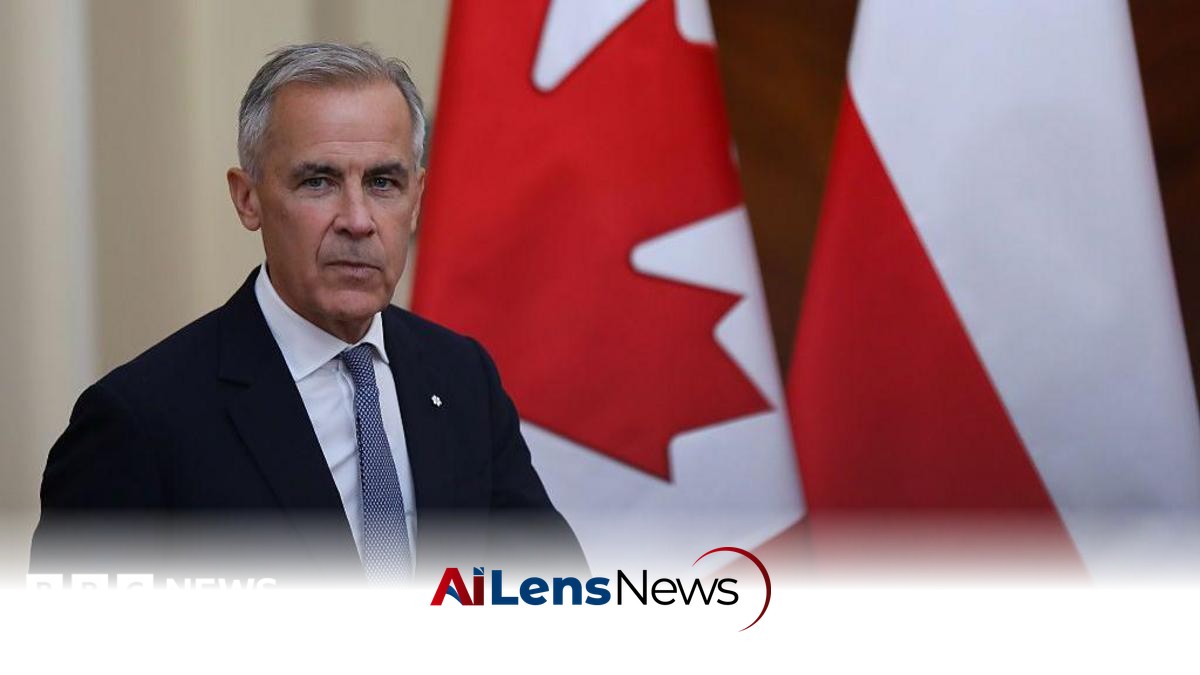



As Canada Day festivities unfold, Alberta and Quebec grapple with separatist sentiments, challenging national unity under Prime Minister Mark Carney.
New Delhi, India Jul 3, 2026 ALN: Canadians gathered across the country to celebrate Canada Day, commemorating the birth of the nation 159 years ago. But beneath the festivities, twin challenges are testing the country's unity.
Canada Day, celebrated annually on July 1st, marks the anniversary of the confederation of Canada, when the British North America Act (now called the Constitution Act, 1867) was enacted. This significant historical moment united the three colonies of the Province of Canada, Nova Scotia, and New Brunswick into a single Dominion within the British Empire. Over the years, Canada has grown to include ten provinces and three territories, each contributing to the diverse mosaic of Canadian identity. However, as the nation celebrates its birthday, it faces significant internal challenges that threaten its cohesion.
In the western province of Alberta, a restive separatist movement has gained momentum, and in a few months, Albertans will vote in a referendum on provincial sovereignty. This movement has been fueled by a perception among many Albertans that their province, rich in natural resources, has been marginalized by federal policies that they believe do not adequately represent their interests. The upcoming referendum, scheduled for October 19, will ask voters whether they wish to remain part of Canada or pursue a binding vote on separation at a later date. This decision reflects a growing sentiment in Alberta that has been developing over several years, exacerbated by economic downturns, environmental regulations, and a perceived lack of federal support for the province's energy sector.
In Quebec, the sovereigntist Parti Quebecois is currently ahead in the polls for the upcoming provincial election. The party has pledged to hold a third referendum on independence by 2030 if it wins. Quebec has a unique cultural and linguistic identity within Canada, being predominantly French-speaking. The province has a long history of sovereignty movements, having held referenda on independence in 1980 and 1995, both of which resulted in a majority vote against separation. Despite this, the desire for independence remains a significant political issue, with opinion polls indicating that support for independence hovers around 30%, a figure that has remained relatively stable over recent years.
"It's a year of pressures on Canadian national unity," said André Lecours, a political science professor at the University of Ottawa. The current political landscape in Canada is marked by a growing polarization between provinces, with Alberta and Quebec leading the charge for greater autonomy or outright independence. Prime Minister Mark Carney finds himself at the center of these tensions, seeking to balance the competing interests of the provinces while holding the country together. His challenge is compounded by the need to address the distinct grievances of each region while promoting a unified national identity.
Canada is "worth fighting for," he said last month, promising to campaign for a united country in the months ahead. Carney's commitment to national unity is underscored by his understanding of the historical context surrounding separatist movements. Having previously served as the governor of the Bank of England during Brexit, Carney has witnessed firsthand the complexities and potential pitfalls of secessionist rhetoric. On Wednesday, Carney had planned to travel to Edmonton, his hometown, in a symbolic visit on the country's birthday, but the visit was cancelled due to weather. In a Canada Day statement, he emphasized the importance of unity, stating, "There will always be forces that want to divide us."
Historian JDM Stewart notes that Canada's vast geography and strong regional identities pose unique challenges to national cohesion. "Because it's so big, and because it is so regional, it does create tensions that have been with us since the beginning, and we still wrestle with them today," he says. The geographical expanse of Canada contributes to the development of distinct regional identities, which can sometimes lead to feelings of alienation among provinces. Quebec, a majority French-speaking province, fiercely protects its identity and its culture as a distinct society. This cultural pride has historically fueled calls for greater autonomy and independence, leading to two previous referenda on the matter.
Despite the Parti Quebecois's current lead in the polls, the party's pledge to hold a third referendum is met with skepticism by some. Many Quebecers are aware of the complexities and potential economic ramifications of separation, particularly in light of the province's reliance on federal funding and support. The political landscape in Quebec is further complicated by the presence of other parties that advocate for federalism and unity, creating a dynamic electoral environment.
Meanwhile, Alberta faces a different debate. The citizens-led push for a referendum reflects a growing sentiment among residents that their voices are not being heard by the federal government. Many backers of the movement argue that Alberta's energy-rich economy has long been overlooked by decision-makers in Ottawa, the national capital. They contend that federal environmental policies have hindered Alberta's ability to build pipelines and develop its natural resources, which are vital to the province's economy. The frustration over perceived neglect has fueled the separatist movement, which is seen by some as a response to long-standing grievances.
Professor Lecours argues that this separatist push is different from the Western alienation that has long been felt in the region. He characterizes the current drive as an "outgrowth" of right-wing populism, suggesting that it is part of a broader trend of discontent with established political structures. "All these organizations in Alberta, not coincidentally, they all emerged during the pandemic," he said, pointing to the ways in which the COVID-19 crisis has exacerbated existing divisions and frustrations. He also noted that the movement "is occurring in the complete absence of any elected representative clearly and openly supporting independence," indicating that the push for separation may not have widespread political backing at the highest levels of government.
Carney, who has witnessed the dangers of secessionist movements, expressed concern over the implications of Alberta's separatist sentiments. He stated that what is happening in Alberta "is very reminiscent" of the arguments made during Brexit, where proponents of separation emphasized the ease of transitioning away from the established political framework. He cautioned that such arguments risk undermining Canada's future, especially at a time when the country is viewed as one of the most trustworthy and reliable places to do business. "We shouldn't mess that up," he added, highlighting the importance of maintaining a stable and unified national identity.
Stewart, who has written extensively on Canadian prime ministers, emphasized the need for leaders to address provincial frustrations and work towards reconciliation. He noted that past prime ministers have had to navigate similar challenges, often emphasizing the importance of compromise and dialogue. "Remember that provinces are sometimes a bit like people; they want to be seen and they want to be heard," he said. In times of division, it is crucial for leaders to articulate a vision for Canada that resonates with all provinces and fosters a sense of belonging.
The prime minister has been making overtures to address these tensions. Carney, who was raised in Alberta, has signed a deal with the province that opens the door for an oil pipeline to the Pacific—a project long pushed for by the oil heartland. This agreement marks a significant step towards resetting the relationship between Alberta and Ottawa, which has been fraught with tension over energy policy for decades. In a video address, Carney recalled how past energy policies "made Albertans feel like our resources weren't our own" and expressed a desire to focus on building a collaborative future.
On Thursday, the province will formally submit a proposal to the Carney government asking for the "million-barrel-a-day" pipeline project to be fast-tracked. This proposal represents a critical moment for both Alberta and the federal government, as it could pave the way for increased cooperation and investment in the province's energy sector.
In Quebec, Carney has also offered recent initiatives, including a C$10 billion infrastructure deal aimed at improving hospitals, housing, and public transit. These investments are designed not only to address pressing needs in Quebec but also to demonstrate the federal government's commitment to supporting provincial priorities.
Despite the divisions, many Canadians remain hopeful for a unified future, even as they express deep concerns about regional frustrations. A poll by the Angus Reid Institute indicates that most Canadians believe it is unlikely that either Alberta or Quebec will separate. "Most Canadians really feel happy about the country and are happy to keep working to make it work, and do the bit of compromise that has really been the secret sauce," said Stewart. He emphasized that compromise and pragmatism have been essential to maintaining the fabric of Canadian society, and that continued dialogue and cooperation will be crucial in navigating the challenges ahead.
As Canada moves forward, the interplay of regional identities, economic interests, and national unity will remain a focal point of political discourse. The upcoming referenda in Alberta and Quebec will serve as critical tests of the country's resilience and commitment to inclusivity. It is a moment that will require thoughtful leadership, open communication, and a willingness to embrace the diverse perspectives that make Canada a unique and vibrant nation.
To learn more about the latest developments in Culture & Society, stay updated with our exclusive reports and analyses on AILensNews.

