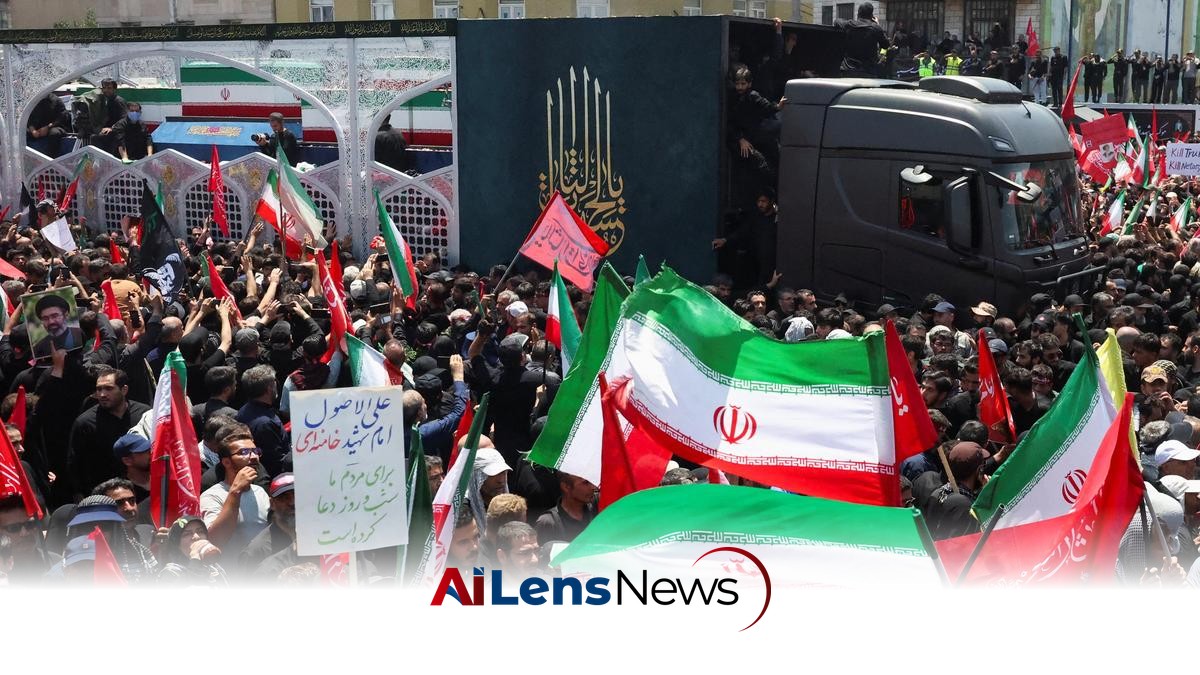


Mourners in Tehran call for revenge during Ayatollah Khamenei's funeral procession, as tensions escalate with the U.S. and Israel.
Tehran, Iran Jul 6, 2026 ALN: Mourners dressed in black flooded into Iran's capital on July 6, 2026, for a procession honoring the late Supreme Leader Ayatollah Ali Khamenei. The massive turnout was marked by calls for revenge, particularly against U.S. President Donald Trump, as tensions escalated in the region. Khamenei's death has left a significant void in Iran's political landscape, and the enormity of the public response reflects the deep emotional connection many Iranians felt towards him, as well as the ongoing tensions with the West.
Iran Holds Funeral for Ali Khamenei: Who is Attending?
Khamenei's flag-draped coffin, along with those of family members killed in an airstrike, was placed on a truck designed to resemble the ornamental grating surrounding the shrine of an imam. This display was part of a broader show of strength by Iran's theocracy amid ongoing negotiations with the U.S. for a permanent end to the war that claimed Khamenei's life. His leadership was often characterized by a staunch opposition to Western influence, particularly from the United States and Israel, and this funeral has served as a rallying point for those sentiments.
Helicopter footage broadcasted by Iranian state television revealed a massive crowd stretching from Tehran's Azadi, or Freedom, Square for kilometers down a multilane street. The turnout appeared to surpass that of the 2020 procession for Revolutionary Guard General Qassem Soleimani, which had drawn over one million attendees. The sheer number of participants underscores the significance of Khamenei's leadership and the impact of his policies on Iranian society.
While authorities did not provide an immediate crowd count, many participants carried placards and banners demanding Trump's death. "Today that we are here for the funeral for our leader, it's a very tough day," said mourner Fatima Hassan. "We are not here to say goodbye to him; we are here for revenge. And we will take revenge." This sentiment reflects a broader narrative within Iran, where the leadership has historically framed conflicts with the U.S. and its allies as existential struggles, thereby galvanizing public support for retaliatory actions.
Mourners reached out to touch the truck carrying the coffins, throwing scarves and other items as a blessing, a common practice in Iran. Attendants sprayed misted water across the crowd to provide relief from the heat. Authorities expressed concern over the large gathering, urging the public to walk slowly and stay to the edges of the street. The funeral procession has turned into a national event, showcasing the collective grief and anger felt by many Iranians in the wake of Khamenei's death.
The coffins are set to be transported through Tehran on a 12-hour journey to Mehrabad International Airport, as stated by Revolutionary Guard General Hasan Hasanzadeh, who is overseeing the procession. The route has been meticulously planned to allow for maximum public participation and visibility. Authorities have shut down streets, airspace, and daily life for the mourning period, which began on July 4 and will conclude on July 9, culminating in Khamenei's burial at the Imam Reza shrine in Mashhad, his birthplace. This strategic choice of burial site reflects the importance of religious symbolism in Iranian culture and politics.
“This is the last time I am seeing him,” wept Maryam Alizadeh. “Our generation lived with him for decades.” Such statements from mourners highlight the personal connection many Iranians feel towards their leaders and the emotional weight of political transitions in the country. The passing of Khamenei not only marks the end of an era but also raises questions about the future direction of Iran's political landscape.
As the funeral progressed, calls for vengeance intensified among mourners. Signs demanding the deaths of both Trump and Israeli Prime Minister Benjamin Netanyahu were prominently displayed. One effigy of Trump was even seen hanging along the procession route. The public display of anger towards these leaders serves as a reminder of the long-standing grievances that Iran holds against the United States and Israel, particularly in light of recent military actions and sanctions that have had a profound impact on the Iranian populace.
"We are here to show that his path will continue, and every single one of these people will continue down his path with clenched fists, and soon we will certainly avenge his death against the U.S. and Israel,” stated mourner Sahar Zaraatgar. This rhetoric is consistent with the Iranian leadership's longstanding narrative of resistance against perceived imperialism. U.S. federal authorities have monitored Iranian threats against Trump and other officials for years, particularly following Trump's order for the 2020 killing of Soleimani, who led the elite Quds Force. While Iran has denied any plans to kill Trump, hard-line propaganda has long suggested that he is a target, indicating the heightened stakes for U.S.-Iran relations.
Trump, for his part, has threatened to destroy Iran's civilization during the ongoing conflict. Such inflammatory statements only serve to exacerbate tensions, and the cycle of retaliation appears to be a central theme in the relationship between the two nations. The ongoing animosity complicates any potential for diplomatic resolution, especially in the wake of Khamenei's death.
The U.S. is eager to resume negotiations with Iran to fully reopen the Strait of Hormuz, address the contentious nuclear program, and achieve a permanent end to the war. However, these talks appear to be stalled until after Khamenei's burial. The Strait of Hormuz is a critical chokepoint for global oil shipments, and control over this waterway is of paramount importance to both Iran and the international community. Iran's strategic positioning and military capabilities in the region have made it a key player in global energy security.
The funeral served as a demonstration of unity as Iran seeks greater control over the Strait of Hormuz, a crucial waterway for global energy. The U.S. has rejected Iran's demands, and significant divisions remain over key issues, including Iran's nuclear ambitions and the ongoing conflict involving Israel and the Iran-backed militant group Hezbollah in Lebanon. The geopolitical implications of Khamenei's death and the subsequent power transition will likely have far-reaching consequences for the region and beyond.
Iran's new supreme leader, Ayatollah Mojtaba Khamenei, has yet to appear at the funeral ceremonies, which are unfolding over several days. He is believed to be in hiding after reportedly being injured in the airstrike that killed his father. During the war, Israel targeted top leaders, possibly using public appearances to track their positions and has even threatened the younger Khamenei. The absence of the new leader from such a significant public event raises questions about his ability to command authority and stability in a time of crisis. The coming days and weeks will be critical in determining how Iran navigates its internal and external challenges in the wake of Khamenei's death.
To learn more about the latest developments in Regions & Countries, stay updated with our exclusive reports and analyses on AiLensNews.

