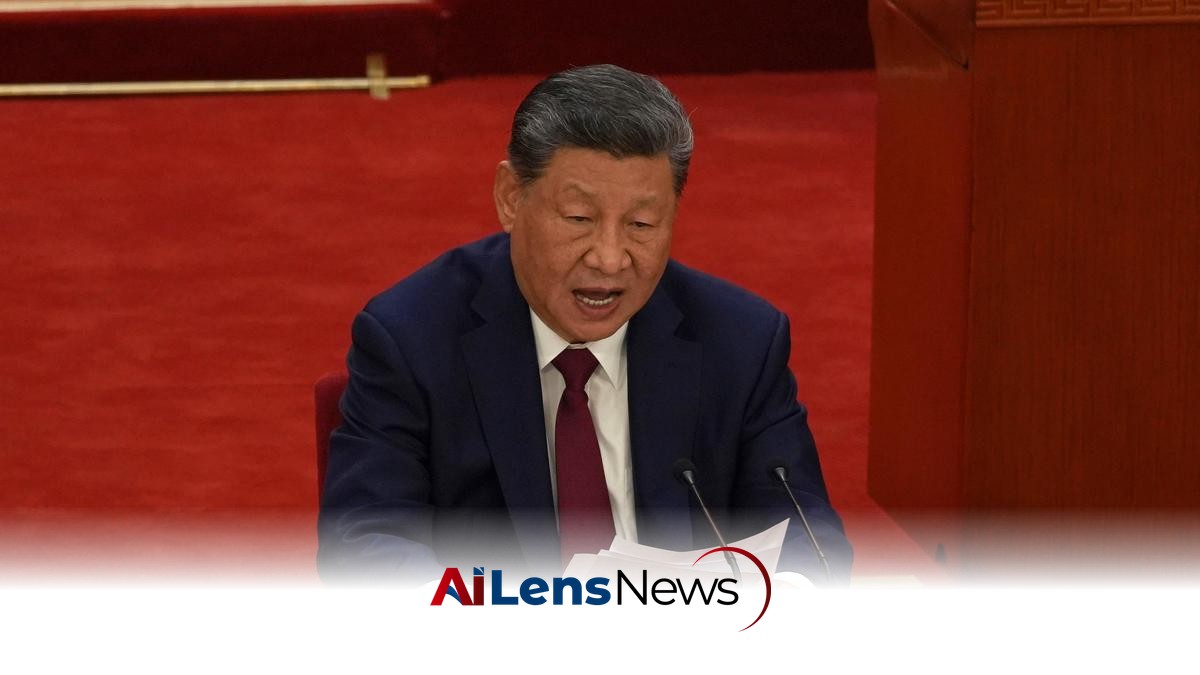


Explore China's perspective on a shifting global order, marked by declining U.S. credibility and the rise of AI technology.
China, China Jul 5, 2026 ALN: A decline in U.S. credibility following the Iran war and the increasing significance of technology, particularly AI capabilities, are two key trends likely to shape the immediate future of the global order. This perspective was shared by China’s top experts who convened in Beijing on July 3 and 4, 2026, for the country’s premier annual foreign policy forum. The discussions at this forum reflect a significant shift in how China perceives its role in the , particularly in relation to the United States and its allies.
“Politically, the Iran war has led more nations to view China as more trustworthy than the United States. China’s strategic credibility has risen, while America’s has declined,” stated Yan Xuetong, a leading Chinese foreign policy scholar and convenor of the annual Peace Forum at Tsinghua University. His remarks provided a rare insight into how Chinese strategic thinkers perceive the global order and China’s role within it. This shift in perception can be traced back to a series of events that have eroded American influence and credibility on the global stage, particularly in the Middle East.
Mr. Yan and other Chinese experts discussed the weakening of U.S. relations with its allies, reflecting a changing global order. “[West Asian] states that were traditionally U.S. allies are now questioning America’s security guarantees on two fronts,” he noted, referring to both U.S. resolve and its capability to protect these nations. The implications of this are profound, as these nations begin to reconsider their alliances and seek alternative partnerships, potentially with China or other emerging powers.
Recent fluctuations in India-U.S. relations were also highlighted, viewed as part of a broader trend in the engagement strategies of the Trump administration with U.S. partners. The evolving dynamics between India and the U.S. underscore the complexities of international relations in the region, where traditional alignments are increasingly being tested. The Chinese perspective on these changes suggests a growing confidence in its own diplomatic engagements and a willingness to fill any perceived power vacuums left by a retreating U.S.
The Indo-Pacific strategy under the previous Biden administration and the revival of the Quad have raised concerns in China, perceived as a renewed U.S. commitment to the region. “With the renaming of the Indo-Pacific Command back to the Pacific Command, my understanding is that the U.S. believes using India as a key partner to contain China has proven ineffective,” remarked Wu Xinbo, a leading expert on China-U.S. relations and Dean of the Institute of International Studies at Fudan University. “Initially, the U.S. held high expectations for India’s role. The Trump administration has become much more realistic... If this renaming signifies anything, it is that India’s status in America’s regional strategy has noticeably declined,” he added. This shift in U.S. strategy may have significant implications for regional security dynamics and could lead to a recalibration of alliances.
Mr. Trump’s reference to a U.S.-China “G2” during his recent visit to China may not have received official endorsement from Beijing, but it has seemingly reinforced views among Chinese scholars regarding a changing global order, which they perceive as a shift from unipolarity to bipolarity. Historically, such shifts have often been “very dangerous” moments, as noted by Jia Qingguo, a Peking University scholar and member of the Standing Committee of the Chinese People’s Political Consultative Conference. He referred to the “Thucydides’ trap,” where a dominant power seeks to preserve the status quo while a rising power aims to alter it. This concept has been a focal point of international relations discourse, highlighting the potential for conflict when a rising power challenges an established one.
However, he suggested that the current scenario might differ, as “China, the rising power, is relatively satisfied with the existing international order.” He emphasized that China supports the UN and endorses multilateralism, indicating that it is unlikely to use force to challenge the existing international system. This assertion reflects a strategic positioning by China, seeking to portray itself as a stabilizing force in international affairs, while simultaneously advocating for reforms that align with its interests.
Citing the example of the UN Charter, Jia stated that Beijing seeks to preserve older institutions while simultaneously aiming to change their functions by emphasizing different values. “We have had a period where the West dominated and chose to prioritize human rights over sovereignty rights,” he explained. “Now that’s changed, but that does not mean the UN Charter itself is no longer functional.” This perspective underscores China's approach to international governance, where it seeks to reshape global norms and standards to reflect its own values and priorities. The emphasis on state sovereignty over individual rights resonates with many developing countries that feel marginalized by Western-centric narratives.
Technological disruptions, particularly in AI, are emerging as the next key battleground, especially concerning the establishment of standards, where the U.S. and China are viewed as the two primary players. The race for technological supremacy is not only about economic power but also about shaping the future of global governance and security. Mr. Yan noted that the is “fracturing into three categories of nations,” referring to AI standard-setters, AI innovators, and AI consumer nations. This classification highlights the disparities in technological capabilities and the geopolitical implications of these divides.
“Within a decade,” he predicted, “this classification will become universally recognized, similar to the Bank’s division of nations into high, middle, and low-income categories. The impact of technology on international relations will become increasingly pronounced, and we will see evidence of this within the next 12 months.” The urgency of establishing technological standards raises critical questions about data privacy, cybersecurity, and the ethical implications of AI. As nations navigate this new landscape, the competition for technological leadership will likely intensify, with far-reaching consequences for global governance and power dynamics.
In conclusion, the discussions at the Beijing forum reflect a significant moment in the evolution of international relations, characterized by a perceived decline in U.S. credibility and a corresponding rise in Chinese influence. As China positions itself as a key player in the reconfiguration of the global order, the implications of these developments will be felt across various dimensions, including security, diplomacy, and technology. The interplay between these factors will shape the future of international relations, as nations grapple with the challenges and opportunities presented by this shifting landscape.
To learn more about the latest developments in International Politics, stay updated with our exclusive reports and analyses on AiLensNews.

