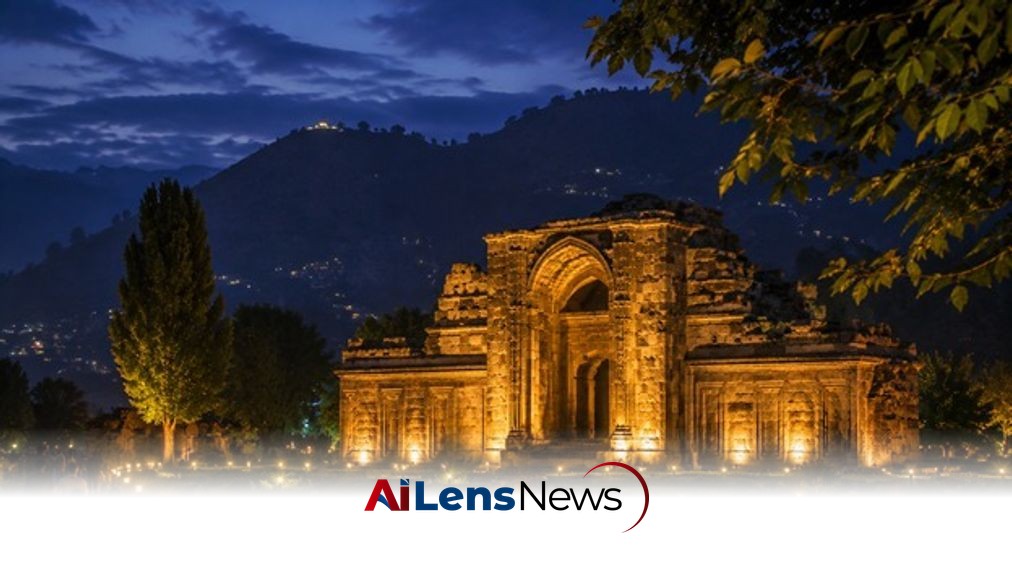


With rising tourist numbers, stakeholders in Kashmir advocate for night tourism at protected monuments, aiming to enhance visitor experiences and boost the local economy.
New Delhi, India Jul 11, 2026 ALN: With tourist arrivals rising across Kashmir, residents and tourism stakeholders have urged the Archaeological Survey of India (ASI) to introduce night tourism at centrally protected monuments, saying it would enhance visitor experience and boost the local economy.
The demand comes as several iconic monuments in the national capital, including heritage complexes managed by the ASI, remain open during evening hours with architectural lighting, cultural ambience, and guided experiences, attracting thousands of domestic and foreign visitors every year. This trend highlights a growing recognition of the potential for night tourism, which has gained traction in various parts of the world as a means to maximize the economic benefits of cultural heritage sites.
In Kashmir, however, most ASI-protected monuments close before sunset, limiting the time available for tourists to explore these centuries-old heritage sites, particularly during the peak tourism season when visitors often spend their mornings visiting gardens, hill stations, and other attractions. This situation has raised concerns among local stakeholders who believe that the current visiting hours do not adequately reflect the region's tourism potential.
Tourism stakeholders believe extending visiting hours and introducing professionally managed night tourism at select monuments would diversify Kashmir’s tourism offerings and encourage visitors to spend more time exploring the valley’s rich architectural and cultural heritage. Night tourism could serve as a vehicle to showcase the unique stories behind these monuments, allowing visitors to engage with the history and culture of Kashmir in a more immersive manner.
Among the monuments that could be considered for the initiative are the ancient Martand Sun Temple in Anantnag, the Avantiswami Temple and Avantishvara Temple in Awantipora, the Parihaspora archaeological remains in Baramulla, the Naranag temple complex in Ganderbal, and the Ancient Temple at Boniyar in Uri, besides other protected heritage sites where adequate infrastructure and security arrangements can be developed. Each of these sites has its own historical significance, and illuminating them at night could provide a new perspective on their architectural beauty.
Local residents said that beautifully illuminated monuments against Kashmir’s evening landscape would offer a unique experience for tourists and photographers while showcasing the valley’s civilisational history beyond its natural beauty. The picturesque backdrop of the Himalayas combined with the glow of these ancient structures could create an enchanting atmosphere, drawing in visitors who seek both adventure and cultural enrichment.
“We often hear tourists asking why these heritage sites close so early. If monuments can remain open during evening hours in Delhi with proper lighting and security, the same model can be implemented in Kashmir,” said Mushaaque Ali Ahmad Khan, a tourism stakeholder in Srinagar. His statement reflects a broader sentiment among the local community that there is a missed opportunity to capitalize on the natural beauty of the region during the evening hours.
Faisal Ahmad, a Srinagar resident, said night tourism would not only improve the visitor experience but also benefit local guides, photographers, transport operators, handicraft sellers, and nearby businesses by increasing tourist activity beyond daytime hours. The ripple effect of such an initiative could lead to job creation and increased revenue for local artisans, who often depend on the influx of tourists for their livelihoods.
Tour operators believe the initiative could help decongest popular destinations by distributing tourist movement throughout the day and creating an additional attraction for visitors staying overnight in Srinagar and other districts. This approach aligns with sustainable tourism practices that encourage longer stays and more meaningful interactions with local culture, ultimately fostering a more resilient tourism economy.
Sahim Ahmad, a heritage enthusiast, also stressed that any such initiative should prioritize conservation. They said modern illumination systems, regulated visitor numbers, CCTV surveillance, and trained security personnel would be essential to protect the monuments while allowing public access during evening hours. The importance of balancing accessibility with preservation cannot be overstated, as heritage sites require careful management to ensure that they are not compromised by increased foot traffic.
Experts noted that heritage tourism is increasingly becoming an important component of destination management across the world, with several historic sites offering curated evening experiences, sound-and-light shows, and cultural programmes that enhance visitor engagement without compromising preservation. Such initiatives can serve to educate visitors about the history and significance of the sites, fostering a deeper appreciation for the cultural heritage of the region.
The implications of introducing night tourism in Kashmir extend beyond mere economic benefits. It could also play a crucial role in fostering cultural exchange, as visitors from different backgrounds interact with local traditions and narratives. Moreover, by showcasing the rich tapestry of Kashmiri history, night tourism could help combat stereotypes and promote a more nuanced understanding of the region’s identity.
However, the successful implementation of night tourism will require collaboration among various stakeholders, including government agencies, local communities, and tourism operators. Policymakers will need to ensure that appropriate regulations are in place to protect the integrity of the monuments while also facilitating a vibrant tourism experience. Community involvement will be key to ensuring that the benefits of night tourism are equitably distributed and that local voices are heard in the planning process.
In conclusion, the growing demand for night tourism at Kashmir’s monuments reflects a broader trend in the tourism industry, where the emphasis is shifting towards creating enriching experiences that engage visitors in meaningful ways. By embracing this opportunity, Kashmir could not only enhance its tourism offerings but also pave the way for sustainable economic development that honors the region's rich heritage.
To learn more about the latest developments in Cultural Tourism, stay updated with our exclusive reports and analyses on AiLensNews.

