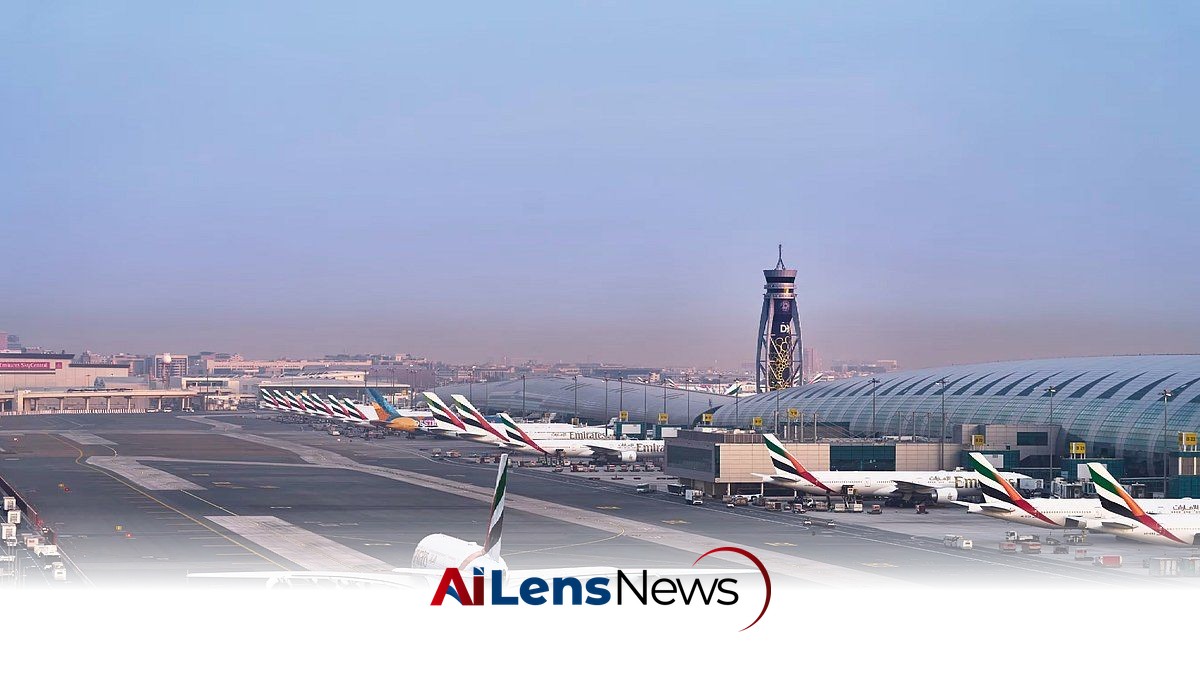


Dubai International Airport leads global rankings for international seat capacity in July 2026, reinforcing its dominance in long-haul travel.
Kuwait City, Kuwait Jul 25, 2026 ALN: Dubai International Airport (DXB) has once again solidified its status as the world's busiest international travel hub, topping global rankings for scheduled international seat capacity in July 2026. This achievement comes at a time when global air travel is experiencing a robust recovery following the disruptions caused by the COVID-19 pandemic, which severely impacted the aviation industry worldwide. The airport's ability to accommodate 4.35 million international seats in July underscores its pivotal role in long-haul travel demand and the growing connectivity between key global cities.
According to data released by the UK-based aviation analytics firm OAG, Dubai International Airport outperformed several other major airports, including Heathrow Airport in London, which ranked second with 4.23 million seats, and Amsterdam Airport Schiphol, which offered 3.82 million seats. Incheon International Airport in South Korea recorded 3.75 million seats, while Charles de Gaulle Airport in Paris reached 3.70 million seats. The figures illustrate a competitive landscape among the world's leading airports, each vying for a larger share of international air traffic.
Heathrow's slight decline of 1 percent in seat capacity compared to the previous year contrasts with Dubai's impressive growth of 18 percent year-on-year. This growth reflects a sustained expansion in international connectivity, as airlines adjust their operations to meet the increasing demand for air travel. The recovery of air travel is particularly significant given the challenges faced by the aviation industry during the pandemic, when travel restrictions and health concerns led to unprecedented declines in passenger numbers.
Earlier in 2026, Dubai International Airport had already established itself as a leader in the global aviation market, surpassing Hartsfield–Jackson Atlanta International Airport in January with 5.5 million scheduled seats and maintaining its lead in February with 4.9 million seats. This consistent performance highlights the airport's strategic importance as a central hub for international travel.
In terms of annual performance, Dubai International Airport retained its title as the world's busiest airport for international passenger traffic by seat capacity in 2025, with a total of 62.4 million seats, marking a 4 percent increase from 2024. The airport also achieved a record-breaking milestone by handling 95.2 million passengers during the year, showcasing its capacity to manage high volumes of traffic effectively.
The positive momentum has continued into 2026, with the airport welcoming 18.6 million passengers in the first quarter alone. This surge in passenger numbers can be attributed to several factors, including the stabilization of regional airspace conditions and airlines expanding their operations to cater to the growing demand for air travel. As travelers increasingly resume their pre-pandemic travel habits, airports like Dubai International are adapting to meet their needs.
To support this growth, Dubai Airports has implemented a range of initiatives aimed at enhancing capacity across its network. One of the key areas of focus has been improving passenger processing and service efficiency. The integration of digital infrastructure has played a crucial role in managing the increased passenger flow. In collaboration with the General Directorate of Residency and Foreigners Affairs, Dubai Airports has introduced a pre-travel eligibility verification tool for smart gates. This tool allows passengers to confirm their eligibility for access before reaching passport control, streamlining the overall travel experience.
The smart travel ecosystem at Dubai International Airport includes biometric gates that enable registered travelers to pass through using iris and facial recognition technology within seconds. This innovation not only enhances security but also significantly reduces wait times for passengers, contributing to a more efficient airport experience.
In August 2025, Dubai Airports launched the "Red Carpet" seamless travel corridor, further enhancing the passenger experience by allowing multiple travelers to clear passport procedures simultaneously without the need to present documents. This initiative has proven to be a game-changer, with processing times ranging between six and 14 seconds, thanks to real-time biometric verification. Such advancements are essential for maintaining a competitive edge in the global aviation market.
Additional measures have also been implemented to improve passenger flow and overall satisfaction. These include off-site baggage check-in, priority lanes for families and individuals with disabilities, real-time baggage tracking, and digital wayfinding systems. These enhancements align with Dubai's strategy to maintain its status as a leading global aviation hub, ensuring that the airport can accommodate increasing passenger numbers while providing a seamless travel experience.
The implications of Dubai International Airport's continued growth are significant, not only for the airport itself but also for the broader aviation industry and the economy of Dubai. As travel demand continues to rebound, the airport's ability to handle high volumes of passengers efficiently will be crucial in attracting more airlines and routes, further enhancing Dubai's position as a key global travel destination.
Moreover, the airport's success has a positive ripple effect on the local economy, contributing to job creation and supporting various sectors, including tourism, hospitality, and retail. With Dubai's strategic location at the crossroads of Europe, Asia, and Africa, the airport serves as a vital link for travelers and businesses alike, fostering economic growth and international connectivity.
As the aviation industry continues to evolve in response to changing travel patterns and technological advancements, Dubai International Airport's commitment to innovation and efficiency will play a critical role in shaping the future of air travel. The airport's ability to adapt to new challenges and opportunities will determine its success in maintaining its status as the world's busiest travel hub in the years to come.
To learn more about the latest developments in Destinations, stay updated with our exclusive reports and analyses on AiLensNews.

