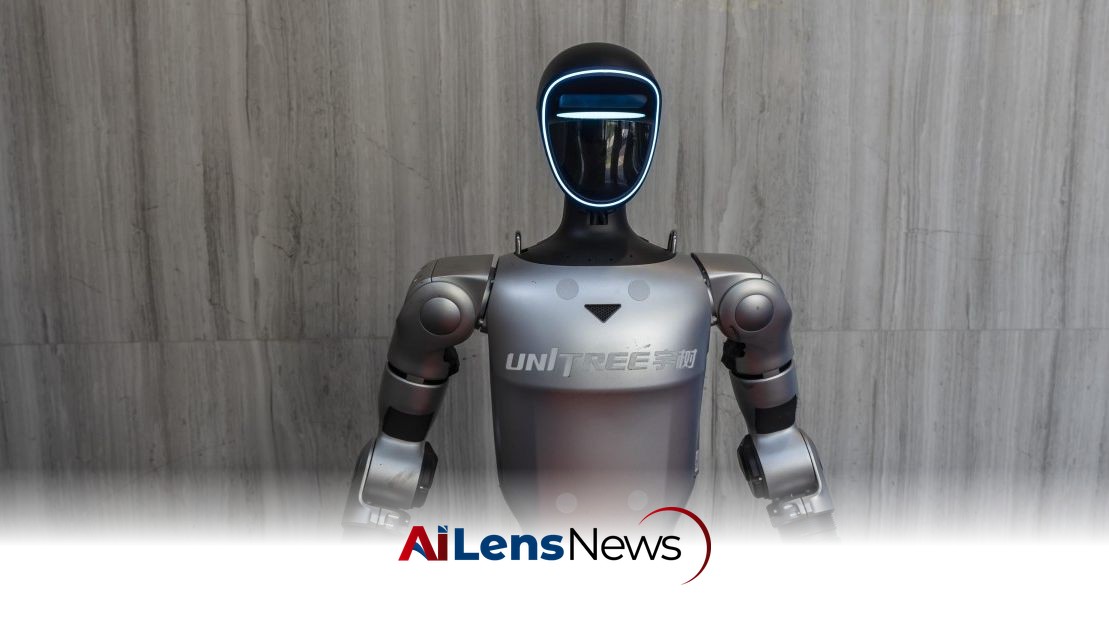


The US government announces a ban on advanced robotic devices and power inverters made abroad, significantly impacting Chinese manufacturers like Unitree.
Washington DC, United States Jul 29, 2026 ALN: The United States government has recently implemented a significant import ban targeting advanced robotic devices and power inverters manufactured in foreign countries, with a notable focus on products from China. This announcement, made by the Federal Communications Commission (FCC), underscores the growing tensions between the US and China, particularly in the realm of technology and national security. The FCC's decision is part of a broader strategy to safeguard American interests and mitigate perceived risks associated with foreign technology.
The ban specifically encompasses a variety of "mobile" robots, including humanoid and quadruped models, but it is not confined to those that exhibit walking capabilities. This expansive definition raises questions about the future of many robotic technologies and their applications in various sectors, including healthcare, manufacturing, and entertainment. Humanoid robots, in particular, have garnered significant attention in recent years, with some achieving viral fame for their entertaining performances. For instance, videos of robots stumbling while attempting to dance to Michael Jackson, participating in mixed martial arts (MMA) fights, or showcasing their talents on platforms like America’s Got Talent have captivated audiences worldwide.
In the United States, companies such as Tesla are pivoting their focus towards robotics, exemplified by the discontinuation of their Model S and Model X vehicles to facilitate the production of their Optimus humanoid robot. This shift indicates a broader trend within the tech industry, where automotive and robotics sectors are increasingly converging. Tesla's move reflects a growing recognition of the potential for humanoid robots to play a transformative role in various industries, potentially reshaping labor markets and consumer interactions.
China, on the other hand, is aggressively advancing its capabilities in the field of robotics, aiming to establish itself as a leader in the global market. The nation is home to several prominent power inverter manufacturers, including Sungrow and Huawei, the latter of which has already faced scrutiny and restrictions from the US government. Power inverters are crucial components in renewable energy systems, particularly in solar panel arrays, and their production is vital for supporting the global transition to clean energy. The FCC's decision to include these devices in the ban highlights the intersection of technology and energy security, reinforcing the notion that foreign-made components may pose risks to national interests.
In its announcement, the FCC cited "unacceptable risks to the national security of the United States or the safety and security of United States persons" as the rationale behind the import ban. This justification reflects a growing concern within the US government regarding the potential for foreign technology to be exploited for espionage or cyber-attacks. The FCC's stance aligns with a broader narrative in which national security considerations are increasingly influencing technology policy, particularly concerning countries perceived as strategic competitors.
The FCC has defined an "advanced robotic device" as any machine capable of locomotion, obstacle avoidance, navigation, or ground movement that is equipped with sensors to perceive its environment and contains a chip for network connectivity. Furthermore, these devices must weigh more than 4.4 pounds, including any docking stations. This definition is broad enough to encompass a wide range of robotic technologies, including future iterations of robot vacuums, which could inadvertently fall under the ban unless they receive a waiver. This aspect of the regulation raises concerns among industry stakeholders about the implications for innovation and product development.
Interestingly, the FCC's approach mirrors previous actions taken against foreign-made routers, where companies could apply for waivers to continue importing their products. However, the waiver application process does not mandate improvements in the security of the robots or inverters, which raises questions about the effectiveness of the regulatory framework. Existing products currently in the US market will not be affected by the ban, allowing individuals and businesses to continue utilizing their current robotic technologies and power inverters without disruption.
The FCC's focus on the origin of these devices—specifically where they are designed and manufactured—highlights a critical aspect of the regulatory environment. Every applicant seeking a waiver will need to present a detailed plan for domestic manufacturing, which underscores the US government's push to bolster its own technology production capabilities. Reports indicate that the FCC is likely to exempt many non-Chinese suppliers from these restrictions, suggesting a nuanced approach to the enforcement of the ban.
As part of the regulatory framework, the FCC has stated that all robots and power inverters will continue to receive security and compatibility updates through January 1, 2029, thanks to an additional waiver provision. However, there are concerns that the FCC may not be fully transparent regarding how these updates function, as companies are not currently required to notify the FCC when they implement security updates for their devices. This lack of oversight raises potential vulnerabilities and questions about the accountability of manufacturers in maintaining the security of their products.
In summary, the US government's import ban on advanced robotic devices and power inverters from foreign countries, particularly China, reflects a significant shift in technology policy driven by national security concerns. As the landscape of robotics and renewable energy continues to evolve, this ban could have far-reaching implications for innovation, international trade, and the future of technological competition between the US and China. Stakeholders in both countries will need to navigate this complex regulatory environment as they seek to balance security considerations with the imperative for technological advancement and collaboration in an increasingly interconnected world.
To learn more about the latest developments in Software & Platforms, stay updated with our exclusive reports and analyses on AiLensNews.

