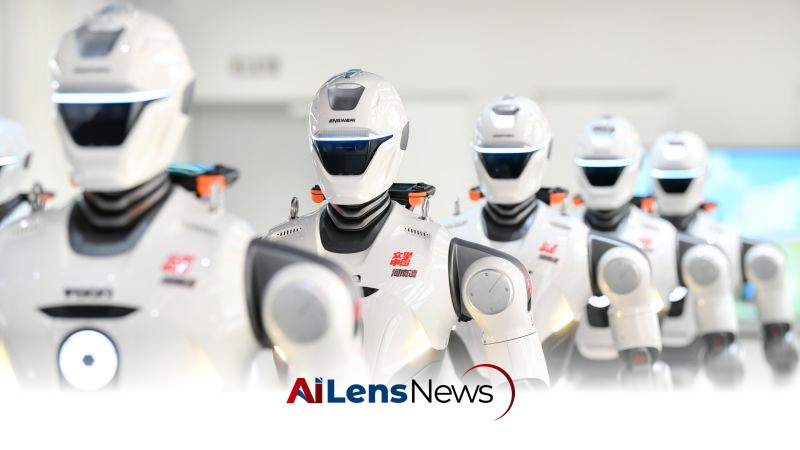


The US government has imposed a ban on the import of humanoid and quadruped robots from China, citing national security risks. This move significantly impacts China's dominance in the global robotics market.
Washington DC, United States Jul 30, 2026 ALN: The recent ban on imports of humanoid and quadruped robots from China by the US government marks a significant shift in the country’s approach to foreign technology and national security. This decision comes amidst a broader strategy to reduce reliance on foreign technology, particularly from China, which has emerged as a dominant player in the robotics and artificial intelligence sectors. The implications of this ban are profound, affecting not only trade relations but also the landscape of technological innovation and collaboration.
China is currently the world's largest supplier of humanoid robots, accounting for a significant share of the global market. This position has been achieved through substantial investment in research and development, as well as a robust manufacturing base that allows for rapid production and deployment of robotic technologies. The ban effectively cuts off China from its largest export market, raising questions about the implications for both Chinese manufacturers and US industries that may rely on these technologies. The move is part of a series of actions taken by the Trump Administration aimed at tightening control over technology imports that are deemed to pose risks to national security. This reflects a growing trend in US policy where technology is increasingly viewed through the lens of national security.
According to the US government, the decision to impose these restrictions stems from concerns that foreign-manufactured robots, particularly those from China, could be used for espionage or other malicious purposes. The fear is that advanced robotics could be equipped with capabilities that allow for data collection, surveillance, or even sabotage of critical infrastructure. The ban also extends to power converters, which are critical components for integrating renewable energy sources into the national power grid. By restricting these imports, the US aims to mitigate potential vulnerabilities in its energy infrastructure and technological ecosystem. This underscores a broader concern about the security of supply chains and the potential for foreign entities to exploit technological dependencies.
This latest policy is indicative of a broader trend in US-China relations, which have been characterized by increasing tension and competition, particularly in the realm of technology. The rivalry has intensified as both nations vie for supremacy in advanced technologies, including artificial intelligence, robotics, and other emerging fields. The US has expressed concerns that China’s rapid advancements in AI could lead to a technological gap that would undermine its national security and economic interests. This competition is not merely economic; it has profound implications for global power dynamics, with both countries seeking to assert their influence on the international stage.
Despite the US's historical leadership in AI research and development, analysts have noted that China has made significant strides in recent years. The country has invested heavily in AI research and has developed powerful AI models that have begun to rival those from the US. Furthermore, China has leveraged its vast manufacturing capabilities to produce and deploy AI-enabled hardware, such as robots, at an unprecedented scale. This has allowed Chinese companies to commercialize AI products quickly, gaining a competitive edge in consumer applications. The rapid growth of the Chinese robotics industry has not only transformed its domestic economy but has also raised alarms in the US about the potential for China to outpace American technological advancements.
The implications of the ban extend beyond immediate economic impacts. It raises concerns about the future of international collaboration in technology development. The robotics industry, which often relies on global supply chains and cross-border partnerships, could face disruptions as countries reevaluate their trade relationships and technology exchanges. This could lead to a fragmentation of the global technology market, with countries increasingly turning inward to develop homegrown solutions. Such a shift may hinder innovation and limit the benefits of collaborative research, which has historically led to significant technological breakthroughs.
Moreover, the ban could have ripple effects on the US economy. Many American companies utilize foreign-manufactured robots for various applications, including manufacturing, logistics, and healthcare. The sudden unavailability of these robots could hinder productivity and innovation in sectors that are increasingly reliant on automation and robotics. As companies seek alternatives, they may face increased costs and delays, ultimately impacting consumers. The reliance on foreign technology for critical operations means that any disruption in supply can have a cascading effect across multiple industries, potentially leading to job losses and decreased competitiveness.
In addition to economic considerations, the ban raises questions about the ethical dimensions of technological development and deployment. As countries prioritize national security, there is a risk that ethical standards and regulations surrounding AI and robotics may be compromised. The potential for misuse of technology, whether for surveillance or military purposes, underscores the need for robust frameworks that govern the development and use of AI and robotics. This situation calls for a balanced approach that considers both security and ethical implications, ensuring that technological advancements do not come at the cost of fundamental human rights and freedoms.
The US government's decision to impose this ban reflects a growing recognition of the strategic importance of technology in global power dynamics. As nations increasingly view technological capabilities as a key determinant of economic and military strength, the competition for technological supremacy is likely to intensify. This could lead to further restrictions on technology transfers and collaborations, as countries seek to protect their national interests. The potential for a technological arms race looms, with nations investing heavily in their own capabilities to ensure they remain competitive on the global stage.
Looking ahead, the ramifications of this ban will likely unfold over the coming months and years. As the US seeks to bolster its domestic industries and safeguard its technological landscape, it will need to navigate complex challenges, including balancing security concerns with the need for innovation and collaboration. The future of robotics and AI will depend not only on technological advancements but also on the policies and frameworks that govern their development and deployment. Policymakers will need to engage with stakeholders across sectors to ensure that regulations support innovation while addressing legitimate security concerns.
In conclusion, the US ban on imports of humanoid robots from China is a significant development in the ongoing technological rivalry between the two nations. It highlights the intersections of national security, economic interests, and ethical considerations in an increasingly interconnected world. As both countries continue to compete for leadership in advanced technologies, the implications of this ban will resonate throughout the global technology landscape, shaping the future of robotics, AI, and international relations. The unfolding narrative will likely influence not only bilateral relations between the US and China but also the dynamics of global trade and technological cooperation in the years to come.
To learn more about the latest developments in Software & Platforms, stay updated with our exclusive reports and analyses on AiLensNews.

