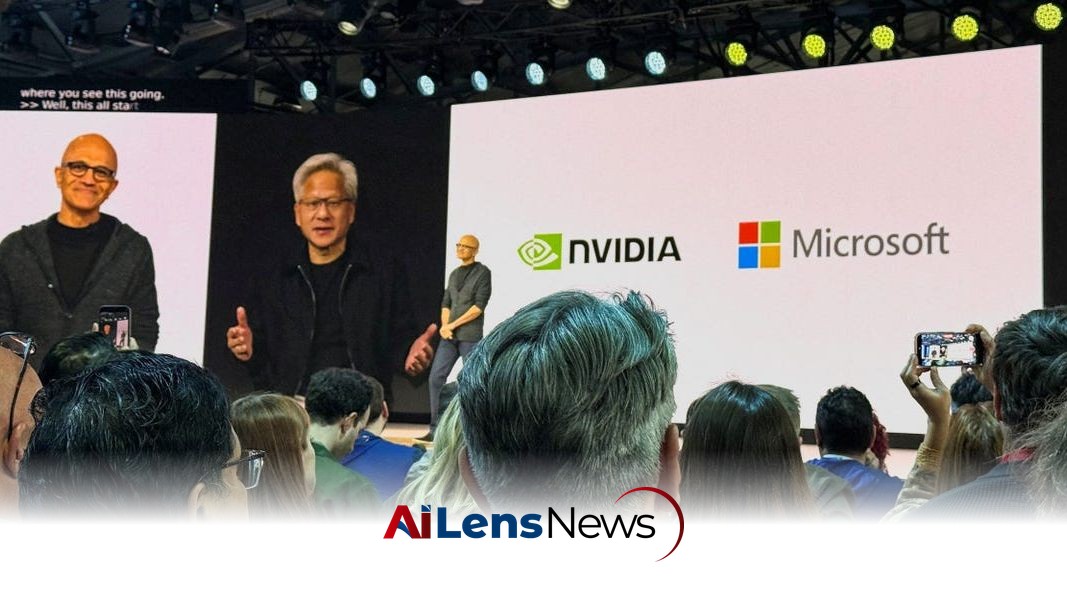


Major tech companies, including Nvidia, Microsoft, and OpenAI, have signed an open letter urging US policymakers to support open-weight AI models, emphasizing their importance for innovation and cybersecurity.
Washington DC, United States Jul 25, 2026 ALN: In a significant show of unity among major players in the technology sector, over two dozen companies, organizations, and platforms have come together to advocate for open-weight AI models. This coalition includes some of the most influential names in the tech industry, such as Nvidia, Microsoft, Meta, OpenAI, and Mistral. Their collective effort culminated in the release of an open letter urging U.S. policymakers to refrain from imposing stringent regulations on open-weight AI models, which are seen as pivotal for innovation and competitiveness in the rapidly evolving field of artificial intelligence.
Nvidia CEO Jensen Huang, in his inaugural post on social media platform X, emphasized the transformative potential of AI across various industries and national boundaries. He stated, "AI will transform every industry, power every company, and be built by every country." Huang highlighted the importance of open models, asserting that they enhance safety and cybersecurity, accelerate innovation, and empower national sovereignty.
The timing of this letter is particularly crucial, as there have been increasing regulatory concerns surrounding AI technologies in the United States. Recent discussions among top officials in the Trump administration have suggested the possibility of taking action against Moonshot AI, the company behind the Kimi K3, which is recognized as the world's most powerful open-weight AI model. The signatories of the letter argue that the future of AI leadership should not rest on a singular model but rather on fostering a robust and open ecosystem that permeates all sectors.
Initially, it was noted that two prominent companies, OpenAI and Anthropic, were absent from the list of signatories when the letter was first published. However, by Friday evening, OpenAI's name appeared on the list, indicating their endorsement of the letter's message. OpenAI has been a key player in the AI landscape, and its inclusion signifies a broader consensus among industry leaders regarding the importance of open-weight models. Despite this, OpenAI did not provide a comment regarding its decision to sign the letter.
The letter contrasts the open-source Kimi K3 with proprietary models like Anthropic's Fable 5 and OpenAI's GPT-5.6-Sol, which are not available for public customization. The implications of this distinction are significant, as open-source models allow for broader accessibility and innovation, while proprietary models may limit the potential for collaborative advancements in AI technology. Companies like OpenAI and Anthropic could benefit from regulatory actions that hinder their competitors, particularly those based in China, such as Moonshot AI.
OpenAI CEO Sam Altman expressed his support for the movement towards open-weight models, stating he was "glad to see" the letter's backing. He emphasized the importance of the U.S. excelling in both open-source and proprietary AI models. However, a community note accompanying his post raised questions about OpenAI's initial reluctance to sign the letter, suggesting a complex interplay of competitive dynamics within the AI sector.
Elon Musk, while not a signatory of the letter, voiced his support for the initiative, reinforcing the notion that influential figures in tech are rallying behind the cause of open-weight AI models. His endorsement underscores a broader sentiment within the tech community that emphasizes the need for an open approach to AI development.
While the letter does not explicitly mention Moonshot AI, it draws parallels between the current landscape of open AI models and the historical impact of open-source software on the computing industry during the 1980s. The authors argue that open-source initiatives not only reduced software costs but also established a collaborative foundation that empowered generations of engineers and entrepreneurs, fostering a sense of institutional sovereignty.
Despite the U.S.'s historical leadership in open-source software, China has emerged as a formidable competitor in the development of open-weight AI models. Two notable organizations, Mozilla and the Linux Foundation, which have been at the forefront of the open-source movement, are among the signatories of the letter, highlighting the importance of maintaining a competitive edge in this domain.
In the U.S., Nvidia's Nemotron model stands as one of the largest open-weight AI models available, although it is perceived to lag behind competitors like Kimi K3 in performance. Alexandr Wang, the chief AI officer of Meta, has indicated that his team at Meta Superintelligence Labs is committed to developing open models, including an open variant of their Muse Spark model. Additionally, Reflection AI, a startup founded by former Google DeepMind researchers, is also in the process of preparing its own open model, further contributing to the growing landscape of open-weight AI technologies.
Compounding the regulatory landscape is a recent statement by Michael Kratsios, director of the White House Office of Science and Technology Policy, who publicly accused Moonshot AI of developing Kimi K3 through a process known as distillation. This technique involves training a less powerful model on the outputs of a more powerful one, a method that has sparked controversy and debate within the AI community. Companies like Anthropic have accused their Chinese counterparts of misusing this process to infringe upon intellectual property rights, raising concerns about the ethical implications of AI development.
In light of these developments, Treasury Secretary Scott Bessent suggested that the U.S. government could impose sanctions on companies engaging in unethical distillation practices, equating it to theft. The letter from the coalition of tech companies defends the distillation process, asserting its relevance to AI innovation, yet it also leaves room for potential support of regulatory measures against companies that exploit these techniques unethically.
The letter has garnered significant attention, with a total of 32 companies, organizations, and platforms signing on by Friday evening. The list includes a diverse array of entities, such as the American Innovators Network, Andreessen Horowitz, Arcee AI, Arena, Black Forest Labs, Box, Cisco, Cohere, CrowdStrike, Dell Technologies, DoorDash, Emergence Capital, Fireworks AI, GitHub, Hugging Face, IBM, The Linux Foundation, Mariana Minerals, Meta, Microsoft, Mistral, Mozilla, Nvidia, OpenAI, Palantir, Palo Alto Networks, Perplexity, Reflection, Replit, ServiceNow, Telnyx, and Y Combinator.
This coalition reflects a growing recognition among tech leaders that the development of open-weight AI models is crucial for fostering innovation, ensuring cybersecurity, and maintaining competitive advantages in a global landscape increasingly dominated by AI technologies. As the debate around regulation continues, the implications of this letter and the collective stance of these companies may play a pivotal role in shaping the future of AI policy in the United States.
To learn more about the latest developments in Software & Platforms, stay updated with our exclusive reports and analyses on AiLensNews.

