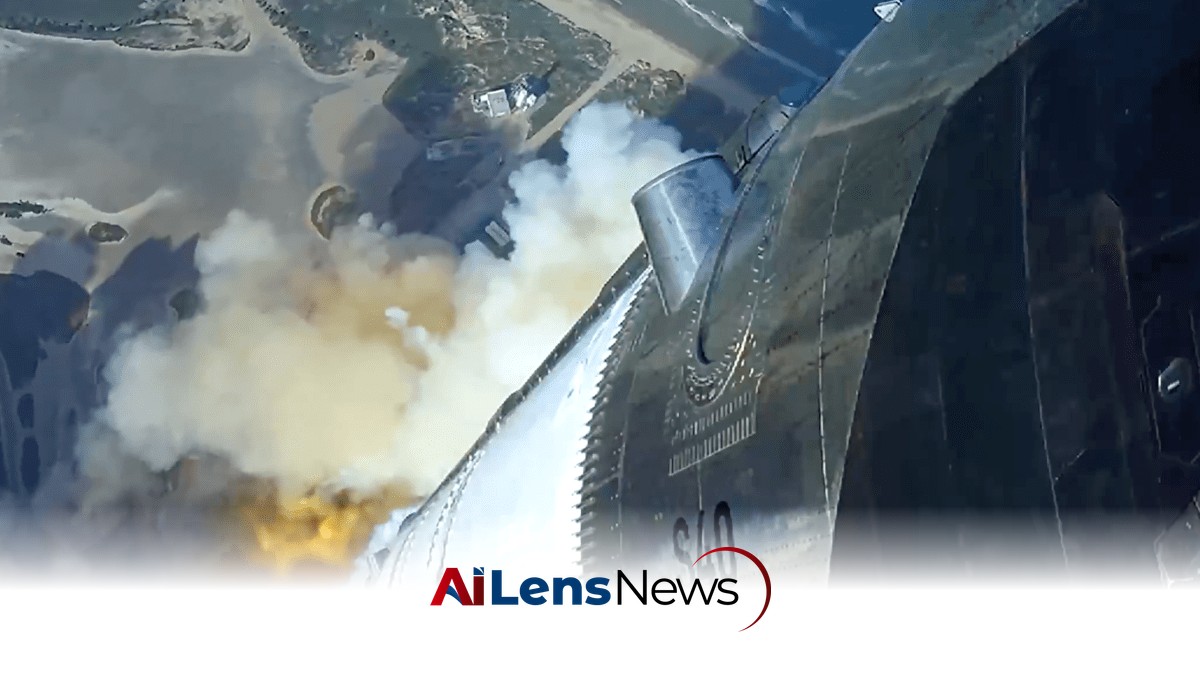


SpaceX successfully deployed its first third-generation Starlink satellites but faced another booster failure during the launch of its upgraded Starship.
Washington DC, United States Jul 25, 2026 ALN: SpaceX successfully deployed the first third-generation Starlink satellites on Friday using an upgraded version of its prototype Starship — the 13th test flight of its mega-rocket to date. But the company suffered another failure with its Super Heavy booster during a planned simulated landing in the Gulf of Mexico.
The launch is significant in the context of SpaceX's ongoing development of its Starship program, which aims to create a fully reusable spacecraft capable of carrying humans and cargo to destinations beyond low Earth orbit, including Mars. This particular test flight was crucial as it marked the first operational deployment of the V3 Starlink satellites, which are designed to enhance the capacity and performance of SpaceX's satellite internet service.
However, the mission was not without its challenges. The Super Heavy booster faced issues during its flight, which has become a recurring theme in the development of the Starship system. This incident is the second failure involving the Super Heavy booster during the V3 testing phase. In May, during the inaugural flight of the V3 Starship, a failure occurred shortly after the booster separated from the upper stage, leading to a premature end to that mission. Despite these setbacks, SpaceX has been able to demonstrate the resilience of its design and engineering through subsequent test flights.
The latest launch took place just over a week after a previous attempt was aborted due to multiple rocket engine failures at ignition. In preparation for the recent flight, SpaceX undertook significant modifications, replacing six engines on the Super Heavy booster to address the issues encountered in the prior test. This proactive approach reflects SpaceX's iterative design philosophy, often summarized as "fly, fail, fix," which emphasizes rapid testing and development cycles to improve technology.
During the most recent launch, the Super Heavy booster did manage to travel farther into its planned trajectory than in previous tests. However, it ultimately failed to ignite all the engines necessary for a successful simulated landing burn. The booster exploded upon impact with the water, a stark reminder of the challenges faced in developing such advanced aerospace technology. This incident raises questions about the reliability of the booster system and the implications for future missions.
Interestingly, this launch was the first since SpaceX went public in June, marking a significant milestone for the company. The IPO was notable for being the largest in history, reflecting investor confidence in SpaceX's future prospects. However, the stock has faced volatility since the IPO, with a noticeable decline following the recent launch abort. The company's stock price dropped from a peak of over $200 per share to around $115 by the close of trading on Friday, and further declined in after-hours trading following the booster failure. This fluctuation highlights the market's sensitivity to the company's performance and the inherent risks associated with space exploration.
Despite the challenges faced by the Super Heavy booster, the upper stage of the Starship performed admirably during the latest mission. Unlike the first V3 launch in May, where the upper stage lost a rocket engine, this time it successfully deployed the new Starlink satellites without incident. The upper stage, referred to as "the Ship" by SpaceX, endured the extreme conditions of atmospheric reentry and managed to execute a simulated landing in the Indian Ocean approximately one hour after liftoff. This successful operation is a positive sign for the future of the Starship program and its potential capabilities.
In a departure from previous missions, the Ship did not explode upon hitting the water; instead, it floated, providing SpaceX with an opportunity to utilize a drone to closely inspect the heat shield tiles on the spacecraft. This inspection is critical for ensuring the integrity of the heat shield, which is essential for the safe reentry of the spacecraft during future missions.
The new Starlink satellites, deployed during this mission, are designed to be more capable than their predecessors. They burned up in the atmosphere approximately 20 minutes after deployment, as the Starship is currently not capable of reaching Earth orbit. Nonetheless, SpaceX successfully communicated with all deployed satellites while they were in space, marking a significant advancement in the Starlink program, which has emerged as the only profitable segment of SpaceX's diverse business operations.
The deployment of the V3 Starlink satellites is particularly important for enhancing the economics of SpaceX's ambitious satellite internet network. The company has indicated that launching 60 of the new satellites on the Starship could potentially yield a twenty-fold increase in downlink capacity compared to the same number of satellites launched aboard a Falcon 9 rocket. This increase in capacity could significantly improve service quality and expand coverage for users of the Starlink service.
However, the realization of these potential gains hinges on the ability of SpaceX to achieve a fully reusable Starship system. Currently, the Super Heavy booster is expended during each launch, which raises concerns about the overall cost-effectiveness of the Starlink deployment strategy. SpaceX's S-1 has indicated that without a fully reusable Starship, the pace of progress on the Starlink project could be slower and more expensive, potentially impacting the company's long-term growth and profitability.
As SpaceX continues to refine its Starship technology and expand its Starlink constellation, the implications of these test flights extend beyond just the company itself. The successful implementation of a robust satellite internet network has the potential to revolutionize global internet access, particularly in underserved and remote areas. This aligns with SpaceX's broader mission to make space more accessible and to provide advanced communication solutions worldwide.
In conclusion, while the recent launch showcased SpaceX's ability to deploy advanced satellites and demonstrated the resilience of its upper stage, the ongoing challenges with the Super Heavy booster highlight the complexities of developing cutting-edge aerospace technology. The company's iterative approach to testing and problem-solving will be crucial as it navigates the path forward in its ambitious plans for both Starship and the Starlink program.
To learn more about the latest developments in Software & Platforms, stay updated with our exclusive reports and analyses on AiLensNews.

