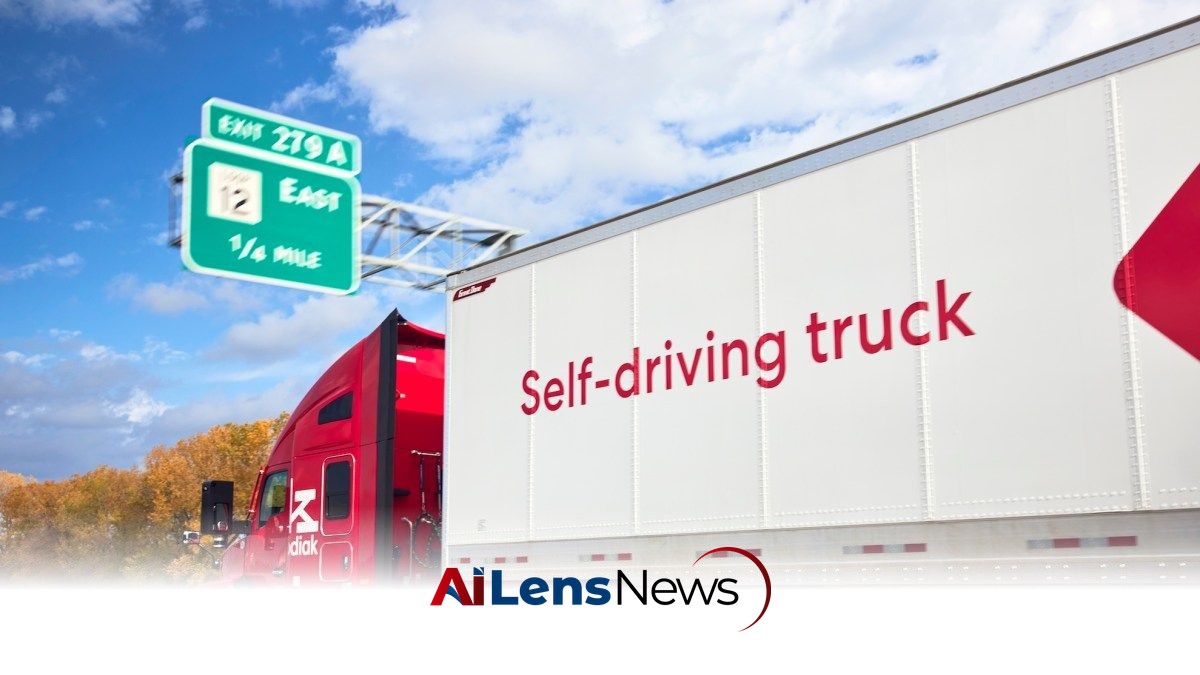


Aurora Innovation and Kodiak AI have received permits to test self-driving trucks on California highways, marking a significant step in autonomous vehicle technology.
Washington DC, United States Aug 15, 2026 ALN: Aurora Innovation and Kodiak AI, two companies developing self-driving trucks, have received permits from the California Department of Motor Vehicles to test their autonomous vehicle technology on public roads. Kodiak has already initiated its testing.
Kodiak is starting with a handful of test trucks in California, primarily around its Mountain View office. This is a significant development, as it marks a crucial step in the evolution of autonomous vehicle technology, particularly in the logistics and transportation sectors, which are increasingly looking toward automation to enhance efficiency and reduce costs.
Both companies applied for testing permits this spring under updated rules approved by the California DMV, the agency that regulates autonomous vehicles in the state. Those rules, approved on April 28, lifted a ban on driverless vehicles weighing over 10,000 pounds from testing on public roads and provided a regulatory path for companies to test and eventually deploy autonomous heavy-duty vehicles. The decision to revise these rules reflects a growing recognition of the potential benefits of self-driving technology, including reduced labor costs and the potential to mitigate the ongoing shortage of truck drivers.
The trucking industry has faced significant challenges in recent years, including a shortage of qualified drivers, which has been exacerbated by the COVID-19 pandemic. As businesses struggled to keep up with demand for goods, the need for innovative solutions became more pressing. Autonomous trucks are seen as a potential remedy to these challenges, offering the promise of increased efficiency and reduced dependency on human labor. This shift could fundamentally alter the landscape of logistics and transportation, prompting companies to reassess their operational models.
Kodiak and Aurora met the DMV’s permitting criteria, which included safety, insurance, vehicle registration, safety driver qualification, and other requirements. The testing permits require a human safety operator to be behind the wheel and prohibit companies from operating on roads where the posted speed limit is 25 miles per hour or less unless they are on a “direct route” between destinations. These stipulations are designed to ensure that safety remains a priority during the testing phase, as autonomous vehicles are still being developed and their behavior in complex traffic scenarios is being studied.
Despite these restrictions, the prospect of self-driving trucks on California’s highways has sparked opposition. Last week, Teamsters California sued the state’s DMV, alleging that the agency circumvented laws requiring it to study and publicly disclose the potential economic impacts of allowing self-driving trucks on public roads. The lawsuit, filed in the state’s Superior Court in Alameda County, also accused the DMV of failing to consider the safety risks to motorists. This legal action underscores the concerns many have about the rapid rollout of autonomous technologies, particularly in industries where human jobs are at stake. The Teamsters, a labor union representing a wide range of workers, have long been vocal about the need to protect jobs in the trucking industry, which has been a traditional source of employment for many individuals across the country.
The implications of the Teamsters' lawsuit extend beyond the immediate legal framework. It raises critical questions about the interaction between technological advancement and labor rights. As self-driving technology continues to evolve, there is a growing fear that automation could lead to significant job losses in the trucking sector, which has historically provided stable employment for millions of Americans. Labor unions and workforce advocates are pushing for policies that would protect workers in the face of these changes, emphasizing the need for retraining programs and safety nets for displaced workers.
For autonomous vehicle developers, the new rules allow them to test and eventually deploy in their home territories. Aurora and Kodiak are both based in California but had previously focused their testing and deployment activities in Texas due to their home state’s ban on autonomous heavy-duty trucks. Aurora launched a self-driving truck service in Texas in May 2025, starting with a Dallas-to-Houston route. The company has since added more routes, including between Fort Worth and El Paso, El Paso and Phoenix, Fort Worth and Phoenix, and Laredo and Dallas. This expansion into California represents a strategic move for both companies, allowing them to operate in a market that is not only larger but also more influential in setting standards for autonomous vehicle regulations nationwide.
Kodiak began commercial driverless truck operations in January 2025 in an off-road environment in West Texas’ remote Permian Basin. The company has since expanded to on-highway operations, including a route between Dallas and Houston. This growth trajectory highlights the increasing confidence in the technology and its potential to transform logistics and supply chain management. As companies like Kodiak and Aurora continue to refine their systems, they are also likely to face ongoing scrutiny regarding their impact on employment and public safety.
The implications of self-driving trucks extend beyond the immediate operational capabilities of these vehicles. They pose significant questions about regulatory frameworks, liability in the event of accidents, and the future of the workforce in an industry that has traditionally relied on human drivers. As self-driving technology advances, policymakers will need to consider how to balance innovation with safety and economic stability.
Moreover, the testing of self-driving trucks in California could serve as a bellwether for other states considering similar regulations. The outcomes of these tests, both in terms of safety and operational efficiency, could influence legislative decisions across the country. If successful, it may pave the way for broader acceptance and integration of autonomous vehicles in various sectors beyond trucking, including passenger transport and delivery services.
In conclusion, the commencement of testing for self-driving trucks in California by Aurora Innovation and Kodiak AI marks a pivotal moment in the evolution of autonomous vehicle technology. As these companies navigate the complexities of regulatory compliance and public sentiment, the outcomes of their testing could have far-reaching implications for the future of transportation, labor markets, and regulatory practices in the United States. The intersection of technology, labor rights, and public safety will continue to be a critical area of focus as society adapts to the changes brought about by automation in the transportation sector.
To learn more about the latest developments in Software & Platforms, stay updated with our exclusive reports and analyses on AiLensNews.

