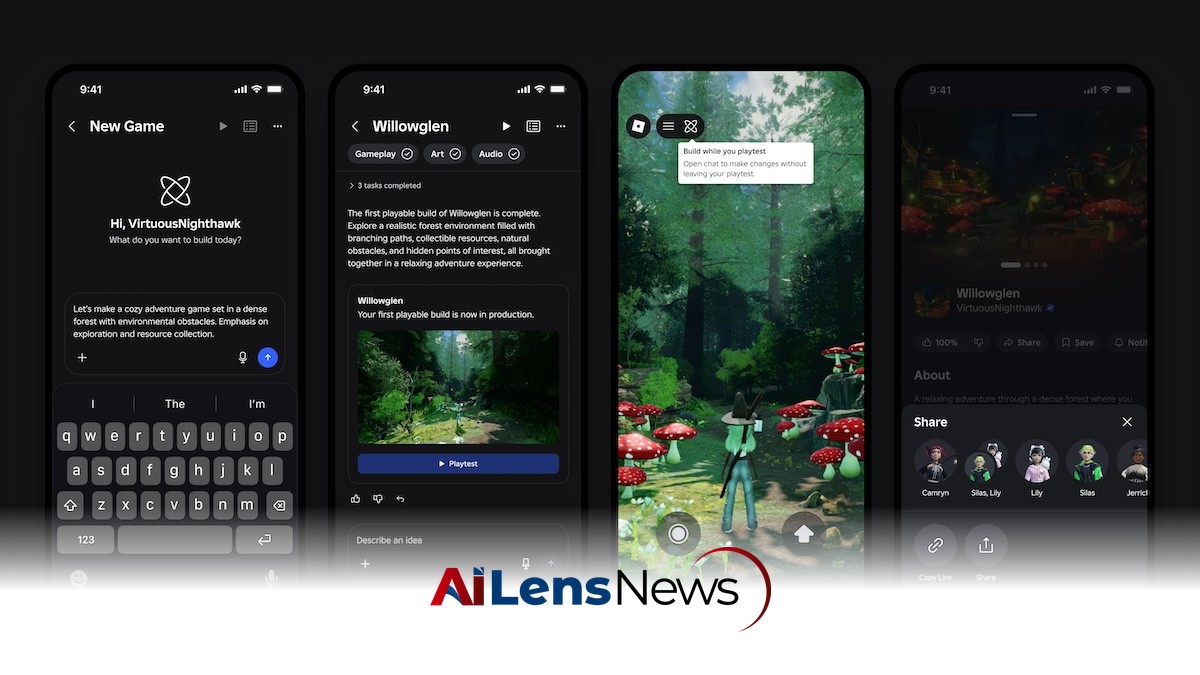


Roblox's new 'Build' feature allows users to create games using AI with simple text prompts, raising concerns about game quality and competition.
Washington DC, United States Jul 16, 2026 ALN: Roblox announced Thursday a new feature called “Build,” allowing users to design games from their mobile devices using AI.
The Build feature lets anyone turn simple text prompts into a basic game without any programming experience. For example, if a user types, “Let’s make a cozy adventure game set in a dense forest,” the new feature will generate an initial version of the game, which users can then modify and share with friends.
“Powered by a broad set of AI models, including both open-source and proprietary Roblox models, Build handles gameplay mechanics, environment, characters, visual style, sound, and more,” the company wrote in a blog post. This significant advancement aims to democratize game development, allowing users who may not have technical skills to engage in the creative process and produce their own interactive experiences.
Roblox has always prided itself on being a platform that empowers creators, and this new feature is a natural extension of that philosophy. By leveraging artificial intelligence, Roblox is attempting to streamline the game creation process, making it more accessible to a broader audience. The company has recognized a growing trend in the gaming industry towards the integration of AI technologies, as seen in similar tools developed by tech giants like Google, Microsoft, and Tencent.
The integration of AI into game development is not merely a trend but a reflection of how technology is reshaping creative industries. AI has the potential to automate repetitive tasks, enhance creativity, and provide insights that were previously unattainable. In gaming, AI can facilitate everything from game design to player experience analysis, making it an invaluable tool for developers. The Build feature is part of a larger movement towards making game development more inclusive and user-friendly, catering to a diverse demographic that includes younger users and those with limited technical backgrounds.
However, the introduction of AI-powered game generation has not come without controversy. Critics within the gaming community have expressed concerns that the ease of creating games via text prompts could lead to a deluge of low-quality and repetitive content flooding the platform. This influx could overwhelm users, making it more challenging to discover engaging and well-crafted games. Furthermore, the competition could intensify, as creators would find themselves not only competing with their peers but also with AI-generated content that can be produced at a much faster rate.
These concerns are echoed in the findings of the Game Developer Conference State of the Game Industry survey conducted earlier this year, which revealed that 52% of game industry professionals believe generative AI is having a negative impact on the industry. This sentiment reflects a broader anxiety about the implications of AI on creativity, originality, and the overall gaming landscape. The fear is that as AI becomes more integrated into game development, it may stifle unique voices and ideas, leading to a homogenization of content.
In response to these worries, Roblox has outlined a strategy to mitigate the potential downsides of AI-generated games. The company plans to implement a ranking system for these games based on player retention, which is similar to the existing system used for other titles on the platform. This approach is designed to ensure that games that fail to attract players will not be prominently featured, thereby maintaining a level of quality on the platform. The company stated, “Our discovery systems are designed to highlight games with long-term retention, which doesn’t include AI slop. The quality of games on the homepage isn’t changing: If no one plays it—no one can find it.” This commitment to quality underscores Roblox's intention to balance innovation with the need for engaging and enjoyable user experiences.
The Build feature is set to enter public alpha testing on July 28, initially available to users in New Zealand aged nine and older who have verified their age. This phased rollout allows Roblox to gather feedback and make adjustments before a wider release. Users aged 16 and up will have the opportunity to publish their creations to a global audience, further encouraging creativity among older users. The availability of a free basic version alongside paid options provides flexibility for users, catering to both casual creators and those looking for more advanced features.
This approach aligns with Roblox’s broader strategy of fostering a creative community where users feel empowered to express themselves. The company has a history of providing tools and resources that enable creators to build and monetize their games, and the Build feature is a continuation of this mission. By allowing users to create games through simple text prompts, Roblox is lowering the barrier to entry for game development, which could lead to an influx of new creators who may not have previously considered game design as a viable outlet for their creativity.
Beyond the Build feature, Roblox is also exploring the development of AI agents that will assist creators in playtesting and providing analytics. These anticipated features aim to enhance the overall game development process and provide creators with valuable insights into player engagement and experience. As the gaming industry increasingly embraces AI, these tools could become essential for developers looking to refine their games and optimize player satisfaction. The ability to analyze player behavior and feedback in real-time could lead to more responsive game design, where creators can make adjustments based on actual player experiences.
Roblox's announcement regarding the Build feature also highlights the company's ongoing investment in artificial intelligence. In addition to the Build feature, Roblox is working on an AI foundation model designed to generate 3D game assets, which could significantly speed up the asset creation process and allow developers to focus more on gameplay and narrative. This could be particularly beneficial for smaller developers who may lack the resources to create high-quality assets, thus leveling the playing field in terms of content creation.
Moreover, the development of an AI chatbot to support developers through the game-building process demonstrates Roblox's commitment to integrating AI into various facets of game creation. This chatbot could serve as a virtual assistant, providing tips, troubleshooting issues, and offering suggestions to improve game design. Such support could be invaluable, particularly for novice developers who may feel overwhelmed by the complexities of game creation.
Another exciting development is the creation of a “new scene-generation model” capable of producing entire editable and playable 3D scenes from a single text prompt. This feature could revolutionize how environments are created within the Roblox platform, enabling creators to bring their visions to life with minimal effort. As these tools become available, they may reshape the landscape of game development on Roblox, allowing for more diverse and imaginative content. The ability to generate entire scenes from text could inspire creativity and encourage experimentation among users, leading to a richer variety of games available on the platform.
The timing of this announcement is particularly noteworthy, coming shortly after Roblox disclosed plans to discontinue “Roblox Connect,” the avatar-based video calling feature that was introduced in 2023. This decision reflects the company's ongoing evaluation of its features and services, ensuring that it remains focused on tools that enhance the gaming experience and foster creativity among its user base. As Roblox continues to evolve, the introduction of AI-powered features like Build represents a significant step forward in its mission to empower creators and engage players in new and innovative ways.
In conclusion, the introduction of the Build feature marks a pivotal moment in Roblox's journey as a platform dedicated to creativity and game development. By harnessing the power of AI, Roblox is not only simplifying the game creation process but also opening the door for a new generation of creators. While challenges remain, particularly regarding content quality and originality, Roblox's proactive measures to maintain a high standard of gameplay and user engagement demonstrate its commitment to fostering a vibrant and diverse gaming community. As the gaming landscape continues to evolve with advancements in technology, Roblox's focus on integrating AI into its platform could pave the way for innovative developments that enhance the gaming experience for all users.
To learn more about the latest developments in Artificial Intelligence, stay updated with our exclusive reports and analyses on AiLensNews.

