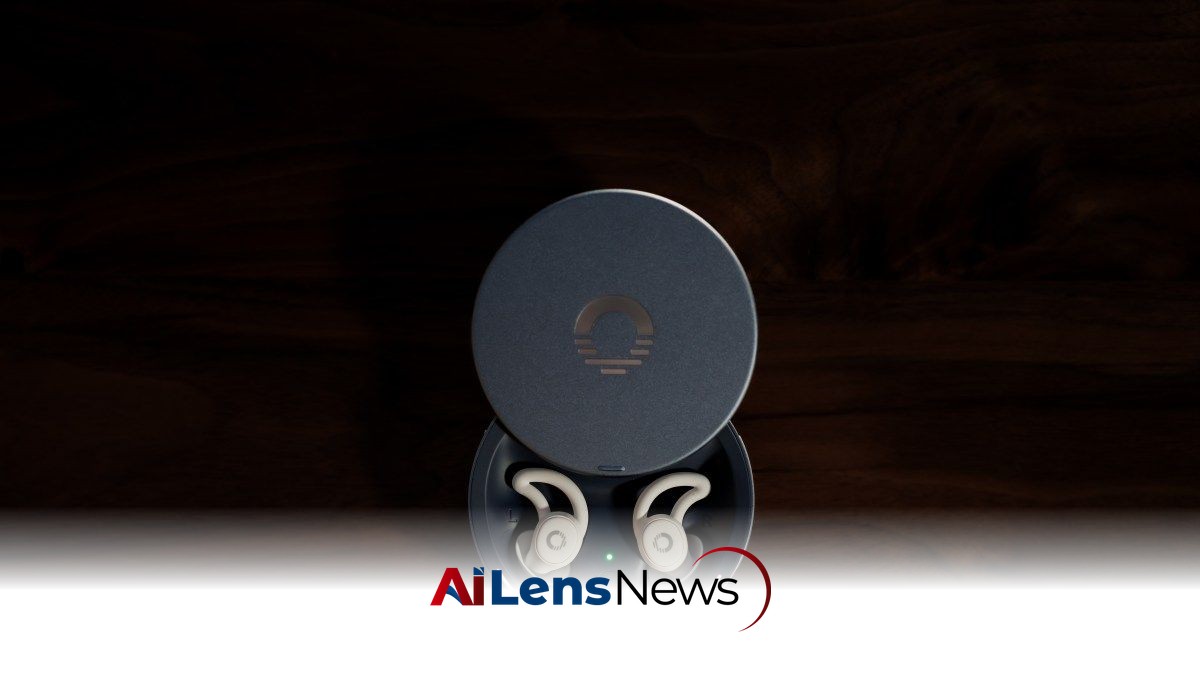


Ozlo unveils its upgraded Sleepbuds 2, featuring improved battery life, connectivity, and sound quality, continuing the legacy of Bose's original sleep earbuds.
Washington DC, United States Jul 29, 2026 ALN: Ozlo, the sleep earbuds startup from former Bose engineers, is launching its next device. On Tuesday, the company unveiled Sleepbuds 2, an updated version of its original product that tackles key areas of improvement, including battery life, connectivity, and sound quality. The new model costs $279, a $30 increase from the original Sleepbuds, which were $249 last month with an MSRP of $349.
The launch marks Ozlo’s first major update since the release of its original device and reflects the company’s evolution from a continuation of Bose’s brand into its own sleep platform. This transition underscores a broader trend in the consumer electronics industry, where startups often emerge from established companies to innovate in niche markets. In this case, Ozlo has taken the foundation laid by Bose’s Sleepbuds and expanded upon it, indicating a commitment to enhancing user experience in the sleep technology sector.
The original Sleepbuds, launched in late 2024, were meant to fill the hole left by Bose’s departure from the category the year prior. Bose, a leader in audio technology, had previously introduced its own version of sleep earbuds, but the discontinuation of this product line left a gap in the market. Ozlo’s co-founders, N.B. Patil, Brian Mulcahey, and Charlie Taylor, were Bose veterans who had been deeply involved with the Sleepbuds program and saw the potential to continue the business. They acquired and licensed the Sleepbuds research and IP for their new company, Ozlo, making its first product essentially a continuation of Bose’s earlier efforts. This strategic pivot allowed them to leverage existing technology while also innovating to meet evolving consumer demands.
The initial earbuds, which now have more than 200,000 customers, were smaller and more low-profile than AirPods. This made them more comfortable to wear at night, especially for side sleepers. They also offered built-in sleep sounds, Bluetooth streaming, passive noise blocking, an in-ear alarm, sleep tracking, and other features. The combination of these functionalities addressed common sleep issues faced by many individuals, such as difficulty falling asleep due to noise or the need for a gentle wake-up method. As the market for sleep aids continues to grow, driven by increasing awareness of the importance of sleep for overall health, Ozlo's products are well-positioned to meet this demand.
The Sleepbuds 2 promise a range of improvements, including, most notably, 14 hours of battery life instead of roughly 10 hours. This is a significant enhancement, as battery life is a critical factor for users who rely on the earbuds throughout the night. Plus, the charging case can now store enough power for two to three nights of use per charge and adds a button that lets users play a sleep sound or snooze the alarm without reaching for their phone. Such features enhance the overall user experience by providing convenience and ease of use, which are crucial for sleep aids.
The update also tackles one of customers’ biggest complaints: Bluetooth connectivity, which could be flaky, although software updates improved it over time. Ozlo claims the Sleepbuds 2 offer longer Bluetooth range, a more reliable connection, and dedicated pairing controls for faster setup. The improvements come from a redesigned antenna and extender, Ozlo said. Reliable connectivity is essential for users who wish to seamlessly integrate their sleep earbuds with other devices, such as smartphones or tablets, to access a variety of sleep sounds or tracks.
The audio system has also been updated with a built-in amplifier for better sound masking and improved sound quality. Personalized sound tuning is new, too, optimizing audio for specific use cases such as Spoken Word, Airplane mode, and Focus mode, in addition to a Balanced mode. This personalization aspect is particularly noteworthy, as it allows users to tailor their listening experience to their specific needs, whether they are trying to concentrate, relax, or drift off to sleep.
Another new feature is a Sleep Shield, which will block incoming calls, alerts, notifications, and Bluetooth audio streaming. This works if the user hasn’t already enabled their phone’s built-in sleep focus mode. This feature addresses a common concern for many users: the disruption caused by notifications during sleep. By minimizing disturbances, the Sleep Shield could significantly enhance the overall sleep quality for users, making it easier for them to stay asleep throughout the night.
Ozlo’s sleep insights have expanded to include more details around sleep patterns. The biometrics in the buds monitor breathing and movement, while the case monitors room conditions, such as the sound levels, light, and temperature. This can help wearers learn which sleep environments lead to deeper, more restorative sleep, helping them improve their sleep over time. Such data-driven insights are becoming increasingly valuable in the wellness space, as consumers seek to understand and optimize their sleep habits.
The company outlined its plans to become a broader platform for sleep data during an interview with at the Consumer Electronics Show in January, including plans to use AI to better interpret users’ sleep patterns. It is also developing an AI “sleep buddy” with which users could chat about their sleep data. This integration of artificial intelligence demonstrates a forward-thinking approach, positioning Ozlo to be at the forefront of sleep technology innovation. The potential for AI to provide personalized recommendations based on individual sleep data could revolutionize how users approach their sleep health.
To kick off the launch, Ozlo is offering a sleep mask and travel case with each purchase for a limited time. The $279 Sleepbuds 2 also ship with four pairs of silicone ear tips in different sizes, the charging case, and a USB-C cable. The inclusion of additional accessories enhances the value proposition for consumers, making the Sleepbuds 2 a more appealing option for those looking to invest in their sleep quality.
As an aside, I purchased my own Ozlo Sleepbuds after reading initial reviews of the product and found them to be an effective tool for blocking out noise and streaming sounds and music, and far more comfortable than sleeping in my AirPods. They never fell out overnight, either. My experience reflects a broader trend where consumers are increasingly seeking specialized solutions for sleep-related issues, leading to a growing market for such products.
However, I found that I prefer streaming from the Calm app instead of using Ozlo’s built-in sounds. (Apparently, I’m not alone: Ozlo and Calm partnered on a co-branded case last year that included a year’s subscription to Calm’s library of sleep sounds, stories, and other sleep experiences.) This partnership highlights the increasing importance of collaboration in the tech space, where companies recognize the value of combining strengths to provide enhanced user experiences.
I’m looking forward to trying the new Sleepbuds 2 to see if they’re worth the upgrade for an existing Sleepbuds owner like me. As sleep technology continues to evolve, the introduction of products like the Sleepbuds 2 not only reflects consumer demand but also the ongoing innovation within the industry. The implications of such advancements extend beyond mere consumer satisfaction; they contribute to a broader understanding of sleep health and wellness, potentially influencing how individuals approach their nightly routines and overall health management.
To learn more about the latest developments in Software & Platforms, stay updated with our exclusive reports and analyses on AiLensNews.

