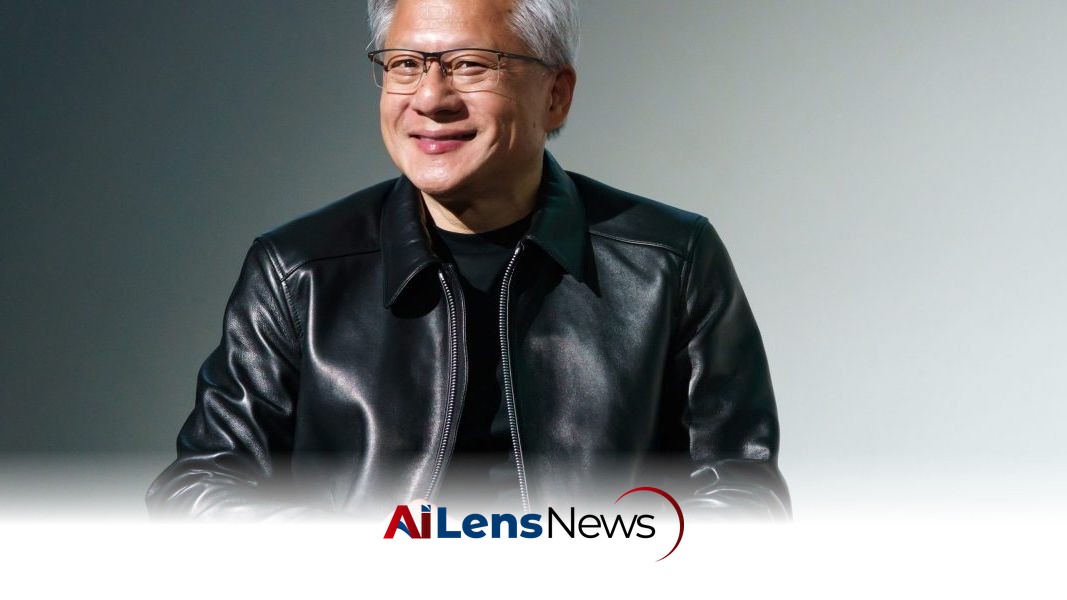


Jensen Huang emphasizes that AI will automate tasks, potentially leading to new job opportunities rather than mass unemployment.
Washington DC, United States Jul 29, 2026 ALN: Jensen Huang, the CEO of Nvidia, has made a significant statement regarding the impact of artificial intelligence (AI) on the labor market, asserting that AI will eliminate specific tasks rather than entire jobs. This perspective could be pivotal in shaping the future of work, potentially steering society away from mass unemployment toward a landscape rich with new opportunities and growth.
During a recent appearance at Y Combinator’s Startup School in San Francisco, Huang articulated his views on the evolving nature of work in the age of AI. He emphasized that while many tasks within jobs may become automated, the essence of jobs themselves will remain intact. “Many tasks will be automated away,” he stated, suggesting a transformative shift rather than a destructive one. This outlook challenges the prevailing narrative that AI will lead to widespread job loss, particularly in white-collar sectors.
Huang's assertion that “AI automates tasks away, but it doesn’t necessarily eliminate jobs” reflects a broader debate in the tech and economic communities about the implications of AI on employment. As businesses increasingly adopt AI technologies, there is a growing concern about the potential for job displacement, particularly in industries that are heavily reliant on routine tasks.
In a report from Goldman Sachs, the financial services firm indicated that AI could be contributing to the loss of approximately 11,000 net jobs per month in sectors most affected by automation, such as marketing, graphic design, and customer service. Although this figure represents an improvement from a previous estimate of about 16,000 jobs lost monthly, it still highlights the vulnerability of entry-level and white-collar positions in the face of advancing AI technologies.
Looking ahead, Goldman Sachs' senior global economist Joseph Briggs projected that around 9% of the U.S. workforce, equating to roughly 15 million individuals, could face job displacement as AI technologies become more prevalent over the next decade. This statistic underscores the urgency of understanding the nuances of AI's impact on employment and the labor market.
Adding to the complexity of the conversation are the predictions made by various AI leaders who have warned of potential mass unemployment due to AI advancements. Dario Amodei, the CEO of Anthropic, previously suggested that AI could eliminate half of entry-level white-collar jobs within a short timeframe, potentially pushing unemployment rates as high as 20%. However, Amodei has since moderated his stance, indicating that automation might expand human responsibilities rather than completely displace jobs. Similarly, OpenAI CEO Sam Altman has acknowledged the risks posed by AI to even high-level roles like that of a CEO but has recently downplayed the likelihood of a global “jobs apocalypse.”
To support his argument, Huang elaborated on the concept that each job has a fundamental purpose, which comprises various tasks. Even if certain tasks are automated, the overarching purpose of the job remains relevant. For example, in the field of radiology, which Geoffrey Hinton, a prominent figure in AI, once predicted would become obsolete, the reality has turned out differently. Hinton had previously advised medical institutions to halt training radiologists, arguing that deep learning would surpass human capabilities within five years. However, he later acknowledged that his assessment was overly broad and revised his predictions during a subsequent interview.
Contrary to Hinton's initial forecast, the number of practicing radiologists has actually increased by about 12% from 2010 to 2022, as reported in a study published in the Journal of the American College of Radiology. Projections suggest that the radiology workforce could grow by an additional 25.7% to 40.3% by 2055, contingent on the expansion of residency positions. Huang pointed out that the increase in radiologists is largely driven by the high backlog of patients needing care. With AI assisting in analyzing scans, radiologists are freed to focus on other critical aspects of patient care, such as consulting with physicians and performing interventional procedures.
This paradigm is not unique to radiology. Huang argued that software engineering is another field where the automation of tasks could lead to an increase in job opportunities. If AI can take over the more mundane aspects of coding, companies will be able to hire more developers to tackle larger, more ambitious projects. Huang emphasized the existing “backlog of ideas” and the potential for growth in the tech sector, stating, “If we can automate away the task of programming, we could hire more software engineers to do more things. We could be more ambitious.”
While Huang maintains an optimistic outlook on the future of work in an AI-driven world, he has also acknowledged that some degree of disruption is inevitable. In previous statements, he has recognized that certain jobs may indeed disappear, as has occurred during past technological transitions. Furthermore, he has noted that workers who adapt to using AI effectively may have a competitive advantage over those who do not.
Despite the challenges posed by automation, Huang's overarching belief is that businesses will leverage the productivity gains offered by AI to expand their operations rather than resorting to mass layoffs. He encapsulated this idea by stating, “This is a classic example of productivity increasing growth. Increasing growth drives more employment.” This perspective aligns with historical trends where technological advancements have often led to increased productivity and, ultimately, the creation of new jobs in emerging sectors.
As the dialogue surrounding AI and employment continues, it is crucial for policymakers, business leaders, and workers to engage in discussions about how to navigate the changes brought about by AI. Emphasizing the distinction between tasks and jobs, as Huang has done, may help mitigate fears surrounding job loss while also highlighting the potential for growth and innovation in a rapidly evolving labor market. The implications of AI on the workforce are profound, and understanding these dynamics will be essential for shaping a future that balances technological advancement with human employment.
To learn more about the latest developments in Software & Platforms, stay updated with our exclusive reports and analyses on AiLensNews.

