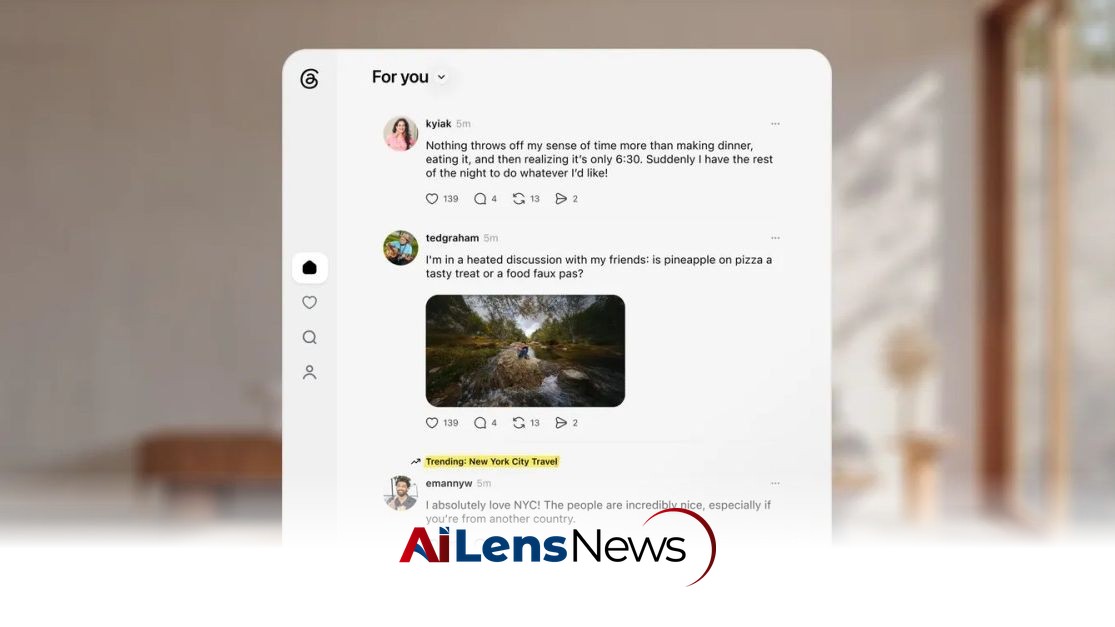


Meta has unveiled a new Threads app for its Meta Quest VR headsets, enhancing social interaction in virtual reality.
Washington DC, United States Aug 12, 2026 ALN: Meta has launched a Threads app specifically designed for its Meta Quest VR headsets, marking a significant expansion of its social media platform into virtual reality. This announcement was made on a Tuesday, and it follows the recent introduction of the Threads app to Meta's Ray-Ban Display AR glasses just a month prior. The launch comes at a time when the Threads platform is experiencing considerable growth, having recently surpassed 500 million monthly active users. This milestone highlights the increasing popularity of Threads as a social media platform, particularly as it seeks to carve out a niche in the competitive landscape dominated by other social networks.
The Threads app for VR headsets is being touted as a full-featured application, allowing users to engage with the platform in a manner that is tailored to the immersive experience of virtual reality. According to Meta, the app enables users to browse their feeds, create and share posts, like and reply to other users’ posts, visit profiles, conduct searches, and watch videos. These functionalities are designed to mirror the interactions that users have come to expect from Threads, but within the more engaging context of VR. This level of integration is pivotal as it allows users to transition seamlessly from traditional social media engagement to a more immersive experience.
In a statement regarding the app, Meta emphasized its commitment to enhancing social interactions within virtual spaces. "We designed the new Threads app for Meta Quest to make using VR more social than ever," the company noted. This sentiment underscores the growing recognition of virtual reality as a platform not just for gaming and entertainment, but also as a viable medium for social interaction. The app aims to facilitate conversations during gaming sessions, allow users to discuss the latest television shows or music albums with friends, and provide quick check-ins between daily tasks. By integrating Threads into the VR experience, Meta is attempting to create a more connected and interactive environment for its users, which could ultimately lead to richer social experiences.
The introduction of the Threads app for Meta Quest VR headsets is part of a broader strategy by Meta to integrate its various platforms and technologies. By extending Threads into the realm of virtual reality, the company is not only enhancing the functionality of its VR headsets but also reinforcing the importance of social connectivity across its ecosystem. This move reflects a growing trend among tech companies to explore the potential of virtual reality as a medium for social engagement, particularly as more users become familiar with immersive technologies. Companies are increasingly recognizing that the future of social interaction may lie in virtual environments, where users can engage in ways that transcend the limitations of traditional platforms.
Furthermore, the launch of the Threads app is significant in the context of the ongoing competition in the social media space. With platforms like Twitter, Facebook, and Instagram vying for users' attention, Meta's focus on creating a unique experience within VR could provide a competitive edge. By offering a dedicated app that allows users to engage with Threads in a more immersive way, Meta is positioning itself to attract users who are looking for new ways to connect with friends and communities. This strategic positioning is crucial as social media platforms increasingly seek differentiation in a crowded market.
As the social media landscape continues to evolve, the implications of such innovations are profound. The integration of social media into virtual reality could potentially change how people interact online. Virtual reality offers a level of immersion and presence that traditional social media platforms cannot replicate. Users can engage in conversations as if they are physically together, share experiences in real-time, and participate in virtual events, all of which could lead to deeper connections and more meaningful interactions. This shift towards immersive social experiences may redefine user expectations and behaviors, pushing other platforms to adapt or innovate in response.
Moreover, the Threads app for Meta Quest could pave the way for future developments in social VR. As more users adopt VR technology, the demand for social applications that leverage these capabilities is likely to grow. This could lead to a new wave of social experiences that incorporate elements of gaming, entertainment, and community engagement in ways that have not yet been fully realized. The potential for virtual reality to host large-scale social gatherings, concerts, or collaborative workspaces could transform how communities are built and maintained in the digital age.
In terms of accessibility, the Threads app is available for download on Meta's store, making it easy for existing Meta Quest users to integrate this new social tool into their VR experiences. This ease of access is crucial as Meta aims to encourage adoption among users who may be hesitant to explore social interactions in virtual reality. By lowering the barriers to entry, Meta is likely to foster a larger user base, which in turn could enhance the vibrancy and utility of the Threads platform.
In conclusion, the launch of the Threads app for Meta Quest VR headsets represents a strategic move by Meta to enhance its social media offerings and capitalize on the growing interest in virtual reality. As the app allows users to engage with Threads in a more immersive and interactive manner, it could potentially redefine social interactions in the digital age. The implications of this launch extend beyond mere app functionality; it signals a shift in how technology companies are approaching social connectivity in an increasingly digital world. As Meta continues to innovate and expand its ecosystem, the impact of such developments on user behavior and social dynamics remains to be seen. The evolution of social media into immersive environments may not only affect how users connect but could also influence broader societal trends as virtual spaces become more integral to everyday life.
To learn more about the latest developments in Software & Platforms, stay updated with our exclusive reports and analyses on AiLensNews.

