


The Google Pixel 11 Pro Fold offers minor enhancements over its predecessor, but its price increase and competition raise questions about its value.
Washington DC, United States Aug 26, 2026 ALN: The Google Pixel 11 Pro Fold is a predictably iterative improvement over last year’s foldable, with slight upgrades to performance and the camera, but it comes with an unwelcome $100 price bump. The device is now priced at $1,900, which raises questions about its value proposition, especially in a competitive market. The IP68 rating for water and dust resistance and the Qi2 25W support for faster magnetic charging are standouts in a category where Google is lagging, but it has never been known for its hardware. Software is where the company excels, and some users will appreciate the unrivaled AI-infused software features that Google is known for, such as advanced photo processing and voice recognition capabilities.
Google is good at elevating its devices beyond the spec sheet, but the 11 Pro Fold is perilously close to the Pixel 11 on paper, a phone that’s less than half its price. Beyond the big unfolding screen and customizable rear LEDs, little else justifies the “Pro” tag. With Samsung’s fresh Fold8 form factor and a folding iPhone on the horizon, I’m not convinced Google has done enough to make this the foldable you drop $1,900 on. The foldable smartphone market has become increasingly competitive, with various manufacturers racing to deliver innovative designs and features that appeal to consumers. Samsung has established itself as a leader in this space, and with Apple potentially entering the foldable arena, Google faces significant pressure to differentiate its offerings.
The Pixel 11 Pro Fold doesn’t look different from the 10 Pro Fold, but Google has shaved off a fraction of a millimeter and 19 grams. However, the 11 Pro Fold is still heavier and thicker (239 grams and 10.1 mm) than Samsung’s Galaxy Z Fold8 (201 grams and 9.7 mm), the Fold8 Ultra (215 grams and 8.9 mm), and the Honor Magic V6 (219 grams and 8.75 mm, not sold in the US). This added bulk can make it a little trickier to handle, especially for users accustomed to lighter devices. The horizontal camera bar means less rocking than Samsung’s phones when they lie flat, which is a small ergonomic improvement.
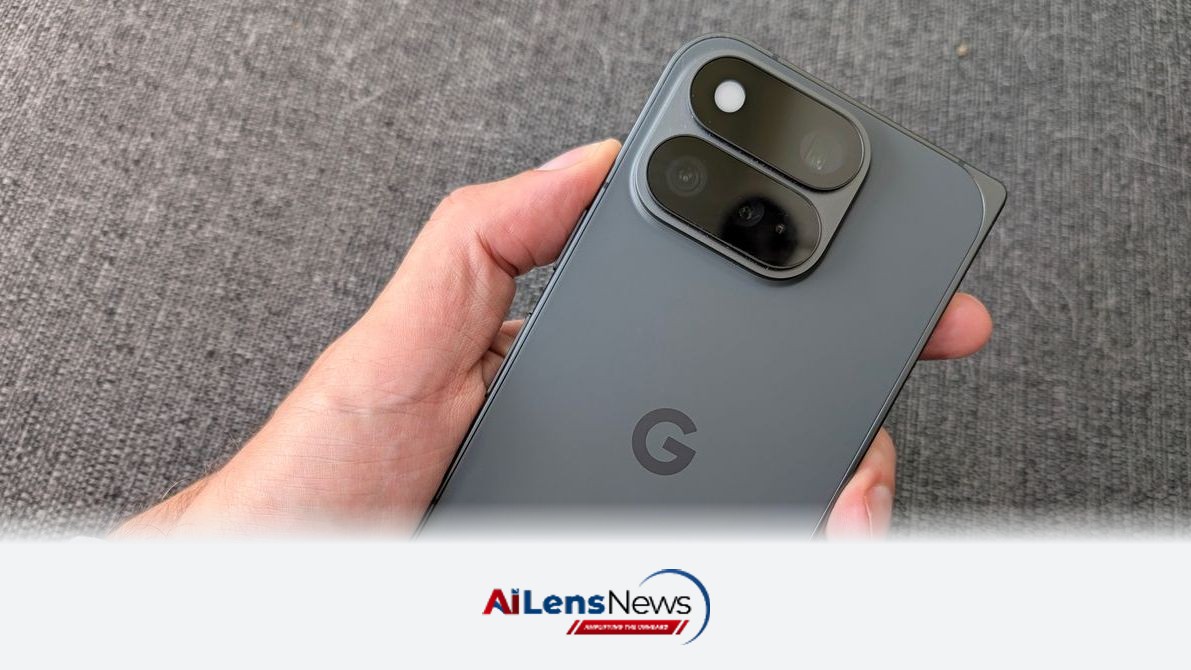
The double-camera module has had a makeover, so it looks less chunky, and the back is matte-textured glass that feels lovely. The Pixel 11 Pro Fold scores an impressive IP68 rating for water and dust resistance, which is a significant advantage. This rating compares favorably to Samsung’s IP48 ratings, which means both can survive shallow submersion, but Google’s phone is dust-tight, whereas Samsung’s phones are at risk from fine dust and sand, making the Pixel a more robust choice for users who prioritize durability.
It’s a shame the Fold is only available in two colors: Obsidian, the color of my review unit, looks more like a dark matte gray than black, while Olive Green has a shinier gold frame. The limited color options may not appeal to all consumers, especially those looking for more personalization in their devices. Color variety can play a significant role in a consumer's purchasing decision, particularly in the premium smartphone segment.
I’m not a fan of Google’s asymmetrical design. With the Pixel 11 Pro Fold closed, there’s a curved corner cutout, and when you open the phone, the two halves have slightly different thicknesses. All folding phones still have a detectable fold line in the middle of the screen when you open them, but Google’s is among the most noticeable. Some folks won’t notice or care, but I’m the kind of guy who goes upstairs to turn the light on so the downstairs switches aren’t misaligned. Aesthetic choices in design can greatly influence user satisfaction, and such asymmetries may detract from the overall experience for some users.
The fingerprint sensor in the power button always bugs me when I switch to a folding phone, because I have to pick it up to touch it and unlock the screen, rather than pressing on the screen like most phones. You do have face unlock with the Pixel 11 Pro Fold, and it works well provided there’s ample light, but it still doesn’t work in a dark room, which is still annoying. This limitation could be a dealbreaker for users who frequently find themselves in low-light situations.
You get two lovely, sharp OLED displays in the Pixel 11 Pro Fold: an 8-inch main screen and a 6.5-inch cover screen. Both push peak brightness to 3,600 nits, remaining legible in direct sunlight, and boast a variable refresh rate up to 120 Hz. They’re smooth, with rich colors, and I have nothing to complain about beyond that crease. The display quality is a strong point for the device, as vibrant and responsive screens are crucial for an enjoyable user experience, especially for tasks like gaming, streaming, and multitasking.
I’m not convinced the 11 Pro Fold earns the “Pro” in its title. It does have the new HiLight feature, a group of color LEDs in the camera module’s flash that light up differently based on the camera’s use, but the overall experience feels more like a minor upgrade than a true flagship. The incremental nature of these enhancements raises questions about Google’s strategy in the foldable market, suggesting a focus on gradual evolution rather than disruptive innovation.
In a market where consumers are increasingly demanding cutting-edge features and unique experiences, the Pixel 11 Pro Fold may struggle to capture the attention of potential buyers. The competition is fierce, with brands like Samsung, Apple, and even emerging players continuously pushing the envelope with new technologies and designs. For Google, the challenge will be to not only keep pace with these advancements but to also carve out a distinct identity for its foldable offerings.
As the foldable smartphone segment continues to evolve, it will be essential for Google to address the feedback from users and reviewers alike. The Pixel 11 Pro Fold may serve as a transitional model, paving the way for future iterations that could potentially incorporate more innovative features and address the criticisms levied against its current design and performance. The implications of the 11 Pro Fold's reception could influence Google's approach to hardware development moving forward, as the company seeks to strengthen its position in a market that is rapidly changing and expanding.
To learn more about the latest developments in Software & Platforms, stay updated with our exclusive reports and analyses on AILensNews.

