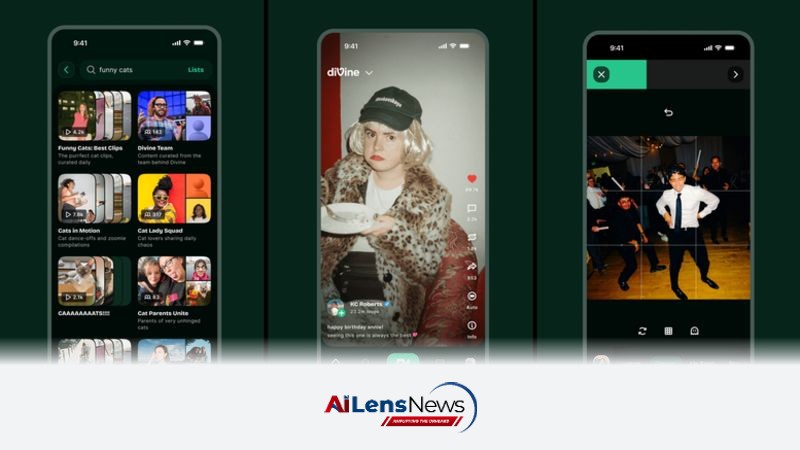



The new app Divine brings back the essence of Vine, allowing users to create six-second videos while ensuring a human touch in content creation.
Washington DC, United States Aug 24, 2026 ALN: Millennials, rejoice … the beloved video app Vine is being resurrected.
Well, sort of.
The internet mourned when Twitter shuttered the six-second, looping video app Vine in 2017. While Vine had struggled to build a viable business model in a crowded market, it pioneered short-form videos and spawned countless cultural references. The app became a cultural phenomenon, allowing users to express themselves in a way that was both concise and entertaining. This unique format gave rise to various trends, challenges, and memes that not only entertained but also influenced how people communicated online.
Vine also helped to launch celebrities like Logan Paul and Shawn Mendes, who leveraged their popularity on the platform to pursue successful careers in entertainment and music. These individuals, among many others, became household names, showcasing the potential of short-form video content as a launching pad for larger creative endeavors. The app was viewed as a home for the kind of silly human creativity that, these days, is increasingly replaced in our feeds by AI-generated content, which often lacks the spontaneity and authenticity that characterized early social media interactions.
Now, nearly a decade later, a new app aims to restore the format and spirit of its predecessor.
Divine, which similarly features a scrolling feed of six-second videos, officially launched last week after nine months of development and beta testing. Users can create content on the app and view its archive of more than 2 million original Vine posts, tapping into the nostalgia that many users feel for the original platform. This archive not only serves as a testament to Vine's cultural impact but also provides a rich resource for new users to explore the creativity that flourished on the platform.
Divine is not formally affiliated with Vine despite being inspired by the original app, which was owned by X, then known as Twitter. This independence allows Divine to carve its own niche in the social media landscape while paying homage to the legacy of Vine. By focusing on short-form content, Divine aims to attract users who are looking for a more authentic and less algorithm-driven experience.
Unlike the rivals that helped push the original app out of business, Divine says it won’t allow users to post AI-generated content. This decision reflects a growing sentiment among some users who are weary of the increasing prevalence of AI in creative spaces. “I want to see things that are creative and are human and that are weird … there’s a way in which AI generates this sort of mediocrity,” the app’s founder, who goes by Rabble, told CNN. This emphasis on human creativity over machine-generated content is a central tenet of Divine's mission and could set it apart in a crowded market.
Rabble, an early Twitter employee, created Divine with backing from Twitter founder Jack Dorsey, indicating a strong connection to the roots of social media innovation. Rabble’s experience at Twitter gives him unique insights into the challenges and opportunities that social media platforms face, and he aims to apply those lessons to Divine. The app has already racked up around 100,000 users, Rabble said. Some have made videos inspired by 2010s memes, while others have celebrated the return of a platform that hearkens back to a time when many felt less pessimistic about the role of social media in their lives. This nostalgia-driven approach may resonate with users who long for the simplicity and creativity that characterized earlier social media experiences.
This week, Divine announced its first brand partnership with Taco Bell, which could signal a new era of monetization for the platform. Brand partnerships have become a significant revenue stream for social media apps, and Divine's collaboration with a well-known brand may attract more users while offering unique content opportunities. Such partnerships could also enhance the user experience by providing engaging content that aligns with the interests of the community.
For those unfamiliar with the lore, Vine was founded in 2012 as one of the first apps to enable anyone to create and post short videos. It was acquired months later by Twitter for $30 million. Although it once felt like a ubiquitous part of online culture, it struggled to compete when rival apps like Instagram launched short-form video content, leading to a decline in user engagement. An already struggling Twitter announced plans to shut it down in 2016, marking the end of an era for many who cherished the app's unique contributions to digital creativity.
Before Vine was gone for good, volunteer internet archivists preserved many of its videos for posterity, and Divine used this archive to restore some of the internet’s favorites. This archival effort not only serves to honor the legacy of Vine but also provides a wealth of content that can inspire new creators on the platform. By offering access to this rich history, Divine fosters a sense of community among users who appreciate the roots of short-form video content.
Divine isn’t the only platform trying to tap into nostalgia. In a recent documentary, the owners of MySpace said they’re looking to revive the site, which was once a dominant social media platform before the rise of Facebook and Twitter. This trend of revisiting and revitalizing older platforms speaks to a broader cultural desire for authenticity and connection in an age where many users feel overwhelmed by the fast-paced, algorithm-driven nature of mainstream social media.
The movement speaks to the frustration many internet users feel about their lack of control on mainstream social media apps — including how the algorithms shape their feeds and how content is moderated — especially after the controversial sale of X to Elon Musk, Rabble said. The changes at X have prompted discussions about user agency and the role of algorithms in shaping online experiences, leading some users to seek alternatives that prioritize transparency and community engagement.
Rabble wants to set Divine apart by giving users more transparency and control over the app’s operations. The app offers a detailed explanation of the algorithm behind their content moderation and user engagement strategies, aiming to foster a community that prioritizes creativity over algorithm-driven content. By demystifying the inner workings of the app, Divine hopes to build trust with its users and create an environment where creativity can thrive without the constraints imposed by traditional social media algorithms.
To learn more about the latest developments in Social Media & Creator Economy, stay updated with our exclusive reports and analyses on AILensNews.

