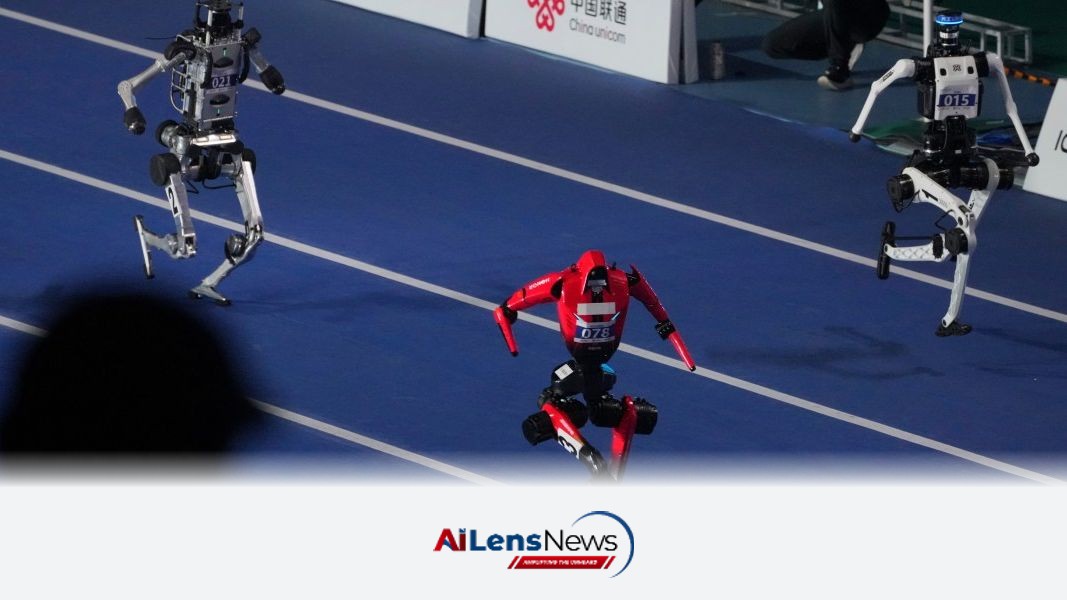



At the World Humanoid Robot Games in Beijing, robots surpassed human records, including Usain Bolt's 100-meter sprint time, showcasing advancements in robotics.
Washington DC, United States Aug 23, 2026 ALN: Chinese humanoid robots achieved remarkable feats on the opening day of the World Humanoid Robot Games in Beijing, breaking established human athletic records and showcasing the advancements in robotics technology. Among the standout performances was a humanoid robot that completed a 100-meter sprint in just 9.39 seconds, surpassing the legendary Usain Bolt’s world record of 9.58 seconds set in 2009. This event marks a significant milestone in the ongoing evolution of robotics, particularly in the realm of humanoid machines designed to mimic human movements and capabilities.
The World Humanoid Robot Games, now in its second year, featured over 2,000 humanoid robots competing across 51 events, including running, table tennis, and soccer. The event is being held at the National Speed Skating Oval, a facility constructed for the 2022 Winter Olympics, highlighting China's commitment to advancing its technological prowess and innovation in robotics.
These games come at a time when the global race in robotics technology is intensifying, particularly between the United States and China. As the world watches, China continues to assert its dominance in the production of humanoid robots, with the country accounting for a significant majority of the world's supply. This dominance has not been without controversy, as the U.S. has begun to scrutinize these robots more closely, citing national security concerns.
In a notable development last month, the U.S. Federal Communications Commission (FCC) announced a ban on imports of new foreign-made humanoid robots, a move that has been interpreted as a direct response to China's growing influence in this sector. The FCC's decision reflects broader concerns regarding the potential military applications of robotics technology, particularly in relation to companies like Unitree, which has been linked to the Chinese military. In response, Beijing has vehemently denied these allegations and criticized the U.S. for its protective measures.
During the opening ceremony of the robot games, organizers and manufacturers, including Beijing-based X-Humanoid, celebrated the achievements of their robots, which not only broke human records but also showcased impressive synchronized movements during a display of hundreds of robots marching in formation. This demonstration served as a testament to the advancements in artificial intelligence and robotics engineering that have made these feats possible.
In addition to the 100-meter sprint record, another humanoid robot achieved a remarkable standing high jump of 2.88 meters, surpassing the previous human high jump record of 2.45 meters set by Cuban athlete Javier Sotomayor in 1993. This achievement highlights the potential for humanoid robots to not only match but exceed human capabilities in specific athletic disciplines.
Prior to the official opening, a humanoid robot developed by the Chinese smartphone company Honor completed a 100-meter sprint in an astonishing 9.32 seconds during a trial run, reaching a peak speed of 14.5 meters per second. Such performances are indicative of the rapid advancements in robotics technology and the increasing sophistication of humanoid designs.
Despite the impressive achievements showcased at the games, experts caution that humanoid robots are still primarily utilized for demonstrations, performances, and research purposes at this stage. The transition from experimental models to widespread real-world applications is expected to take time, as developers continue to refine the technology and address practical challenges associated with deploying humanoid robots in everyday settings.
Audience reactions at the event reflected a mixture of excitement and apprehension regarding the rapid evolution of humanoid robots. One spectator, Li Yanfeng, an education worker from Beijing, expressed her initial resistance to artificial intelligence due to concerns about job displacement. However, witnessing the advancements in robotics has shifted her perspective. "At first, I wasn’t very accepting of artificial intelligence. I was even a bit resistant to it, because of the possibility that it might replace or displace humans. But now that I see this development is unstoppable, I decided to come and take a look," she stated.
The implications of these developments are profound, as they not only challenge existing athletic records but also raise questions about the future roles of robots in society. As humanoid robots continue to evolve, they may find applications in various sectors, including healthcare, education, and entertainment, potentially transforming the way humans interact with technology.
As the World Humanoid Robot Games continue over the next few days, the world will be watching closely to see what further records may be broken and how these advancements will shape the future of robotics. The event serves as a platform for innovation, competition, and the exploration of the boundaries of what humanoid robots can achieve, setting the stage for a future where humans and robots may coexist and collaborate in unprecedented ways.
To learn more about the latest developments in Robotics & Automation, stay updated with our exclusive reports and analyses on AILensNews.

