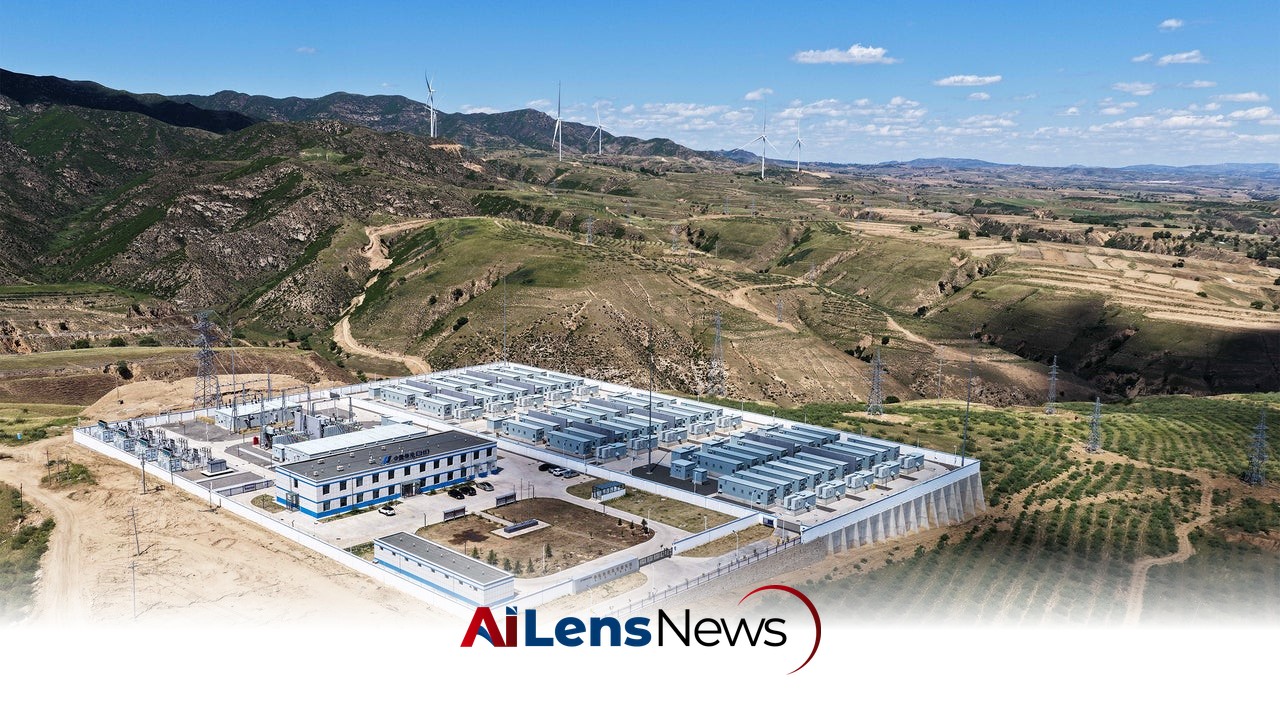


China is rapidly increasing its data centers powered by renewable energy, aiming for 80% clean electricity by 2030 as part of its national strategy.
Washington DC, United States Jul 24, 2026 ALN: The rapid expansion of data centers in China is being driven by the increasing demand for artificial intelligence (AI) technologies, mirroring trends seen in the United States. However, what sets China apart is its aggressive strategy to power these facilities with clean energy sources. This initiative is part of a broader commitment to renewable energy that aligns with the country’s long-term goals of energy security and climate change mitigation.
For instance, a data center located in Mongolia is currently powered by an impressive combination of renewable energy, including 200 megawatts of wind power, 100 megawatts of solar power, and 45 megawatts of battery storage. In the remote region of Qinghai, a pilot data center operates entirely on a solar microgrid, showcasing the potential for localized renewable energy solutions. In another northern province, a data center is connected to a robust infrastructure that includes 500 megawatts of solar energy and 1.5 gigawatts of wind power, illustrating the scale at which China is investing in clean energy for its data infrastructure.
While some data centers in the United States are also beginning to utilize clean energy, China's approach is distinct in that it is part of a national strategy. The Chinese government has established eight large data center hubs as part of its "East West Computing Strategy," which aims to position data centers in regions abundant in renewable energy resources. A critical requirement of this strategy is that all new data centers must source at least 80% of their electricity from clean energy sources. In addition, a recent action plan released by the Chinese government outlined 29 measures aimed at increasing the proportion of clean power used by data centers, further emphasizing the commitment to sustainability in this sector.
China's latest five-year plan reflects an ambitious vision for the future, aiming to develop a comprehensive clean energy system that extends beyond data centers to all sectors by the year 2030. This initiative is not only about addressing climate change but also about ensuring energy security for a rapidly growing economy. Kyle Chan, a fellow at the Brookings Institution who specializes in China's technology development and industrial policy, notes that Chinese policymakers are taking climate change seriously, which is evident in their strategic planning.
As the world's largest emitter of climate pollution, China's efforts to transition to renewable energy sources have significant implications. Any advancements made in this area can have a substantial impact on global emissions levels. The country is targeting a 53% increase in renewable energy generation by 2030, with plans for coal and oil consumption to peak by the same year. This stands in stark contrast to the current trajectory of the United States, where policies under the previous administration have made it more challenging to develop clean energy solutions and have sought to revive coal power despite the economic advantages of renewables.
Data centers are a crucial component of China's overarching energy strategy. Projections indicate that the electricity consumption of data centers in China could more than double by 2030, with some estimates suggesting that energy usage could triple to as much as 600 terawatt-hours. This figure is noteworthy, as it exceeds the current total energy consumption of entire countries, such as Germany. Despite this surge in demand, data centers will still represent a relatively small fraction of China's overall electricity demand, which is predominantly driven by its extensive industrial base.
China's rapid development of clean energy infrastructure positions it well to meet the anticipated demand from data centers. This contrasts sharply with the situation in the United States, where electricity demand has remained stagnant for decades. The sudden surge in demand for energy from AI technologies presents a challenge to the U.S. grid, which has not been prepared for such a rapid increase.
Chan suggests that China has a distinct advantage in this regard, likening the country’s progress in building new power capacity to a long-term workout regimen. "China has been working out every year for decades, for reasons not related to AI. The U.S. hasn’t gone to the gym in this space in a while," he remarks, highlighting the sustained investment and development in clean energy infrastructure that China has undertaken.
However, challenges remain. Similar to other nations, accurately predicting the future demand from data centers is complex, and the construction of new transmission lines and energy capacity carries inherent risks. Data centers located in more remote areas, which are often closer to renewable energy sources like wind and solar farms, may not be able to handle all AI workloads due to latency issues. The Chinese government is currently assessing which workloads can be managed from these distant locations, particularly those that are less time-sensitive. Meanwhile, urban areas have access to additional energy sources, including offshore wind and nuclear energy, but the majority of new clean energy projects are being developed in less populated regions.
Despite these hurdles, Chan expresses optimism that China can sustain the rising demand for AI with new clean energy developments. The country benefits from efficient systems for energy expansion, facilitated by the significant authority and control local governments wield. This decentralization allows local authorities to streamline processes, acting as a one-stop shop for permitting and licensing, which can expedite the development of new energy projects. Moreover, dedicated teams within local governments ensure that communication and coordination are maintained, driving progress in energy infrastructure development.
In contrast, the United States faces significant delays in permitting for solar and wind projects, with some federal initiatives currently frozen. This difference in regulatory environments underscores the challenges that the U.S. must overcome to catch up with the rapid advancements in clean energy infrastructure seen in China. As the global landscape for energy continues to evolve, the outcomes of these contrasting strategies will be critical in shaping the future of energy consumption and sustainability in both nations.
To learn more about the latest developments in Software & Platforms, stay updated with our exclusive reports and analyses on AiLensNews.

