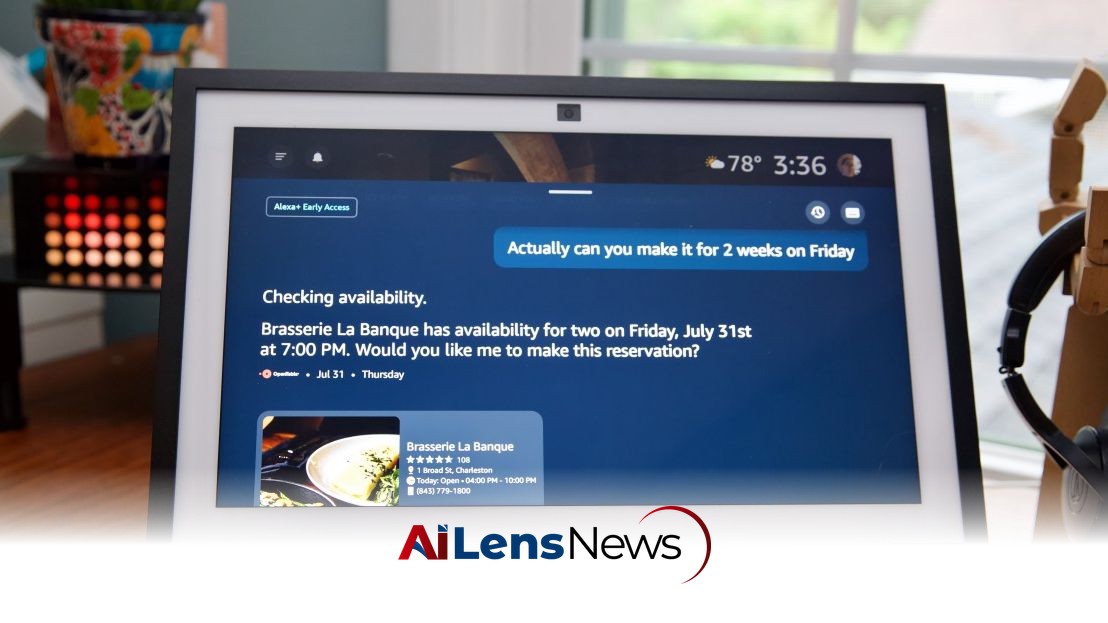


Amazon's Alexa Plus is set to receive an AI update, allowing it to connect with a wider range of smart home devices and handle more complex instructions.
Washington DC, United States Jul 24, 2026 ALN: Amazon's Alexa Plus assistant is set to undergo a significant enhancement with a new update that focuses on improving smart home integration. This update, which is currently in preview, marks a pivotal moment in Amazon's ongoing efforts to solidify Alexa's position as a central hub for smart home management. The expanded compatibility with various smart home devices aims to streamline user interactions, making it easier for consumers to manage their connected devices through voice commands.
The update allows Alexa Plus to connect with a wide range of smart home technology from well-known brands such as Bosch, Delta, Ecovacs, iRobot, Yale Home, Whirlpool, Tapo, Eufy, and many others. This broad compatibility is crucial for users who have invested in multiple smart home devices from different manufacturers. By automatically routing requests to the correct device, Alexa Plus enhances the user experience, reducing the need for manual adjustments or multiple commands.
For instance, a practical example shared by Amazon illustrates how the new features work in real-world scenarios. A user with a compatible washing machine can instruct Alexa Plus by saying, “Alexa, my kid’s soccer jersey could use a deep clean, but the tag says cold wash only.” In this case, Alexa Plus would intelligently navigate the washer’s cycle options and select the appropriate setting based on the user’s request. This level of interaction signifies a leap forward in the usability of smart home technology, as it aligns with the natural language processing capabilities that users have come to expect from modern AI assistants.
The underlying technology that powers these new integrations is Amazon’s advanced AI developer toolkit. This toolkit is designed to simplify the process for device manufacturers looking to connect their products with Alexa Plus. It allows for the incorporation of unique capabilities that may not have been supported in previous versions of the assistant. This move not only benefits consumers by providing them with more options but also encourages innovation among device manufacturers, as they can now explore new functionalities that enhance their products’ compatibility with Alexa Plus.
Amazon first introduced its revamped AI assistant in February, which included significant improvements such as the ability to handle multi-step requests. This update allows users to create more complex routines using just their voice, reflecting a growing trend in the market towards more intuitive and sophisticated AI interactions. However, despite these advancements, the assistant's functionality has been somewhat limited to a select number of third-party services, including Ticketmaster, OpenTable, Uber, Thumbtack, Expedia, Yelp, Square, and Angi.
In an effort to broaden the capabilities of Alexa Plus, Amazon is adopting the Model Context Protocol (MCP), which is an open-source standard designed to facilitate connections between AI models and external systems and tools. The adoption of MCP is a strategic move that aims to open up new avenues for integration, allowing a wider array of brands to interact with Alexa Plus. Companies such as Canva, Headspace, Priceline, Lyft, Cengage, Virgin Atlantic, Weekend, and others are expected to launch their integrations later this year, further expanding the ecosystem around Alexa Plus.
For example, Priceline's upcoming integration will enable customers to browse hotel options and book trips directly through Alexa Plus. This feature not only enhances the convenience of travel planning but also exemplifies how voice-activated technology is reshaping consumer behavior. Additionally, Priceline, along with Atom Tickets, Cengage, Fandango, and Taskrabbit, will support payments through Amazon Wallet, making the transaction process even more seamless for users.
The implications of these updates extend beyond mere convenience; they represent a broader trend in the smart home and AI industry towards greater interoperability and user-centric design. As consumers increasingly expect their devices to work together seamlessly, companies like Amazon are compelled to innovate continuously. The ability of Alexa Plus to integrate with a diverse range of devices and services positions it as a formidable player in the smart home market, where competition is fierce and consumer expectations are high.
Moreover, the expansion of Alexa Plus’s capabilities can have significant implications for the smart home industry as a whole. By encouraging more manufacturers to develop compatible devices, Amazon is effectively creating a larger ecosystem that can attract more users. This could lead to increased sales for device manufacturers and a more robust market for smart home technology. As more households adopt smart home systems, the demand for integrated solutions that can be controlled through a single interface will likely grow, further solidifying Alexa Plus's role in the market.
In conclusion, Amazon's Alexa Plus update represents a crucial step forward in enhancing smart home integration, driven by advancements in AI technology and a commitment to improving user experience. By expanding compatibility with a variety of smart home devices and adopting open standards like the Model Context Protocol, Amazon is not only enriching the Alexa ecosystem but also setting the stage for future innovations in the realm of smart home technology. As this update rolls out, consumers can expect a more intuitive, efficient, and connected experience in managing their smart homes, marking an exciting time for both Amazon and its users.
The evolution of smart home technology has been remarkable over the past decade, with the emergence of devices that cater to various aspects of home management, including security, energy efficiency, and convenience. Smart speakers, like the Amazon Echo equipped with Alexa, have played a pivotal role in this transformation. They serve as the voice-activated control center for many smart home devices, allowing users to interact with their homes in a more natural way.
As smart home technology continues to advance, the integration of AI and machine learning into these systems will likely deepen. The ability of Alexa Plus to understand context and user preferences will enhance the overall user experience. For example, as users interact more frequently with Alexa, the assistant can learn their habits and preferences, allowing it to make proactive suggestions or automate certain tasks without explicit commands. This could include adjusting heating based on the time of day or suggesting recipes based on the ingredients available in the kitchen.
Furthermore, the competitive landscape of smart home technology is continually evolving. Major players like Google, Apple, and Samsung are also investing heavily in their smart home ecosystems. Each company is striving to create a seamless user experience that integrates various devices and services, which means that consumer expectations are rising. The introduction of features like those in the Alexa Plus update is essential for Amazon to maintain its competitive edge in this rapidly changing market.
As Alexa Plus enhances its capabilities, it will also need to address privacy and security concerns that have become increasingly prominent as smart home devices proliferate. Consumers are becoming more aware of how their data is used and the potential risks associated with connected devices. Amazon has made efforts to improve transparency and user control over data, but continued vigilance will be necessary to maintain consumer trust in its products.
Moreover, the integration of third-party services and devices into the Alexa Plus ecosystem will require ongoing collaboration with manufacturers. This partnership is crucial to ensure that the devices are not only compatible but also secure and reliable. As more brands join the ecosystem, the challenge will be to maintain a high standard of quality and performance across all devices that interact with Alexa Plus.
In summary, the upcoming update for Amazon's Alexa Plus assistant represents more than just a technical enhancement; it signifies a commitment to creating a more unified and user-friendly smart home experience. By leveraging advanced AI technologies and fostering partnerships with various brands, Amazon is positioning itself as a leader in the smart home market. As consumers increasingly seek interconnected solutions that simplify their lives, the evolution of Alexa Plus will be closely watched by both users and industry observers alike. The next few years may see significant shifts in how consumers interact with their homes, driven by innovations in voice technology and smart home integration.
To learn more about the latest developments in Software & Platforms, stay updated with our exclusive reports and analyses on AiLensNews.

