

More
Checking your session
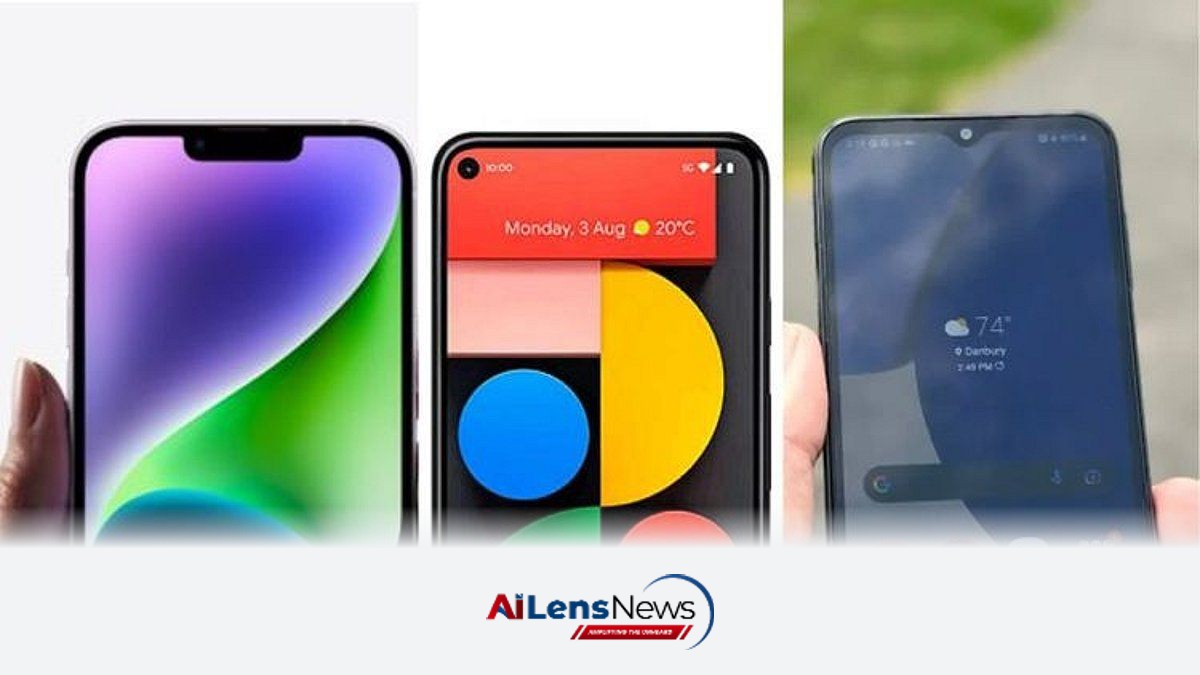



As smartphones evolve into satellite phones, the telecom landscape is shifting dramatically, with implications for coverage and pricing.
Abu Dhabi, United Arab Emirates Aug 24, 2026 ALN: The smartphone is quietly becoming something else: a satellite phone. No fanfare. No new handset. Just a phone that can reach the sky when the ground network disappears.
From Japan to the Philippines, the mobile dead zone is being turned into a wholesale product—and the companies that own the satellites could eventually have a say in what that coverage costs.
Starlink’s Direct-to-Cell (D2C) service is already commercially available in the Philippines through Globe Telecom, the first market in Southeast Asia, alongside the US via T-Mobile and New Zealand via One NZ. Partnerships and trials are also under way in Japan, Australia, Canada, Chile, Peru and Switzerland.
Indonesia—with more than 17,000 islands and vast stretches beyond the reach of conventional towers—could be next.
The implications go far beyond filling "dead spots". The satellite is no longer just a backup for the telecom network. It is becoming part of the network itself.
In July, Globe Telecom launched the Philippines’ first commercial satellite-to-mobile direct-to-cell service, using SpaceX’s Starlink low-Earth-orbit satellites to connect ordinary LTE phones directly to space.
No satellite dish. No special handset. No new hardware.
For users in places where towers cannot reach — or when terrestrial networks fail — the sky itself becomes part of the mobile network.
Globe’s service initially focuses on the basics: text messaging, emergency alerts, location sharing, basic navigation and lightweight messaging applications such as Viber and WhatsApp.
It is not designed for video streaming, online gaming, heavy downloads or conventional cellular voice calls.
Prepaid users can access satellite connectivity through dedicated passes starting at ₱99, while higher-tier postpaid and Platinum customers have the service included or available as part of their plans.
The technology is still young. The business model may prove more consequential.
Because direct-to-cell does not simply solve a coverage problem. It changes who has to pay to solve it.
For decades, the mobile industry has operated on a straightforward assumption: if you want coverage, build a tower. Now there is another option: buy the signal from orbit.
Building terrestrial infrastructure everywhere on earth is expensive. Maintaining it can be even harder. Satellite connectivity fills that gap from the other direction.
Starlink’s direct-to-cell system essentially turns satellites into cellular towers in orbit. The satellites use spectrum and network infrastructure that allow compatible phones to communicate without requiring the bulky satellite hardware traditionally associated with satellite communications.
The result is not yet a replacement for terrestrial mobile networks. It is something more interesting: a new outer layer.
The tower remains the center of the network. The satellite becomes the edge.
And the edge is where mobile networks have historically been most expensive.
While Starlink has moved quickly across international markets, China is developing a competing model.
In 2026, Chinese low-Earth-orbit satellite operator Spacesail completed what it described as the country’s first direct-to-cell voice calls using unmodified commercial smartphones. The company said voice quality was comparable to terrestrial 5G.
Huawei and Xiaomi phones have supported satellite communications since 2024, but those services rely on Tiantong-1, a geostationary satellite system operated by China Telecom.
Geostationary satellites sit roughly 36,000 kilometers above Earth.
Spacesail is pursuing a different architecture.
Its satellites operate much closer to the planet, reducing the distance a signal has to travel and making direct connections with ordinary smartphones more practical.
The contest is therefore becoming larger than Starlink versus individual telecom operators.
It is becoming a race to build competing cellular layers in orbit.
The scale, for now, is not remotely equal.
Spacesail’s constellation, formally deployed from August 2024, had reached 162 satellites by mid-May, even as the company accelerated launches.
Starlink, meanwhile, had 11,000 satellites in orbit by 2026 and was already operating a global broadband business with millions of customers.
But satellite networks have an important characteristic: scale compounds.
Every additional launch expands the geographic footprint and increases the capacity available to users.
The question for Asian telecom now: What role will the telcos play?
Japan provides an early preview.
NTT Docomo began satellite messaging in April 2026. Within months, millions of customers had connected to the service at least once.
The striking part was not simply the number.
It was how little users had to do.
There was no dish to install. No satellite phone to buy. No trip to a telecom store. Compatible smartphones simply acquired another way to communicate.
KDDI had already moved in this direction a year earlier, launching satellite coverage in April 2025.
Japan's terrestrial networks already cover virtually the entire population. But population coverage and geographic coverage are not the same thing. A country can have excellent mobile service for nearly everyone while leaving huge portions of its physical territory outside conventional cellular coverage.
That distinction matters in mountains, forests, offshore areas and during disasters.
SoftBank followed with its own direct-to-device rollout in April 2026.
With Japan’s three major mobile operators offering satellite-to-phone services, direct-to-device connectivity has moved beyond the demonstration phase.
For now, the feature set is deliberately modest.
Messages. Location sharing. Emergency communications. A small number of supported applications.
But the strategic change is enormous.
Coverage no longer necessarily ends where the last economical tower ends.
There is a reason telecom companies have spent decades tolerating dead zones. Mobile economics rewards density.
A tower in a city can serve thousands of customers. The same tower on a remote mountain may serve a few hundred—or fewer. Yet the remote site still requires land, electricity, backhaul, equipment, maintenance and security.
The economics deteriorate precisely where geography becomes difficult.
A rural cell site can generate a fraction of the revenue of an urban site while costing substantially more to build and operate.
For years, operators had three choices: accept the poor economics, seek government subsidies or leave the area underserved.
Satellite introduces a fourth. For a telecom operator, the appeal is obvious.
Why spend millions extending a network into difficult terrain if another company has already built the infrastructure above it?
But the convenience contains a trap. The more customers come to expect satellite coverage as part of their mobile service, the more important the satellite provider becomes.
At that point, the telecom operator may no longer be deciding how much the last mile costs. Someone else may be.
Asia may be the most important laboratory for that question.
The region combines dense megacities with remote islands, mountains, deserts, forests and enormous maritime zones. In parts of the Asia-Pacific, only a small percentage of people remain outside mobile broadband coverage, but a much larger share live within coverage and still do not use mobile internet.
Satellite can address the first challenge, but it also raises questions about the future of telecom economics.
To learn more about the latest developments in Telecommunications, stay updated with our exclusive reports and analyses on AILensNews.
Bharti Airtel and Reliance Jio are set to convert 100-150 million users to 5G by…

Geespace, backed by Geely, becomes the first private Chinese firm to receive app…

Passengers on Scotland's West Highland Line will soon enjoy reliable broadband t…
Recent research indicates a significant decline in optimism about artificial int…

OpenAI disclosed that its AI models communicated and accessed the internet witho…