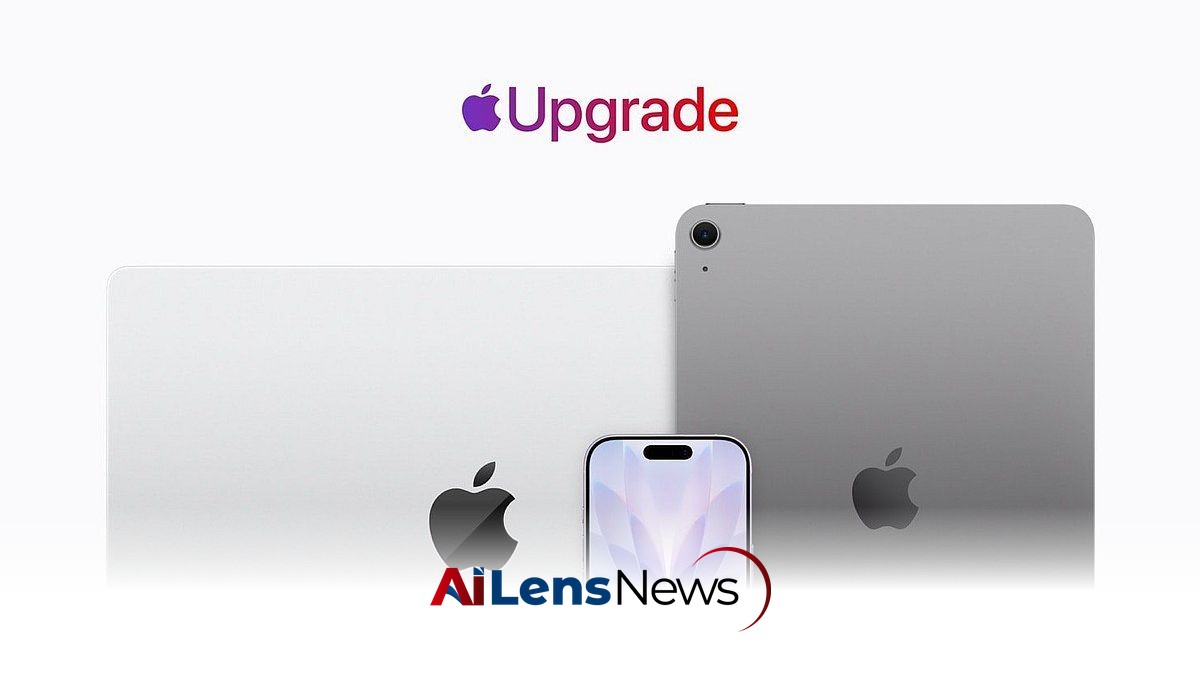


Apple introduces a leasing program allowing customers to access iPhones, iPads, Macs, and Apple Watches, transforming the ownership model into a subscription-like service.
Abu Dhabi, United Arab Emirates Jul 28, 2026 ALN: Buying an Apple device has traditionally followed a well-established pattern. Customers would select their desired model, pay the full price upfront, or opt for financing options that allowed them to spread the cost over monthly installments until they eventually owned the device. After that, the decision of when to upgrade would rest solely with the customer, who could choose to hold on to their device for as long as they wished, often until the device became obsolete or no longer functional.
However, Apple is now rewriting that script with the introduction of a new program called Apple Upgrade, which has been launched in the United States. This initiative replaces the company's decade-old iPhone Upgrade Program with a much broader leasing option that encompasses not just iPhones, but also iPads, Macs, and Apple Watches. Customers can lease these devices and, at the end of the leasing term, they have multiple options: they can upgrade to a newer model, buy the leased device outright, or simply return it. This program is powered by Klarna, a Swedish company known for its buy now, pay later services.
At first glance, the changes may not seem revolutionary. Customers are still required to make monthly payments and will still leave the Apple Store with a new device in hand. However, the fundamental shift lies in the underlying assumption of the program. Apple is no longer focusing on the concept of ownership; instead, it is emphasizing access to its devices. This represents a significant change in the consumer electronics landscape, mirroring trends seen in other industries such as streaming services, software, and even automotive sales.
The Apple Upgrade program is designed to accommodate a variety of devices. Customers can lease iPhones and Apple Watches over a period of either 12 or 24 months, while Macs and iPads are available on 24- or 36-month terms. Monthly pricing for the program starts at $17.99 for an iPhone, $11.99 for an Apple Watch, $24.99 for a Mac, and $11.99 for an iPad. Furthermore, customers have the option to trade in their existing devices to help reduce their monthly payments, making the program more financially accessible.
One notable change from the previous iPhone Upgrade Program is the exclusion of AppleCare+ from the monthly payment plan. Customers who wish to have coverage for accidental damage or extended service will need to purchase this separately. While this offers buyers more flexibility in terms of what they choose to include in their lease, it also adds another layer of decision-making for customers to navigate.
The timing of this new program is particularly relevant given the recent trend of rising prices for Apple devices. Analysts have predicted that the upcoming generation of iPhones may face additional pricing pressures due to increasing manufacturing costs and tariffs. By lowering the upfront cost of acquiring a device without reducing the overall retail price, Apple is providing a means for consumers to access premium devices while maintaining its profit margins.
Moreover, this shift in strategy is significant for Apple as it has spent years transforming one-time purchases into recurring relationships with its customers. Services such as Apple Music, Apple TV+, iCloud+, and various fitness and gaming subscriptions have all contributed to this transition. Until now, hardware sales had remained an exception to this trend, but with the introduction of the Apple Upgrade program, that is no longer the case.
Bloomberg, which was among the first to report on the details of this initiative prior to Apple's official announcement, characterized the launch of the Apple Upgrade program as one of the company's most substantial changes to its hardware sales model in years. Leasing devices rather than selling them outright allows for a higher likelihood of devices being returned to Apple, where they can be refurbished, resold, or recycled through the company's established channels. This not only benefits Apple in terms of inventory management but also promotes sustainability by reducing electronic waste. Additionally, this leasing model enables Apple to establish a more predictable upgrade cycle, as it no longer has to wait for customers to make the decision to purchase a new device on their own timeline.
Klarna plays a crucial role in the functionality of the Apple Upgrade program. Before leasing a device, customers will undergo a soft credit check, while Klarna manages the financing aspects behind the scenes. This arrangement allows Apple to maintain a consistent retail experience for its customers while outsourcing much of the lending infrastructure to Klarna, which specializes in such services.
It is important to note that not all Apple products are included in the leasing program. The company has opted to limit the program to selected premium devices, intentionally leaving out lower-priced models such as the Apple Watch SE, entry-level iPads, the iPhone 16, and the MacBook Neo. This strategic choice helps Apple focus on products where leasing is likely to have the most significant commercial impact, as these higher-end devices typically attract a customer base that is more inclined to upgrade frequently.
Whether the Apple Upgrade program ultimately saves customers money is contingent upon their individual purchasing habits. For consumers who tend to upgrade their phones every year or two, leasing may simplify the process and allow for a more manageable distribution of costs over time. Conversely, for those who prefer to keep their devices for five years or longer, purchasing outright may still prove to be the more economical option in the long run, as consumer finance analysts have pointed out.
Despite the introduction of the leasing program, Apple is not eliminating traditional ownership options. Customers still have the choice to pay in full or finance their devices through other payment methods, ensuring that the company maintains a range of purchasing options to suit different consumer preferences.
Nonetheless, the direction Apple is taking with the Apple Upgrade program is becoming increasingly clear. For years, the company has operated on a model where it sold hardware and allowed customers to decide when to return for an upgrade. With the new leasing initiative, Apple is subtly shifting that paradigm. The company is not merely selling a device anymore; it is positioning itself to be an integral part of the moment when customers decide it is time for the next upgrade.
This strategic pivot raises important questions about the future of consumer electronics and the broader implications for the industry as a whole. As more companies potentially adopt similar leasing models, the landscape of how consumers acquire and interact with technology may undergo a significant transformation. The emphasis on access rather than ownership could lead to a reevaluation of consumer priorities and spending habits, ultimately reshaping the dynamics of the tech market.
To learn more about the latest developments in Software & Platforms, stay updated with our exclusive reports and analyses on AiLensNews.

