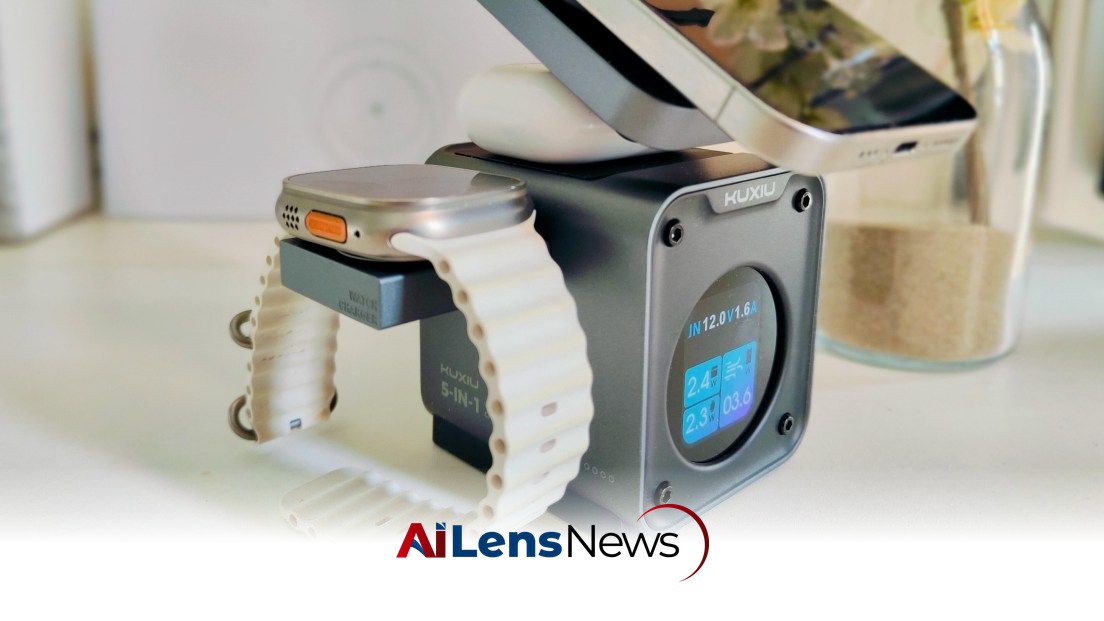


The Kuxiu D5 Qi2.2 charging dock effectively cools devices while charging, proving the value of active cooling in wireless chargers.
New Delhi, India Jul 4, 2026 ALN: Wireless charging has become a common convenience in the modern world, allowing users to power their devices without the hassle of tangled cords. However, one of the significant drawbacks of wireless charging is the heat generated during the process, which can adversely affect battery health. This is where innovations like the Kuxiu D5 Qi2.2 charging dock come into play, integrating active cooling systems to mitigate the heat issue. This article explores the implications of such nology, the necessity of cooling in wireless charging, and the broader context of battery health in smartphones.
Wireless charging operates on the principle of electromagnetic induction, which, while convenient, is inherently less efficient than traditional wired charging. When a smartphone is placed on a Qi charger, the charger generates an electromagnetic field that induces a current in the phone’s receiver coil. This process inevitably produces heat, primarily due to energy loss during the conversion from electricity to electromagnetic energy and back into electricity. The Kuxiu D5, priced at $59.99, is one of the latest models designed to counteract this issue through an integrated fan system that actively cools the device while it charges.
Heat is particularly detrimental to lithium-ion batteries, which are the standard in most smartphones today. Elevated temperatures can accelerate the chemical reactions within the battery, leading to faster degradation and a reduced lifespan. This degradation manifests as a diminished capacity to hold a charge, which can be frustrating for users who rely on their devices for daily tasks. The Kuxiu D5 effectively addresses this concern, as it maintains a cooler temperature during the charging process, thus preserving the battery's health over time.
The experience of overheating smartphones is not uncommon. Many users have faced situations where their devices become excessively hot, especially when performing intensive tasks such as video editing, gaming, or using GPS navigation while charging. The author shares a personal anecdote about frying the logic board of an iPhone 15 Pro due to overheating while editing a 4K video on a train. Such experiences underline the importance of effective cooling solutions in the realm of wireless charging.
The Kuxiu D5 is equipped with a silent internal fan and heat sinks that work together to dissipate heat efficiently. This design allows for faster charging speeds while maintaining a safe operating temperature for the device. The fan can be turned off if desired, providing users with the flexibility to choose between a quieter operation and optimal cooling. Additionally, the dock features a display that shows the charging status and power draw, although the brightness and animated screensaver may not be to everyone's taste.
Another aspect of the Kuxiu D5 is its versatility. The dock can charge multiple devices simultaneously, including Qi2.2-compatible phones, Qi-compatible watches, and Qi-compatible earbuds. However, the claim of being a “5-in-1” charger has been met with some skepticism, as it can only charge three devices at once, leading to some confusion regarding its marketing. Despite this, the inclusion of a 45W USB-C PD charger in the box adds value, ensuring that users have the necessary power supply to maximize the dock's capabilities.
Active cooling nology in Qi chargers is not just a novelty; it represents a necessary evolution in the wireless charging landscape. As smartphone manufacturers continue to push the boundaries of charging speeds and battery capacity, the need for effective heat management solutions becomes increasingly critical. Companies like Anker, Aukey, and ESR are also investing in similar nologies, indicating a trend that may soon become standard in the industry.
The implications of adopting active cooling in wireless chargers extend beyond mere convenience. As smartphones become more powerful and capable of handling demanding applications, the risk of overheating grows. This is particularly relevant for users who rely on their devices for professional tasks or extended gaming sessions. The Kuxiu D5 and similar products could play a significant role in enhancing user experience and prolonging device longevity.
Moreover, the integration of cooling systems in wireless chargers could influence consumer purchasing decisions. As users become more aware of the importance of battery health and the risks associated with overheating, they may prioritize chargers that offer active cooling features. This shift could drive competition among manufacturers to innovate and improve their products, ultimately benefiting consumers with better nology.
In conclusion, the Kuxiu D5 Qi2.2 charging dock exemplifies the advancements being made in wireless charging nology, particularly regarding heat management. By incorporating active cooling systems, it addresses one of the primary challenges associated with wireless charging, thus enhancing the user experience and promoting battery health. As the industry evolves, it is likely that we will see more products that prioritize these features, reflecting a growing understanding of the importance of maintaining optimal operating conditions for our increasingly powerful smartphones.
To further understand the impact of heat on battery health, it is essential to delve into the chemistry of lithium-ion batteries. These batteries function through electrochemical reactions, where lithium ions move between the anode and cathode. Elevated temperatures can disrupt these reactions, leading to increased internal resistance and the formation of lithium plating, which can ultimately result in reduced capacity and increased risk of thermal runaway. Thus, effective cooling mechanisms in charging docks not only enhance user convenience but also extend the overall lifespan of the device.
In addition to consumer electronics, the implications of heat management extend to various sectors, including automotive and renewable energy. As electric vehicles (EVs) become more mainstream, the management of battery temperatures during charging and operation is paramount for safety and performance. Similarly, in renewable energy systems, where battery storage plays a crucial role, maintaining optimal temperatures can significantly affect efficiency and longevity. The advancements in cooling nologies for wireless chargers may pave the way for similar innovations in these other critical areas.
Furthermore, as the demand for faster charging solutions grows, manufacturers are continuously exploring new methodologies to enhance charging efficiency without compromising safety. The integration of advanced cooling systems could enable devices to charge at higher rates without the risk of overheating, thus catering to the needs of consumers who prioritize quick charging times. This aspect is particularly important in today's fast-paced world, where users often seek out solutions that can keep up with their busy lifestyles.
As we look to the future of wireless charging nology, it is clear that innovations like the Kuxiu D5 are setting the stage for a new era of smart charging solutions. The focus on active cooling not only addresses existing challenges but also anticipates the evolving needs of consumers and the nological landscape. As more manufacturers adopt similar approaches, we can expect a significant shift in how wireless charging is perceived and utilized, ultimately leading to a smarter, more efficient, and safer charging experience.
In summary, the Kuxiu D5 Qi2.2 charging dock represents a significant step forward in the realm of wireless charging nology. By addressing the heat generation issue through active cooling systems, it enhances battery health, improves user experience, and sets a precedent for future innovations in the industry. As consumer awareness grows regarding the importance of battery longevity and device performance, products like the Kuxiu D5 will likely become increasingly popular, driving a competitive market focused on innovation and quality.
To learn more about the latest developments in Gadgets & Devices, stay updated with our exclusive reports and analyses on AiLensNews.

