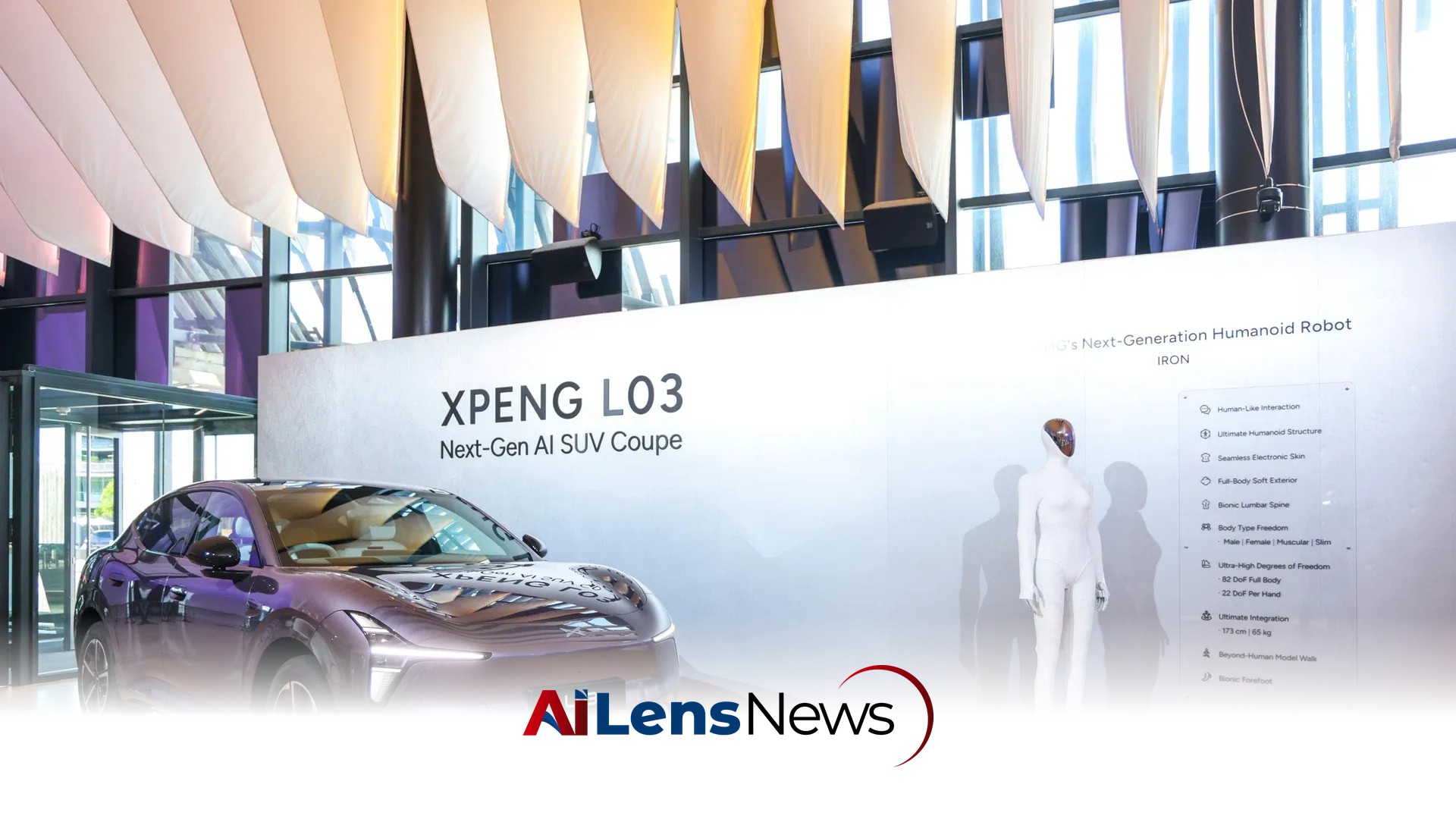


XPeng's chairman envisions a future of flying cars and household robots, starting with the launch of the Mona L03 in 65 markets.
Singapore, Singapore Jul 24, 2026 ALN: [MUNICH] On the way to Munich, Germany, for the XPeng L03’s global launch on Jul 16, chairman He Xiaopeng gave his public relations team something to sweat about. He had decided to deliver his customarily detailed update about his eponymous company and its latest car, for the very first time and without practising, in what he called his "Hubei-accented" presentation. This choice to present without rehearsing not only showcased his confidence but also highlighted the significance he places on this new model and its potential impact on the electric vehicle (EV) market.
The media, along with hundreds of supporters, European dealers, and customers, duly cheered his presentation, but He’s choice of launch venue also spoke volumes. He pulled the covers off the L03 in Munich because he considers Germany the “origin and home of the whole industry.” This statement underscores the importance of the European market for XPeng, as well as the brand's ambition to establish itself as a serious contender among established automotive giants, particularly in a country known for its engineering excellence and automotive heritage.
Better known in China as the Mona L03, the new car went on sale that day in 65 markets, a first for the company and a rare move for Chinese carmakers, which usually launch new models domestically before releasing international versions. This strategic decision to launch simultaneously in multiple markets reflects XPeng's aggressive expansion strategy and its intention to challenge competitors like Tesla and Volkswagen directly on their home turf.
With a starting price of 35,600 euros (US$47,595) in Germany, the sleek coupe-sport utility vehicle undercuts electric cars such as the Volkswagen ID.4 and Tesla Model Y, while slotting between them in terms of size. This pricing strategy is critical as it positions the L03 as an attractive alternative for consumers who may be considering other electric vehicles but are looking for something that offers both style and affordability. The competitive pricing could help XPeng capture market share in the increasingly crowded EV segment.
XPremium BEV, the brand’s importer in Singapore, plans to launch the L03 by the end of 2026 in single and dual-motor configurations. The Business Times estimates that at current Certificate of Entitlement premiums, the former would cost around S$200,000 with a Category A certificate. This pricing reflects the challenges of the Singaporean market, where vehicle ownership is heavily regulated and costs can be significantly higher than in other regions.
That sum buys a car whose slinky shape was the work of JuanMa Lopez, Design VP at XPeng and formerly Ferrari’s chief exterior designer. The L03 features a wide stance, fastback roofline, frameless doors, and lights built from more than 400 individual LEDs that XPeng calls “Starship” headlights. The design elements not only enhance the vehicle's aesthetic appeal but also contribute to its aerodynamics, which is a crucial factor in maximizing electric range and performance.
XPeng says relentless wind tunnel work improved the car’s range by up to 47.5 km, with the single-motor version able to cover a claimed 520 km on a full charge. This impressive range positions the L03 favorably against its competitors, addressing one of the primary concerns consumers have regarding electric vehicles: range anxiety. A range extender variant, which won’t be offered in Singapore, can cover 215 km on battery power alone before a petrol-powered generator kicks in to add roughly 800 km to its cruising ability. This option could appeal to consumers who require longer-distance travel capabilities without the need for frequent charging stops.
XPeng is loading the L03 with frills such as ventilated massage chairs, a new user interface that understands conversational voice commands, a head-up display, and 256-colour ambient lighting. It has a 539-litre boot, one of 37 storage spaces around the vehicle. These features not only enhance the driving experience but also reflect a growing trend in the automotive industry towards integrating advanced technology and luxury elements into electric vehicles, appealing to tech-savvy consumers who expect more than just basic transportation.
But for all the L03’s conventional appeal, He pitched it as the latest of XPeng’s “physical AI” products, which include a flying car and a humanoid robot called Iron that will go on sale in 2027 to businesses. Consumers will one day be able to buy one that can clean the house, He said. This ambitious vision positions XPeng not just as an automaker but as a technology company at the forefront of AI and robotics, indicating a shift in how we might think about the future of mobility and everyday life.
He also considers the L03 a rolling robot; top variants have self-driving abilities powered by three of XPeng’s self-designed Turing AI chips. “I think AI will free you from boring driving and make your trips easier and safer,” He said. This perspective aligns with broader industry trends where autonomous driving technology is becoming a focal point of innovation, with many companies investing heavily in research and development to create safer, more efficient transportation solutions.
He added that the company’s own chips, foundation models, motors, batteries, and operating systems give it the technical platform for AI to power all its products, whether they have wheels, limbs, or aerofoils. The company changed its name in April this year from XPeng Motors to XPeng Group to reflect its pivot from cars to AI machines. This rebranding signifies a strategic shift in XPeng's identity, emphasizing its commitment to integrating AI across various domains and potentially diversifying its product offerings beyond just electric vehicles.
Yet, XPeng badly needs its newest car to be a hit to arrest a volume decline caused by slowing sales at home. According to China EV DataTracker, a third-party site that monitors the industry, XPeng’s global sales volume is down 15.8 per cent year-over-year in the first half of 2026, at 165,977 units. This decline highlights the competitive pressures facing XPeng and other Chinese EV manufacturers as they navigate an increasingly saturated market where consumer preferences are rapidly evolving.
The same source reported that XPeng received 46,859 L03 orders within an hour of its launch. It may not be a humanoid robot, but it has hit the ground running. The swift uptake of orders indicates strong consumer interest and could signal a positive trend for XPeng as it seeks to regain momentum in the market. If the L03 can deliver on its promises of performance, range, and advanced technology, it may well help XPeng solidify its position as a leading player in the global electric vehicle landscape.
To learn more about the latest developments in Software & Platforms, stay updated with our exclusive reports and analyses on AiLensNews.

