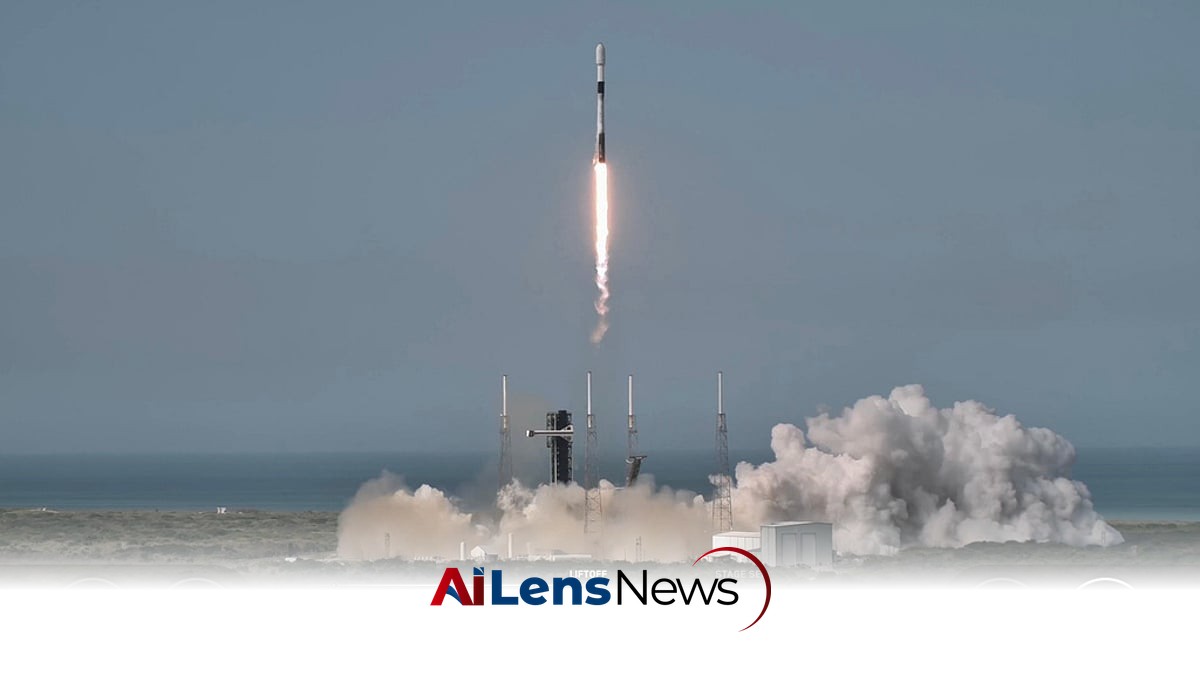


A two-armed space robot has launched on a private mission to attach jetpacks to aging satellites, extending their operational life and saving costs.
Doha, Qatar Jul 22, 2026 ALN: CAPE CANAVERAL, Florida: A two-armed space robot blasted off on a private salvage operation Tuesday to slap life-extending jetpacks on old satellites running low on fuel thousands of miles up. This mission marks a significant development in the ongoing efforts to extend the operational lifespan of aging communication satellites, which have become increasingly vital for global communication, weather forecasting, and navigation.
The launch is the second satellite-saving mission to take place this month, highlighting a growing trend in the aerospace industry aimed at maximizing the utility and longevity of existing spacecraft. As the number of satellites in orbit continues to rise, so does the need for innovative solutions to manage and maintain them. This trend is not only environmentally conscious, reducing space debris, but also economically beneficial, allowing satellite operators to avoid the high costs associated with launching replacements.
Earlier this month, another company successfully launched a three-armed spacecraft designed to boost NASA’s Swift Observatory, which was at risk of crashing to Earth due to its declining altitude. This mission exemplifies the increasing reliance on robotic technology to perform complex tasks in space, a field that has seen significant advancements in recent years.
Launched by SpaceX, Northrop Grumman’s mission robotic vehicle — dubbed the Mission Robotic Vehicle (MRV) — is equipped with jetpacks that will be utilized over the next year to position itself in a geosynchronous orbit approximately 22,300 miles (36,000 km) above Earth. This specific orbit is crucial for communication satellites, as it allows them to maintain a constant position relative to the Earth's surface, providing uninterrupted service to users below.
Once the MRV reaches its operational altitude by mid-2027, it will deploy its 10-foot (9-meter) robotic arms to attach a jetpack to an aging communication satellite. These jetpacks, each roughly the size of a washing machine, are designed to provide the necessary thrust for satellites that have exhausted their fuel reserves, allowing them to continue functioning for several more years. After servicing the first satellite, the MRV will proceed to assist two additional satellites in need of fuel replenishment.
This innovative approach to satellite maintenance could prove to be a significant financial boon for satellite operators such as SES of Luxembourg and Optus of Australia, potentially saving them millions of dollars in replacement costs. The ability to extend the life of existing satellites not only conserves resources but also reduces the environmental impact associated with launching new satellites, a growing concern as the number of objects in orbit increases.
Northrop Grumman's latest mission is part of a broader strategy to establish a satellite servicing industry. The company previously launched a pair of spacecraft in 2019 and 2020 that successfully latched onto failing communication satellites, steering them back into proper orbits and extending their operational lives. The MRV represents the next generation of these robotic helpers, designed to be more versatile and capable of performing a wider range of tasks in orbit.
Looking ahead, Northrop Grumman envisions future iterations of its robotic technology that could not only repair and relocate active satellites but also safely remove defunct satellites from crowded orbits. This capability would be crucial in mitigating the growing problem of space debris, which poses risks to operational satellites and future space missions.
In conjunction with its satellite servicing efforts, Northrop Grumman is collaborating with the US Naval Research Laboratory and the Defense Advanced Research Projects Agency (DARPA) to explore additional applications for its robotic technology. These partnerships underscore the importance of innovation in maintaining the sustainability of space operations.
Meanwhile, Katalyst Space Technologies is also making strides in the satellite servicing arena. The company continues to test its Link satellite helper in orbit, which is set to assist NASA’s Swift Observatory. The Swift telescope, launched in 2004, has been experiencing a rapid decline in altitude due to increased solar activity, which has affected its ability to maintain its orbit. A boost from Link in the coming weeks could extend the operational life of this nearly $400 million gamma-ray observatory, allowing it to continue its mission of studying some of the most powerful explosions in the universe.
NASA has contracted Katalyst for $30 million to elevate Swift back to its original altitude of 373 miles (600 kilometers). Northrop Grumman provided the launch vehicle for Link, utilizing a Pegasus rocket launched from a plane. This collaborative effort highlights the growing trend of public-private partnerships in the aerospace sector, which can accelerate technological advancements and reduce costs.
As the space industry evolves, the implications of these missions extend far beyond just extending the life of individual satellites. The development of satellite servicing technologies represents a paradigm shift in how we approach the management of space assets. By investing in the maintenance and servicing of existing satellites, operators can optimize their investments and contribute to a more sustainable space environment.
Furthermore, as the number of satellites in orbit continues to grow, the potential for collisions and the creation of space debris increases. By developing technologies that can actively manage and mitigate these risks, the industry can help ensure the long-term viability of space exploration and utilization.
In conclusion, the launch of the MRV and the ongoing efforts by companies like Katalyst Space Technologies represent a significant step forward in the realm of satellite servicing. These advancements not only promise to save money for satellite operators but also pave the way for a more sustainable and responsible approach to the utilization of space. As the technology continues to develop, it will be interesting to observe how these initiatives shape the future of satellite operations and the broader aerospace industry.
To learn more about the latest developments in Space & Aerospace Technology, stay updated with our exclusive reports and analyses on AiLensNews.

